Few Western performance events ask as much of a horse as reined cow horse. It combines precision, cow sense and fence work into a single test—one that rewards horses that can show up and stay consistent all the way through.
Reined Cow Horse: An Evolution
1970 First Snaffle Bit Futurity Milestone
Les Vogt on Wrong Key and Bobby Ingersoll on Leocita Chex tie to win first Snaffle Bit Futurity.
1984 Nu Cash Foundation Sire
1987 NRCHA Snaffle Bit Futurity Champion; produced three consecutive NRCHA Snaffle Bit Futurity champions.
1993 Katie Starlight Champion
Winner of inaugural World’s Greatest Horseman in 1999 to become its first champion in history.
1999 First World’s Greatest Horseman Event Milestone
Ted Robinson wins first World’s Greatest Horseman event on Katie Starlight.
1999 Roo Star Champion
2005 Magnificent 7 Champion; an AQHA Superhorse that proves his versatility across multiple events.
1999 WR This Cats Smart Leading Sire
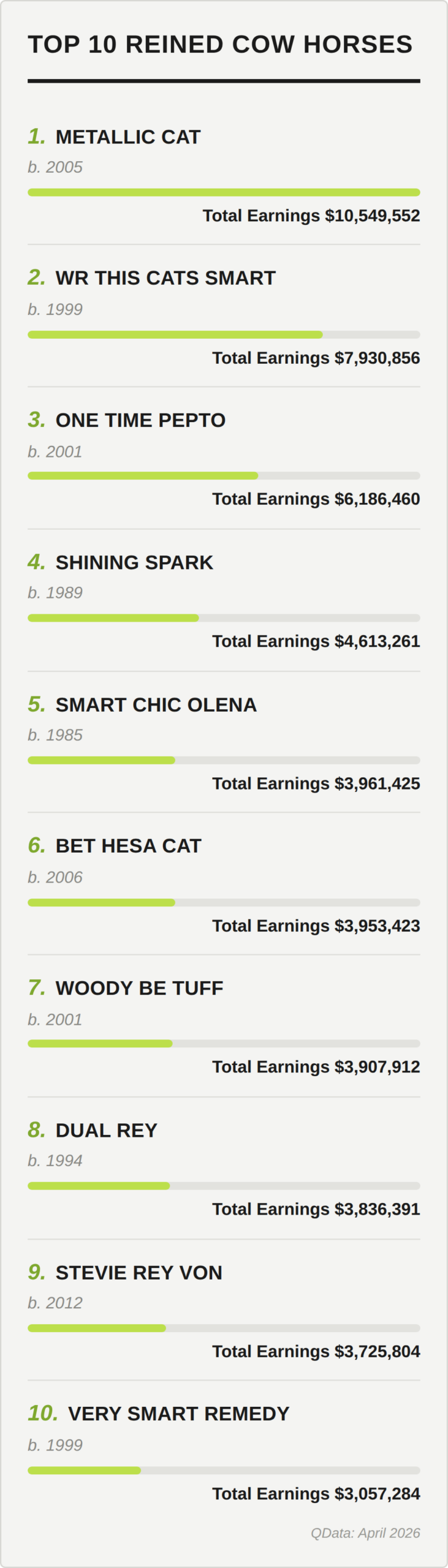
NRCHA $7 Million Sire; the second sire to ever cross this milestone.
2002 Bobbys Starlight Stallion
NRCHA earner of $142,054; a stallion known for his mindset and trainability.
2009 Scooters Daisy Dukes Leading Dam
NRCHA Million Dollar Dam; producer of two of NRCHA’s winningest sires.
2011 Call Me Mitch Leading Sire
Million Dollar Sire; NRCHA’s second highest-earning horse and a World’s Greatest Horseman winner.
2015 Scooter Kat Top Earner
NRCHA’s highest-earning horse; siring the next generation of reined cow horses.
2016 Hazardouz Material Champion
World’s Greatest Horseman winner known for his consistency at major events like the Stallion Stakes and Celebration of Champions.
2024 NRCHA’s First Million Dollar Dam Milestone
Scooters Daisy Dukes becomes NRCHA’s first Million Dollar Dam.
2025 NRCHA’s First $9 Million Sire Milestone
Metallic Cat becomes NRCHA’s first $9 Million Sire.
There might not be another Western performance sport that’s so all-encompassing as reined cow horse.
At various levels of competition, it combines reining, cutting and the singularly unique fence work that fill the seats at every major event. At special events, it even adds a roping element with steer stopping, making these horses some of the most versatile in Western performance.
But long before sold out events took place in the Will Rogers Coliseum, reined cow horse was built out of necessity.
The sport’s roots took shape in purely utilitarian fashion. Ranchers needed all of these skills to work their cattle. However, the horsemanship behind the herd, reined and fence work goes much further back to California vaquero-style horsemanship. The Spanish and Mexican horsemen of California wanted a horse that was light as a feather in response to a cue while still being gritty enough to dominate rank cows. Their methods were meticulous and took time, progressing from the snaffle to the hackamore to the two-rein to being a “finished bridle horse.”
That foundation still defines the sport today.
Over time, those same principles transitioned from the ranch to the arena.
Originally founded as the California Reined Cow Horse Association, the NRCHA was created to preserve and promote this style of horsemanship—carrying the vaquero tradition forward into a competitive arena where those same qualities could be tested under pressure. Today, more than 75 years later, the association continues to uphold that legacy through premier events and a growing network of affiliates across the country.
In competition, that job is divided into three phases: rein work, herd work and fence work (or the boxing for non-pros who choose not to go down the fence). Each is judged separately, with the scores taken from each event to create a combined score as the winning ride.
But while that philosophy built the foundation, it was the horses in the show pen that defined what reined cow horse would become.
From the early standouts that proved the concept to the modern athletes pushing its limits today, each generation has left its mark on the sport—and continues to shape what’s possible in the pen.
Setting the Standard
What set Nu Cash apart wasn’t just that he won, it was how naturally he handled every part of the job.
At a time when the sport was still taking shape, the 1984 sorrel stallion, ridden by Ted Robinson, showed a level of balance, feel and reliability that made him stand out in the show pen. His win at the 1987 NRCHA Snaffle Bit Futurity established him as a top competitor, but it was what came after that defined his impact on the sport.
From 1995 through 1997, Nu Cash’s offspring won three consecutive Snaffle Bit Futurity titles—The Nu Colonel, She’s A Lot Of Cash and Smart Little Cash—marking one of the earliest examples of true consistency at the highest level. To this day, he remains the only NRCHA Open Snaffle Bit Futurity Champion to sire three Open Futurity champions.
His highest-earning reined cow horse, Smartcashinvestment, carried that same reliability into major events, including a third-place finish at the NRCHA World’s Greatest Horseman and another at the Magnificent 7.
For Robinson, what made Nu Cash and his offspring stand out wasn’t just their ability, but how straightforward they were to train and show.
“Nu Cash and his babies didn’t require a lot of drilling,” he said. “Once they were trained, their first run was going to be the best one they made. They were very easy to prepare.”
That kind of trainability mattered in a three-discipline sport that demands precision in the rein work, feel in the herd, and grit down the fence. It’s also what helped expand the reach of the sport.
“Back then, it wasn’t popular to breed to a reined cow horse,” Robinson said. “It is today, but it wasn’t then. I think he brought people from the cutting, reining and breed show worlds. At one point, he was breeding more than 100 mares a year, and that was remarkable at the time. He stood out on his own.”
Twice as Good
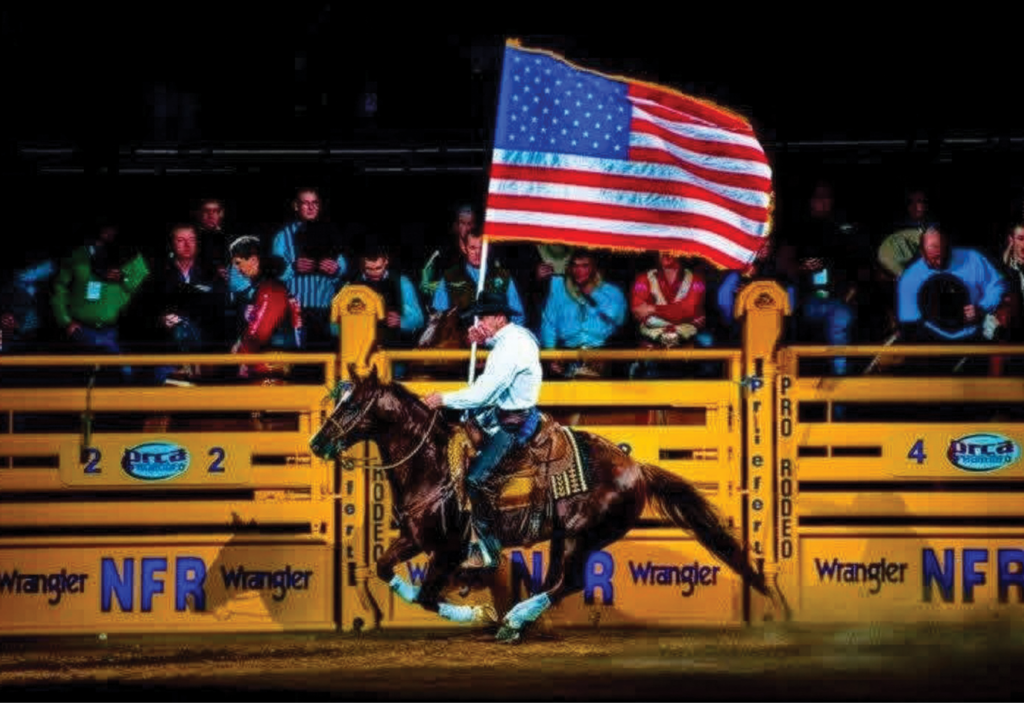
While Nu Cash was helping define the cow horse in the show pen, two full brothers were making their mark in a different arena.
Grays Starlight and Gallo Del Cielo built their reputations in the cutting pen, where cow sense and athleticism were already being pushed to a high level. It didn’t take long for those same traits to carry over into reined cow horse, showing up in horses that were quicker-footed, more balanced and more precise.
One of the first—and most memorable—horses was Katie Starlight.
Even as a young horse, she stood out.
“She was so keen and so put together and so intelligent looking,” recalled NRCHA Hall of Fame horsewoman Sandy Collier.
That impression held as Katie Starlight stepped into the show pen.
By her 3-year-old year, she was already turning heads, and by 1998, she and Ted Robinson claimed the Open Hackamore Championship. But it wasn’t just what she did—it was how she did it.
“The thing that I remember vividly about Katie was that she always knew where every foot was,” Collier said. “She was never out of balance. And she was so easy to train because she was so self-aware and so coordinated. It’s not easy for a growing horse to have authority over their feet all the time, but she did. She was super smart and super cowy, and she had such a tremendous amount of athleticism. A lot of training her was about staying out of her way and letting her get the job done.”
Grays Starlight’s influence showed up again in Bobby Starlight, a horse that left a lasting impression on NRCHA professional Zane Davis.
“To this day, Bobby Starlight was the greatest horse I ever trained,” Davis said. “I’d never ridden anything like him.”
Davis came from a rodeo background and learned about training cow horses from VHS tapes. He’d go try what he’d learned on Bobby Starlight, and the horse quickly caught on. When Davis noticed holes in his training, the horse adapted and relearned Davis’ new ideas.
“I actually think if I had any clue what I was doing with training him, Bobby Starlight would be one of the greatest money-earners of all time,” Davis said. “It didn’t matter what you taught him to do; everything was easy for him.”
On the other side of the pedigree, Gallo Del Cielo—known as “Rooster”—produced horses that brought a different kind of presence to the pen.
Rooster’s top earner is Roo Star, a 1999 bay Quarter Horse. NRCHA Million Dollar Rider Ron Emmons bought the horse as a yearling and was immediately dazzled by the horse’s looks.
“He was gorgeous,” Emmons recalled. “Even as a yearling, he looked like a cow horse all over. He was just a pretty horse that caught your eye. He was one that you could walk in the pen and get a plus-1 for eye appeal.”
Emmons started the colt, then sent him to NRCHA Snaffle Bit Futurity Champion and Million Dollar Rider Todd Bergen as a 2-year-old to prepare him for the NRHA Futurity. After that, Roo Star returned to Emmons’ program and took off as a reined cow horse, his biggest accolade being winning the 2005 Magnificent 7 title, an event that resembles today’s NRCHA World’s Greatest Horseman.
The Complete Cow Horse
Watch a set of finals today and it’s hard to find a weak spot.
Horses are showing up that can rein, work a cow and go down the fence—and stay consistent all the way through.
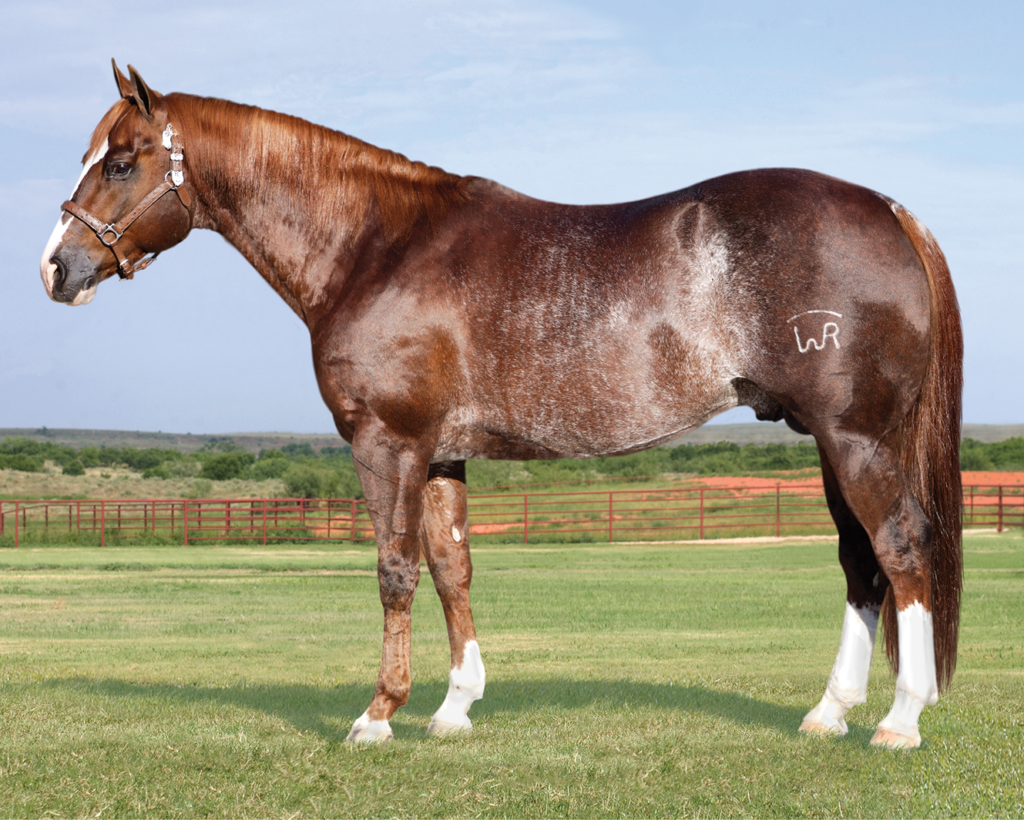
One place that characteristic shows up clearly is in horses by WR This Cats Smart.
His offspring aren’t just athletic—they’re the kind of horses that hold together from start to finish, which has become one of the defining traits of today’s cow horse.
“I believe he contributes a unique combination of qualities to the reined cow horse,” said Dustin Ewing, the general manager of Wagonhound Land & Livestock. “We consistently hear from mare owners and riders that his foals are overachievers and exceptionally athletic. They excel in the reined cow horse because they have a natural presence, intensity working a cow and real grit, but what truly sets them apart is their consistency in all three components of the event. That same versatility is why we see so many WRs have success in other Western disciplines as well.”
WR This Cats Smart is consistently ranked at the top of the annual NRCHA Snaffle Bit Futurity Western Bloodstock Sales, as well as other sales, demonstrating the popularity and high value of his get.
NRCHA Million Dollar Rider Nick Dowers estimates he’s won nearly half of his lifetime earnings on horses by WR This Cats Smart, including Cabanna Boy with more than $212,000 in earnings. The 2019 gelding is WR This Cats Smart’s second-highest earner behind Shine Smarter with $360,000.
“We’ve got a pile of ‘WR’s,” Dowers said. “What I like about them is they have a great work ethic. They have a lot of tenacity. Going into the fence work of a long finals day, I never wonder if they’ll have enough in the tank to finish. I also like that they’re really quick-footed and good on their front end, which is great for all three events. I really like WR on Shining Spark mares.”
Raising the Bar
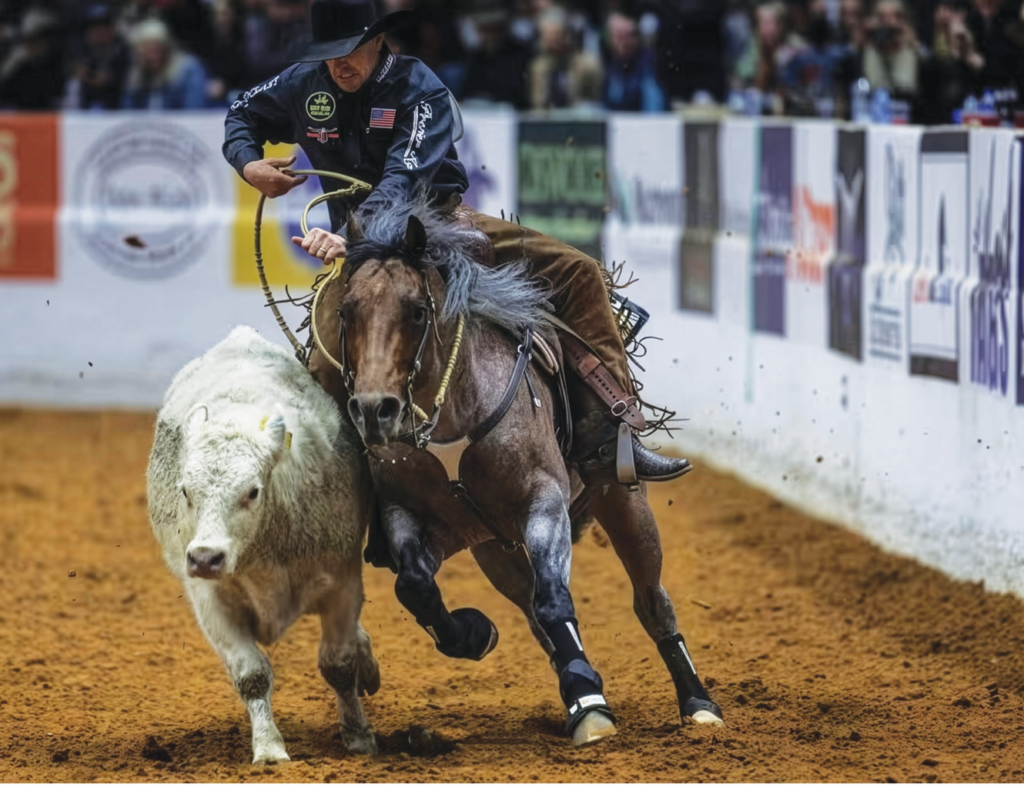
If you want to see what the modern cow horse looks like, you don’t have to look much further than Call Me Mitch.
By Metallic Cat and out of Miss Hickory Hill, the 2011 bay roan stallion has built a career on doing exactly what the sport now demands—showing up across every phase and holding it together when it counts.
From futurities to the World’s Greatest Horseman, Mitch has proven he’s not just capable in one part of the run—he’s competitive in all of them.
“There are great horses in individual events,” said rider Phillip Ralls. “But Mitch really brings that extra factor being able to do all of it at that high of a level.”
What’s separated Mitch over time isn’t just his ability—it’s how dependable he’s been doing it.
“He’s always on your team,” Ralls said. “He doesn’t have bad shows. Every time you show him, he gives you everything he’s got.”
That kind of consistency—run after run, year after year—is what’s defining the next generation of cow horses.
And it’s starting to carry forward.
As Mitch’s offspring begin stepping into the show pen, they’re showing the same traits: athletic, trainable and able to handle pressure across multiple disciplines.
That’s the influence behind horses like Call Me Mitch.
He isn’t just producing talent. He’s producing horses that can do the whole job.
More Than One Great One
There was a time when producing one great horse was enough.
Now, it’s happening more than once—and sometimes from the same mare.
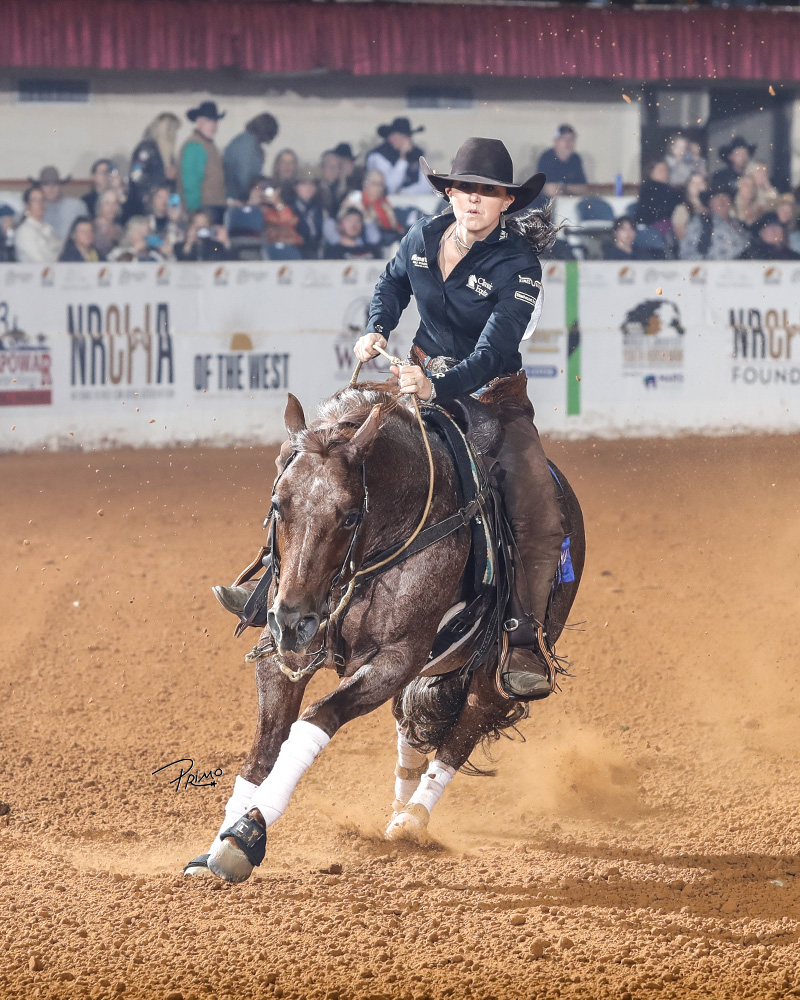
Scooters Daisy Dukes earned nearly $100,000 in NCHA lifetime earnings, but her biggest mark on reined cow horse history comes from just a handful of babies with NRCHA earnings—12, to be exact. But two of them stand out from the rest, both bred by Taylor Carbo. They’re Scooter Kat (by Kit Kat Sugar) and Hazardouz Material (by Metallic Cat).
Former Major League Baseball pitcher Aaron Cook now owns Scooters Daisy Dukes. After retiring from baseball, Cook took up trail riding but his competitive streak led him to want more. His wife, a barrel racer, purchased Scooters Daisy Dukes from a sale, and the mare came with three recipient mares carrying her babies.
“Scooter Kat was only probably a yearling at the time, and he hadn’t even shown yet,” Cook recalled. “Two of the recip mares had babies by Kit Kat Sugar, and the other was by Metallic Cat.”
Scooter Kat would go on to become NRCHA’s highest money-earner in history with more than $675,000, and the foal from the recipient mare was Hazardouz Material, earner of more than $450,000.
“From Day 1, Justin and Scooter have been magical,” owner Eric Freitas said. “They’re on the same page. They just click.”
And it hasn’t stopped in the show pen.
His first foals are already making an impression, carrying the same mind, ability and willingness that made him so dominant.
“He has a great mind, which contributes to all of his success,” rider Justin Wright said. “He loves being a show horse, and he’s truly a great horse to be around. I’ve never been around one that wants to do everything right the way he does.”
At the same time, Hazardouz Material has built a legacy of his own, proving himself as one of the most complete horses in the sport—culminating in a historic run with Erin Taormino to win the World’s Greatest Horseman.
“It’s hard to put into words what he’s like,” Taormino has said of the stallion. “He just shows up for you every time. No matter the situation, he wants to be right there with you.”
From the standout mares to the stallions that helped build the sport, reined cow horse remains the ultimate test of Western versatility.
As the horses continue to get more athletic and more consistent across all three events, it’s showing up in the pen—and raising the bar every time they walk in.
—H&R—