
What began as a ranch chore became a proving ground—where instinct, precision and style shaped the evolution of the modern cutting horse.
Evolution Timeline
1876 First-Ever Cutting Competition Milestone
First-ever advertised “Cutting Out” competition is held in Haskell, Texas.
1946 NCHA Founded Milestone
National Cutting Horse Association is founded. George Glascock pilots Benny Binion’s gelding to the first of three consecutive championship titles at the inaugural NCHA World Finals.
1956 Doc Barb. 1956 Foundation Sire
Establishes the potential of the cutting horse as a sire. His progeny will set the bar.
1962 NCHA Futurity Begins Milestone
Buster Welch wins the inaugural NCHA Futurity aboard Money’s Glo. The Hall of Fame announces its initial eight equine inductees, including Poco Lena and Welch’s Marion’s Girl.
1967 Doc O’Lenab. 1967 Foundation Sire
The Doc Bar x Poco Bueno x King cross transforms the cutting industry. He was syndicated for $2.1 million in 1978.
1974 Peppy San Badgerb. 1974 Foundation Sire
When crossed with Doc Bar get, NCHA and AQHA Hall of Famer “Little Peppy” would sire cutting heavyweights like Peptoboonsmal and Dual Pep.
1979 Smart Little Lenab. 1979 Foundation Sire
First-ever NCHA Triple Crown Champion: Futurity (1982), Super Stakes (1983) and Derby (1983). In just eight shows, he won nearly $750,000.
1980 Royal Blue Boonb. 1980 Leading Dam
This mare produced 16 money-earners with all-time earnings of $4,267,965, making her the No. 1 Cutting Dam for All Time.
1983 Doc Bar Bloodline Dominates Milestone
Out of 23 NCHA Futurity finalists, 21 boast Doc Bar bloodlines.
2025 Stevie Rey Von Takes the Lead Milestone
Stevie Rey Von (Metallic Cat x Miss Ella Rey x Dual Rey) overtakes his sire as the No. 1 leading cutting sire of the year by $150,000 with $6.4 million reported.
Across its well-established history, the cutting horse serves as a clear indicator of the development of today’s modern performance horse. As many horse sports have, cutting originated with the ranch horse who displayed the greatest aptitude for separating a cow from the herd on any given working day. Inevitably, the ever-present desire for good sporting competition and bragging rights brought that horse to the arena where an industry was built, powered by some of the most influential bloodlines in the Western performance world.
A Sport Is Born
In all likelihood, cowboy competitions came to fruition the first day one cowboy met another. But in 1898, a flyer was posted calling all cowboys to Haskell, Texas, for the first-ever advertised “Cutting Out” competition. Sam Graves packed his bedroll and headed for town—a two-day ride—on his 22-year-old horse named Hub.
In front of a 1,500-person crowd, Graves and Hub outperformed 10 other cowboys on their top cutting mounts for $150—an amount that, at the time, reportedly allowed Graves to pay for Hub’s care through his well-earned retirement.
And thus, a sport was born. Cutting competition became regular fare at state fairs and reunions and, in 1919, the first in-arena event was held at the Southwestern Exposition and Fat Stock Show in Fort Worth when the cutting was added to the rodeo. Finally, a handful of cowboys recognized the need for some structure and consistency across the board, and the National Cutting Horse Association was formed in 1946 with 13 founding members.
With the formation of the association came the World Championships, and an unfortunately named black gelding owned by Benny Binion (it was a few years ahead of his 1951 opening of the Horseshoe Casino in Las Vegas, where he’d become an eventual NFR icon), and ridden by George Glascock took the title in 1946, ’47 and ’48, firmly setting the standard.
The three-year sweep also presented a hole in the setup: As the World Champion was (and is) determined by money earned in a year, the horse that can go the most wins the most. Today, open competitors are committed to hauling, making the race to the top a fair game, but in those early days when most of the horses were being pulled from their day work on the ranch to compete locally, those privileged enough to travel had a clear advantage.
The NCHA looked to the well-established Quarter Horse racing industry and its All American Futurity that first ran at Ruidoso Downs in 1959 for a solution.
“Horse racing lasts because you’ve got a new set of 3-year-olds and 2-year-olds [each year],” explained Bill Riddle, a $4 million rider, trainer, Hall of Famer and 2007 president of the NCHA. “Now you’ve got a business. Now you have to breed horses. You have to have young horses coming in all the time.”
According to Riddle, the Futurity is also what sets the breeding tone for the industry.
“The style of horse that wins,” Riddle continued, “the genesis of that is almost always at the Futurity. The Futurity is still the cutting horse Super Bowl.”
Making Magic
Out the gate, it appeared the NCHA Futurity was going to suffer the same challenge its World Finals did when cutting icon Buster Welch (1928–2022) took the first two titles in 1962 on Money’s Glo and in 1963 on Chickasha Glo, both sired by King Glo, an own son of the 1931 foundation sire, King.
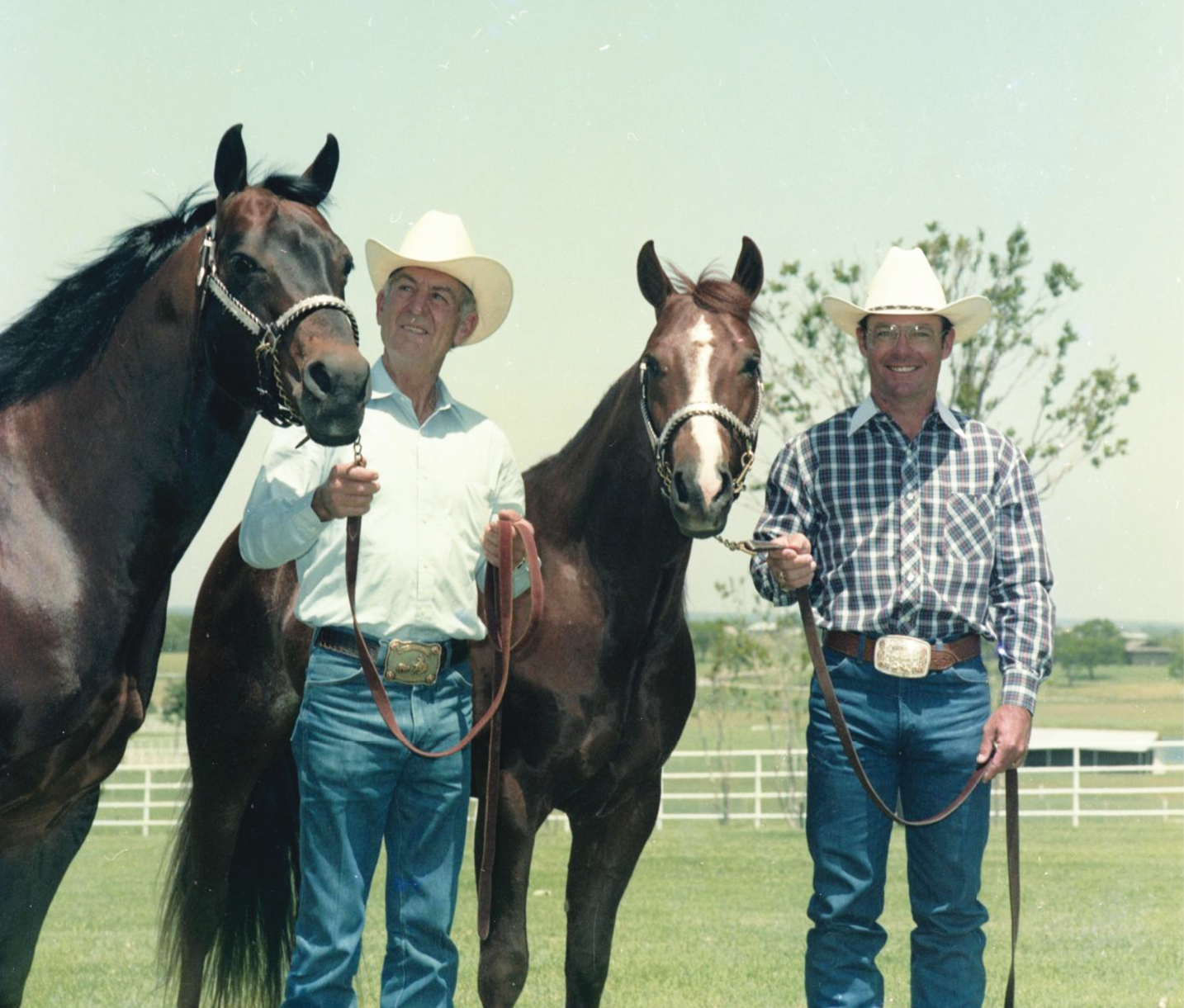
Doc O’Lena
According to American cowboy chronicler Bob Welch, Buster’s great-nephew, the movement was producing some individual standouts at this point, with lines running back to King, Wimpy or Leo, mostly, but the dots didn’t connect until Doc O’Lena took the Futurity title in 1970, followed by his full brother, Dry Doc, in 1971.
“That was the next big watershed moment for those horses,” Welch said. “When those Doc Bar horses proved they could win at the Futurity, that changed everything.”
Doc O’Lena was foaled in 1967. He and Dry Doc were sired by Doc Bar and out of Poco Lena, a granddaughter to King through Poco Bueno. That was the magic cross.
It’s worth noting that success indicators of the Doc Bar x King cross showed up earlier in horses like 1961 mare Fizzabar (Doc Bar x Teresa Tivio x Poco Bueno), who was ridden to the 1968 NCHA World Championship by Don Dodge. And though scant evidence of her notoriety can be found today, clues exist in places like Facebook, where 1967 NCHA Non Pro World Champion and performance horse pillar Carol Rose posted a rare 1963 image including the notable mare.
Fizzabar was an undeniable great one with the 1971 induction into the NCHA Hall of Fame to prove it, but the stars aligned for Doc O’Lena.
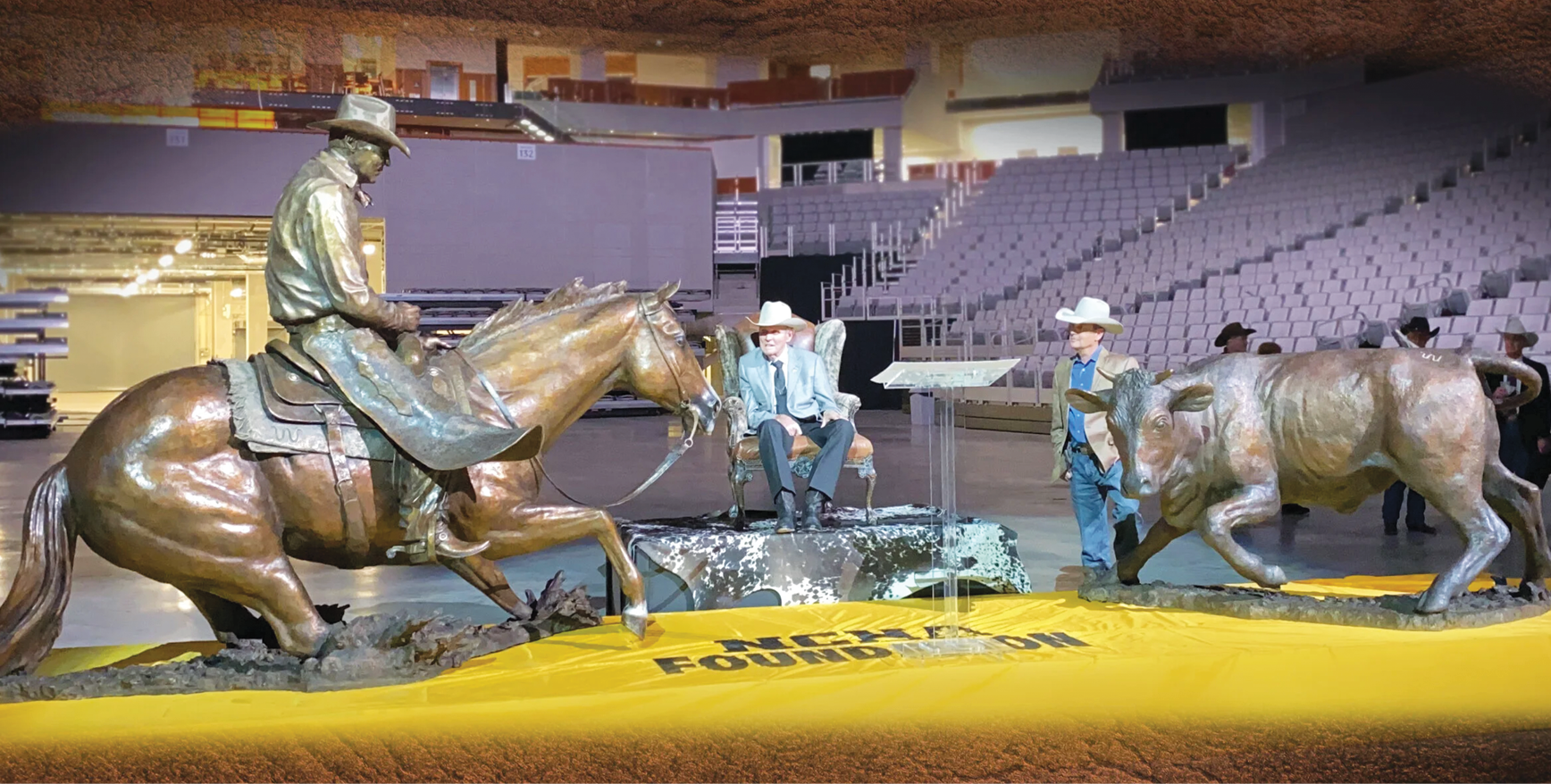
“He won all the go-rounds at the Futurity,” said renowned cutting horse sculptor Kelly Graham, the stepson of Shorty Freeman who piloted Doc O’Lena to his titles. “He won the semis; he won the Futurity. And they syndicated that horse for $2.1 million in the ’70s.”
Not only was Doc O’Lena a force to be reckoned with in the arena, he was also the first sire to produce another Futurity champion—1972 mare Lenaette (out of Bar Socks Babe) took the title in 1975 and, between 1982 and 1983, his 1979 son Smart Little Lena became the first-ever horse to win the NCHA Triple Crown, comprised of the Open Futurity Championship, the Super Stakes and the Derby.
“He was a whole different level of horse that would break down a little bit in his hocks, just facing up to a cow,” continued Graham, a professional cutting horse trainer through the ’70s and ’80s before committing to his art career. “They respected [a cow’s] area and would give ground. And when you give ground, it reduces the speed of a cow.”
Graham’s observation speaks to the point in cutting horse history where breeding began to prioritize a horse’s ability to be the best in the arena instead of the best horse in the cutting cavvy.
“Doc O’Lena would change the cutting horse world,” Riddle concurred. “That Doc Bar cross on a Poco Bueno mare would turn into a bloodline of horses that would use their butt more easily. They would use their head and ears more easily, and that began to paint a beautiful picture. And cutting changed from how hard you could work to hold a cow to how pretty you could hold a cow.”
Little Peppy
In 1977, Buster Welch returned to the Futurity to claim his fifth championship title—a record that remains today—aboard a 1974 Leo holdout named Peppy San Badger (Mr San Peppy x Sugar Badger). In a tribute after his great uncle’s passing, Bob Welch referred to “Little Peppy” as Buster’s “magnum opus.” As Bob tells it, Buster was so confident in this horse’s talent, he called his shot before he entered the arena that day.
“He owned the horse, and he was trying to sell it to King Ranch,” Bob explained. “And he said, ‘Either my name will be on it or King Ranch’s name will be on it, but I’m going to win this thing.'”
Buster had ridden the horse’s sire to glory for the 1974 NCHA Open World Championship and did so again in 1976, the same year the pair claimed the AQHA World Cutting Championship, a feat that had never before been accomplished. Mr San Peppy’s next feat was becoming the first cutting horse to ever earn $100,000 in a season.
Like his sire, Little Peppy was inducted into the NCHA Hall of Fame, and he made a lasting mark on the further development of the sport and the cutting horse through his progeny—a fact demonstrated by his continued presence among the Top 10 Cutting Sires of All Time nearly 50 years after his Futurity debut.
“In my opinion,” Bob offered, “from then on, every horse is some sort of mix of the Doc Bar line and a Little Peppy line.”
Time Marches On
In the era that followed, greatness and innovation were called to the arena dirt, though it’s hard to argue which one drew the other.
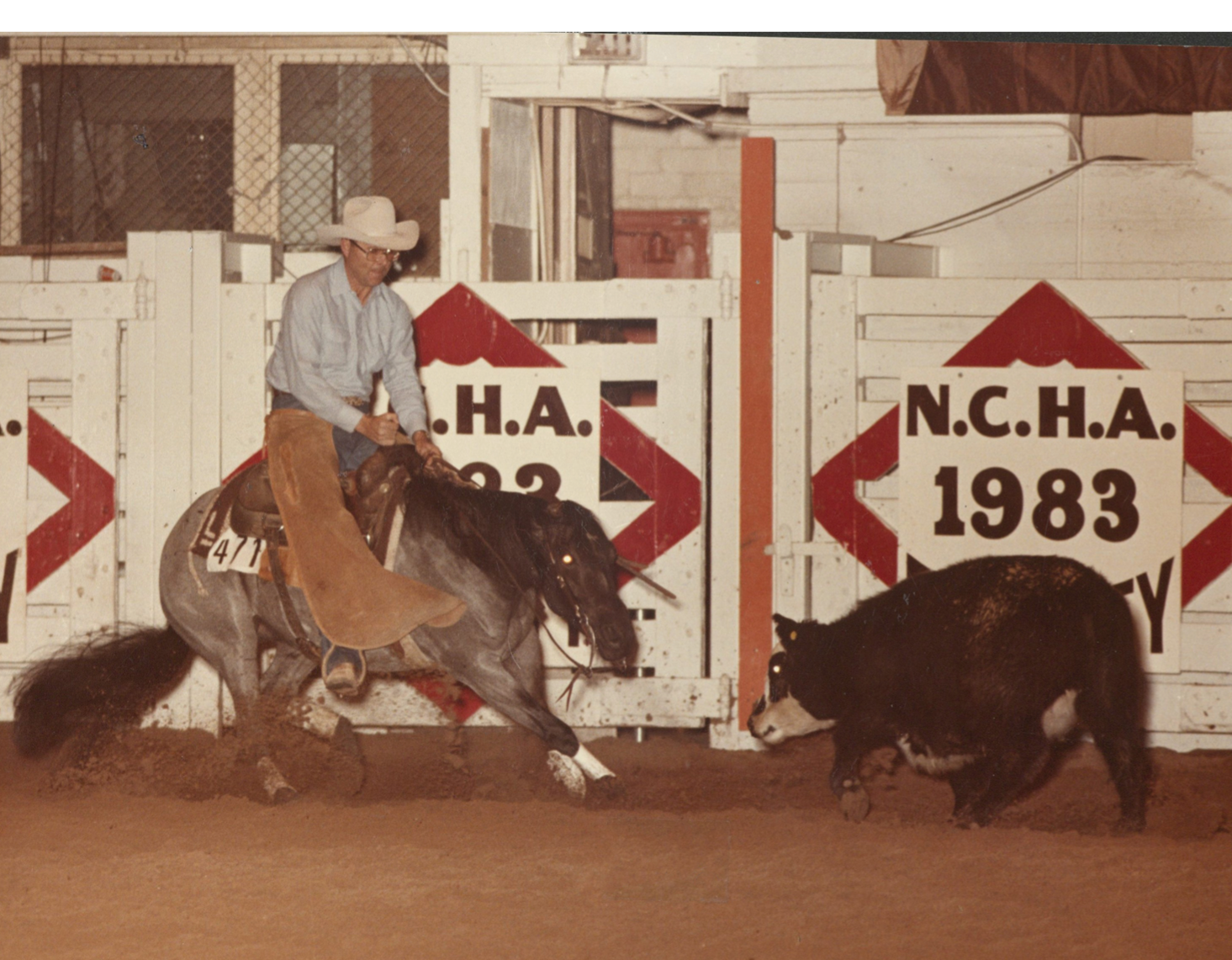
The 1979 sorrel stallion Smart Little Lena (Doc O’Lena x Smart Peppy) took the competition to new heights when he won the 1982 Futurity Open (earning $267,085 in a single run), the 1983 Super Stakes and the 1983 NCHA Derby, claiming the first-ever NCHA Triple Crown and earning $743,275 in just eight shows. And he did it amid a changing environment.
Graham, who has also served as a judge, points to the warm-up program.
“In the ’60s, nobody was at the other end of the cutting [arena], trotting a loping circle,” he said. “You had to save that energy. When the Doc Bars came along, you had to lope that energy down.
“They could move better,” Graham continued, referring to the more refined bone the Doc Bar line brought to the pen, “and just react to a cow and be so far away from that cow, they didn’t know how they got there … That’s when our judging started developing, and they had what we call a one point, missing a cow, if you missed going too far by it.”
True to his roots as a former teacher, Riddle authored the book originally used to train NCHA judges, making him an exceptional resource in the matter.
“In 1980, there were anywhere from 15 to 25 guys that had horses that would allow them to have a chance to win the Futurity,” Riddle said. “Then, between 1982 and 1985 or -6, NCHA made a real commitment to upgrading our judging program.”
In short, judges became accountable for their marks on the cards they turned in after a run.
“Now, you can’t win the cutting just because your horse was beautiful and everybody loved him and the crowd was loud,” Riddle explained, illuminating the moment in the sport when the horses were suddenly required to compete at an elite level of excellence.
Performance Perfection
As the cutting horse has done throughout its history, the horses rose to the occasion, and the rewards rose to meet them in the moment.
Million-Dollar Moment
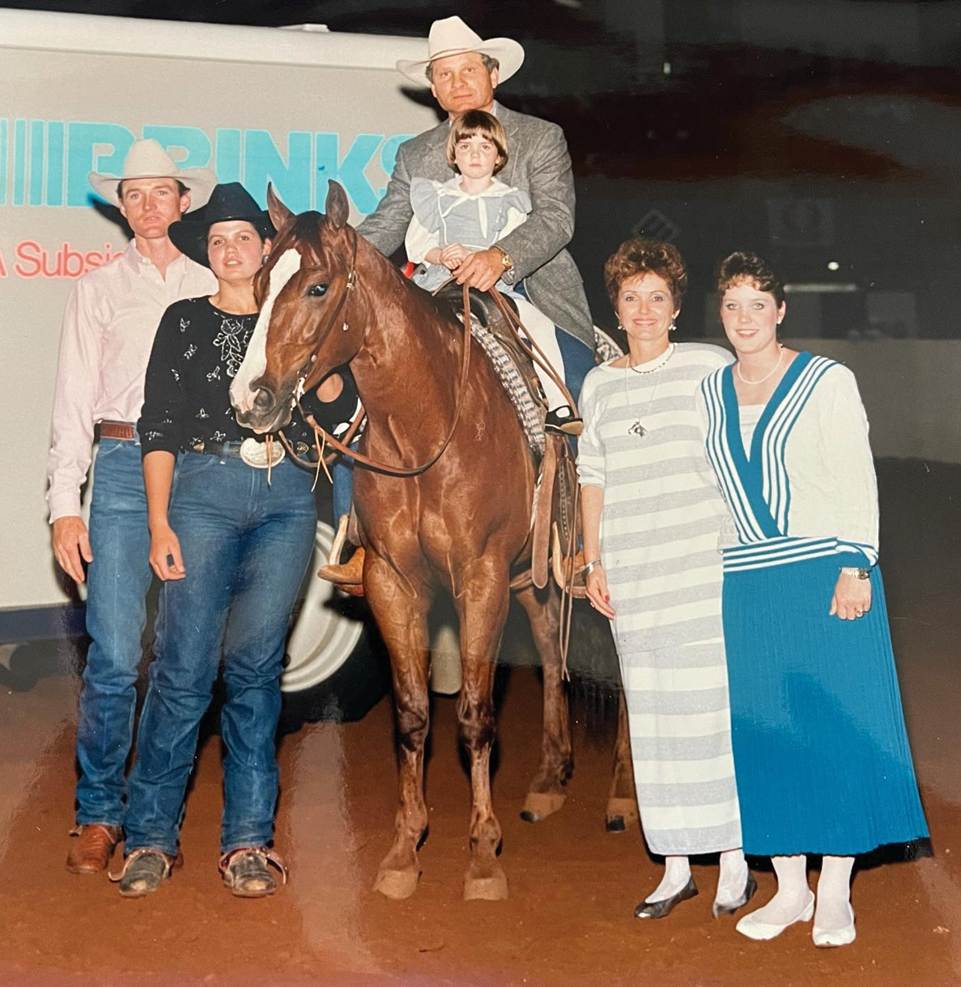
In 1987, the very same Bill Riddle entered the Gold & Silver Stakes competition on the 1983 sorrel gelding, Poco Quixote Rio (Doc Quixote x Poco Lady Liz), at the Lazy E Arena in Guthrie, Oklahoma. In the always-allotted time of 2 minutes and 30 seconds, horse and rider first picked off a mousy-colored cow that appeared continually surprised to find a horse in the way of his herd. Next up, a bold red cow short on quit tried its best to beat the pair until the buzzer.
For their efforts, Riddle and Poco Quixote Rio won the event with a 221, earning them $1 million in cold hard cash. The payout remains the biggest winner’s check ever cut in the sport and, to this day, QData indicates Poco Quixote Rio is still the No. 1 highest money-earning cutting horse with $1,108,867 in lifetime earnings.
More Marepower
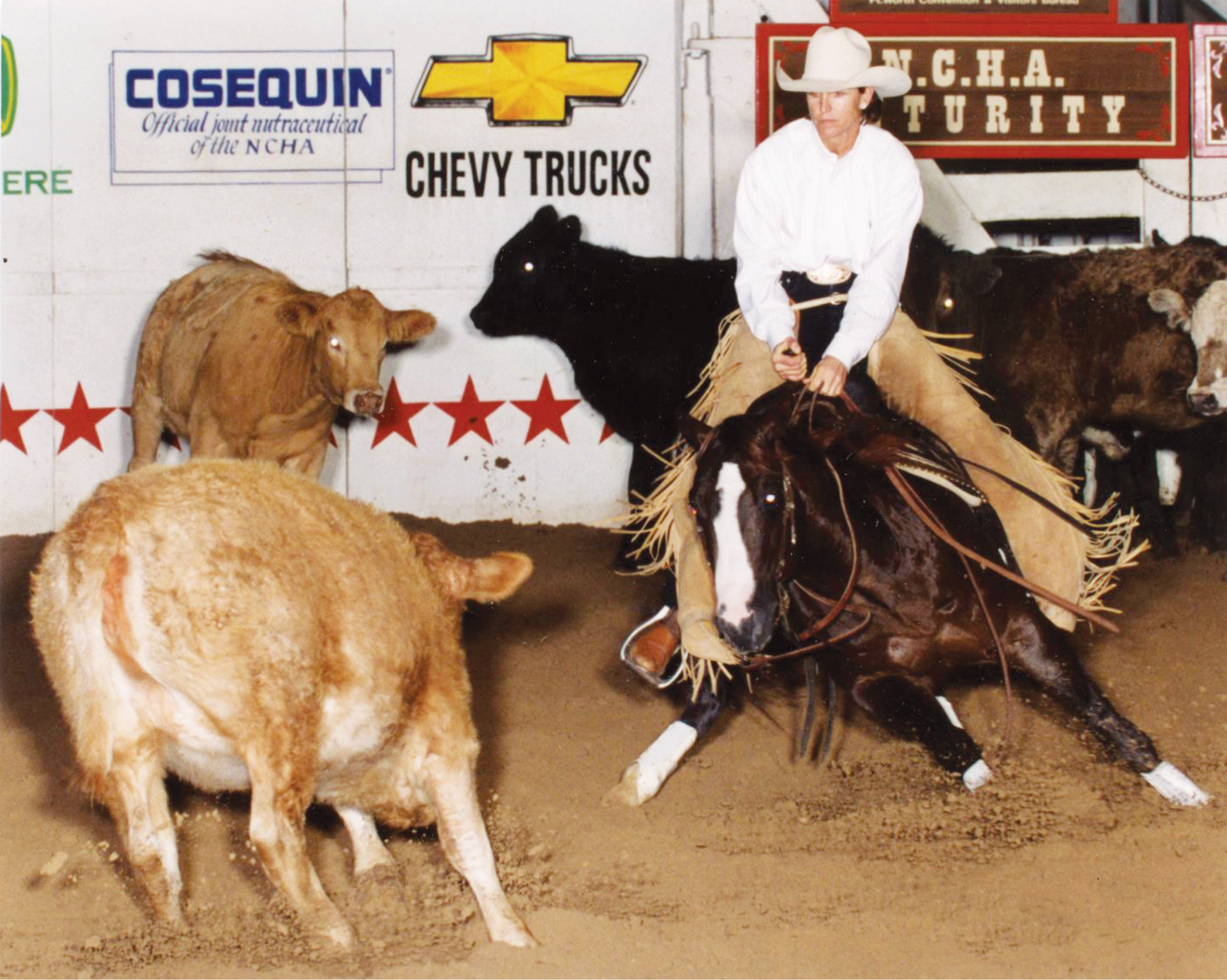
Poised to push him off his pedestal, though, is 2019 mare Kittennish, who packs a powerful pedigree. By No. 10 All-Time Cutting Sire Hottish (Spots Hot x Stylish Play Lena) and out of Show Biz Kitty—the No. 1 Cutting Dam for All Time—who is sired by No. 1 All-Time Cutting Sire High Brow Cat and out of a Son Ofa Doc mare, Show Biz Sandy, Kittenish is claiming her place in cutting horse history with $1,022,087 in lifetime earnings reported.
“She’s an extraordinary horse,” said two-time NCHA Futurity Open Champion Kathy Daughn. “I understand the purses are bigger but, comparatively speaking, that’s an extraordinary feat for a mare to do … for a horse to keep going when it’s 3, 4, 5, 6 years old, as many times as we show with them now.”
Daughn is an NCHA Hall of Famer who earned her Futurity title first in 1985 on The Gemnist (Doc Bar Gem x Miss Fancy Zan) and returned to the winner’s circle in 2000 aboard Royal Fletch (Jae Bar Fletch x Royal Blue Dually). When asked to pinpoint a horse that moved the needle in the recent history of cutting horses, she didn’t hesitate.
“Royal Blue Boon,” Daughn stated. “She is the one. We wouldn’t have Metallic Cat without her.”
Making Metallic Cat
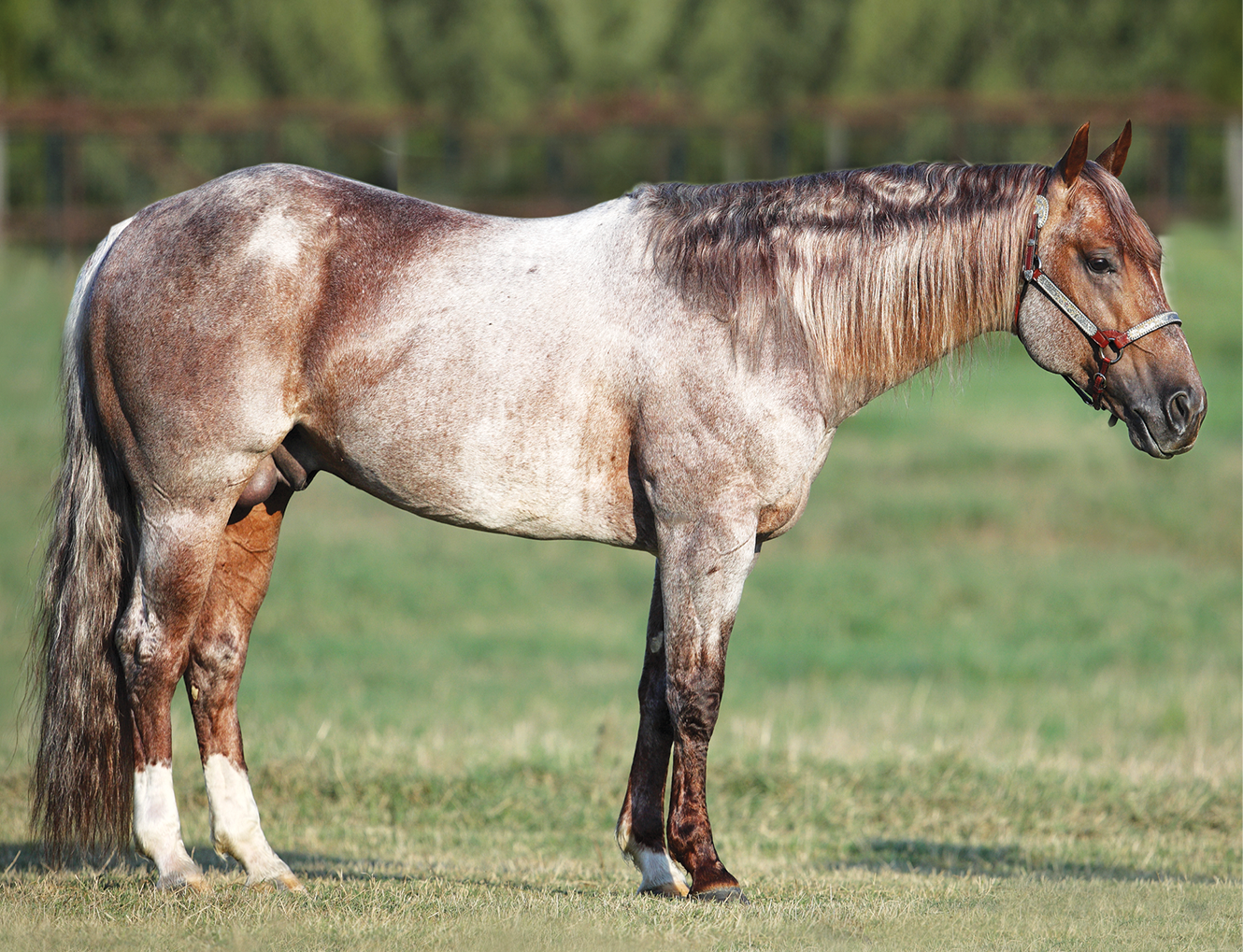
Royal Blue Boon was foaled in 1980 and made her debut at the 1983 Futurity, where she placed eighth under saddle for Larry Reeder to earn $39,269.
The little roan mare was sired by Boon Bar (Doc Bar x Teresa Tivio) and out of Royal Tincie (Royal King x Texas Dottie). In her performance career, she earned more than $380,000, but as Daughn suggests, her real legacy is through her progeny.
Royal Blue Boon produced 16 money-earners with current earnings of $2,626,131 for average earnings of $164,133, including heavy hitters like Bet Yer Blue Boons (Freckles Playboy), Mecom Blue (Haidas Lil Pep), Red White And Boon (Smart Little Lena) and Peptoboonsmal (Peppy San Badger), the maternal grandsire of Metallic Cat.
On the top side, Metallic Cat is sired by High Brow Cat (High Brow Hickory x Smart Little Kitty), and not only do the father-son duo claim the top two places on the list of all-time cutting sires, they are the top two sires of all time across all Western performance disciplines.
“Metallic Cat has been so dominant in the Western world,” Daughn continued. “And now his sons are our leading junior sires. So Royal Blue Boon, as far as crossing on those old-time studs, really started the modern-day era.”
Making the Next Move
As for up-and-comers, Daughn is keeping her eye on Show Biz Kitty.
“We’ll see how it goes for generations to come,” she said. “I don’t know if she’ll do what Royal Blue Boon did, but she’s pretty phenomenal.”
On the sire side, Bob Welch is watching 2019 Open Futurity Champion Metallic Rey Mink, a 2016 red roan stallion by Metallic Cat and out of Dual Rey Mink.
“Really, right now, the key is finding the best cross for the Metallic Cat sons. In his first year of having colts in the show pen, they did exceptionally well.”
Daughn points out that, with advances in breeding techniques like ICSI, which makes it possible to produce multiple foals from just one mare in a single year, it’s hard to put a finger on what the future holds for the cutting horse.
Simultaneously, Graham is fascinated by the return of the cutting horse to its roots on the ranch.
“At the 6666, in the last little under a decade, they’re all big-time cutting studs now to cover all aspects of equine competition. They’re using their better cutting horse stallion as their [main] stallion. I never really saw that coming.”
In a discipline that has made such remarkable progress refining its pedigrees, it seems the sport has also come full circle.
“Cows are more expensive,” Riddle admitted. “Vehicles are more expensive. We had the same problems in 1980. [But] if you look at the sport today, there’s never been a better time for the horseman.”
—H&R—