
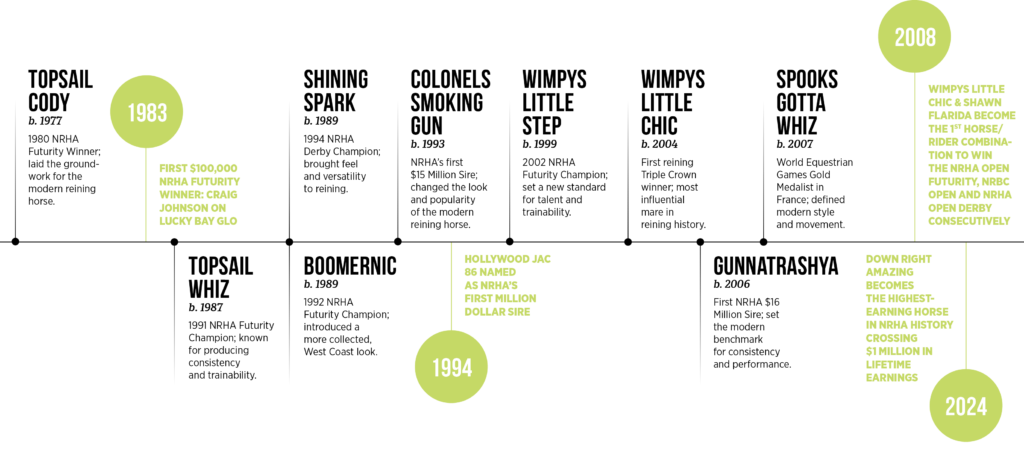
From ranch-bred durability to the rise of purpose-bred athletes, the reining horse didn’t just change—it was shaped by the horses that defined each era.
Reining didn’t begin in an arena. It began out on a ranch where a horse’s ability to stop quick, turn fast and respond instantly wasn’t about style, it was about getting a job done efficiently.
Long before patterns were drawn and competitions took place in perfectly dragged arenas, the horses that would eventually define reining were shaped by necessity. Vaqueros in California and cowboys across the American West relied on horses that could respond to the smallest cue without missing a beat. Performing maneuvers like dropping into a stop to block a cow, rolling back to change direction or accelerating forward in a single stride.
As ranch work evolved, those same skills became something more. Riders began to gather at local events, informal competitions and county fairs, testing one another’s horses not on cattle, but on their ability to perform those maneuvers with precision and control. What started as friendly rivalry gradually became something structured—a way to showcase the ideal working horse.
That structure took shape in 1966 with the formation of the National Reining Horse Association, which brought standardized patterns, scoring and rules to a discipline that had, until then, been largely informal. For the first time, the qualities that defined a great ranch horse—responsiveness, athleticism, control—were translated into a judged event.
And yet, even as reining moved into the show pen, the goal never changed. At its core, the discipline still comes back to a simple but demanding standard: a horse that is willingly guided and responsive throughout every piece of a pattern.
Built for a Job
In those early years, the horses that excelled in reining were built for a job outside of the show pen.
Ranchers needed a sturdy horse that could effectively get the job done day after day. So the horses seen in the reining were often bigger, stronger-made horses with the kind of durability that helped them work the long days cowboys originally required.
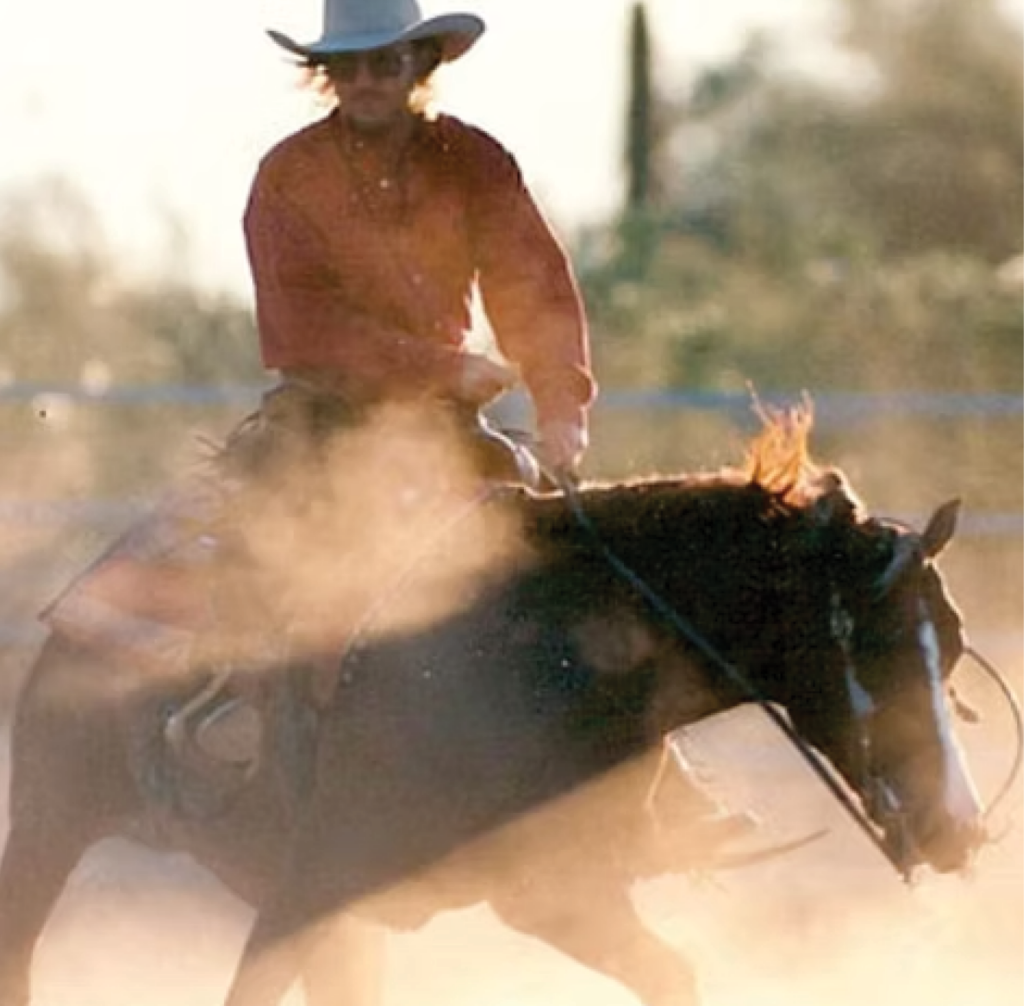
That kind of horse was heavily influenced by foundational bloodlines like Joe Cody that carried forward in reining horses like Topsail Cody, a son that would go on to win the 1980 NRHA Futurity with Bob Loomis and help define the first era of modern reining.
But what set Topsail Cody apart wasn’t just his build, it was also his style and his willingness in the show pen. He had the size and strength of those early horses, paired with a level of athleticism and trainability that made him stand out almost immediately. At the NRHA Futurity that year, he marked a 230 in the first go-round, followed by a 234.5 in the finals. A year later, he went on to win an AQHA Junior Reining World Championship before retiring.
“At the time, Joe Cody babies stood out in the show pen because they were big, tall horses and were very elegant looking,” shared Loomis. “They also had what it takes mentally. One thing about that family is they all have big, big hearts and would give 100% every time. They have no quit in them.”
Where Power Met Precision
By the early 1990s, reining was starting to look different.
The fundamentals behind the sport hadn’t changed, but the way horses carried it out had. Runs were smoother, horses were starting to carry themselves a little differently and the overall picture in the pen began to shift toward a more refined look.
Topsail Cody’s son Topsail Whiz played a major role in that shift, particularly in how consistently his offspring could perform—one of the reasons the name “Whiz” still shows up so often in today’s reining pen through stallions like $5 Million Sire Walla Walla Whiz.
“They were all monster stoppers,” said Bob Loomis on the traits you still see in the show pen thanks to Whiz’s influence. “And when it comes down to it, the stop is always the winning maneuver. It’s the most spectacular thing to watch.”
But “Whiz” wasn’t the only horse shaping the direction of the sport at the time.
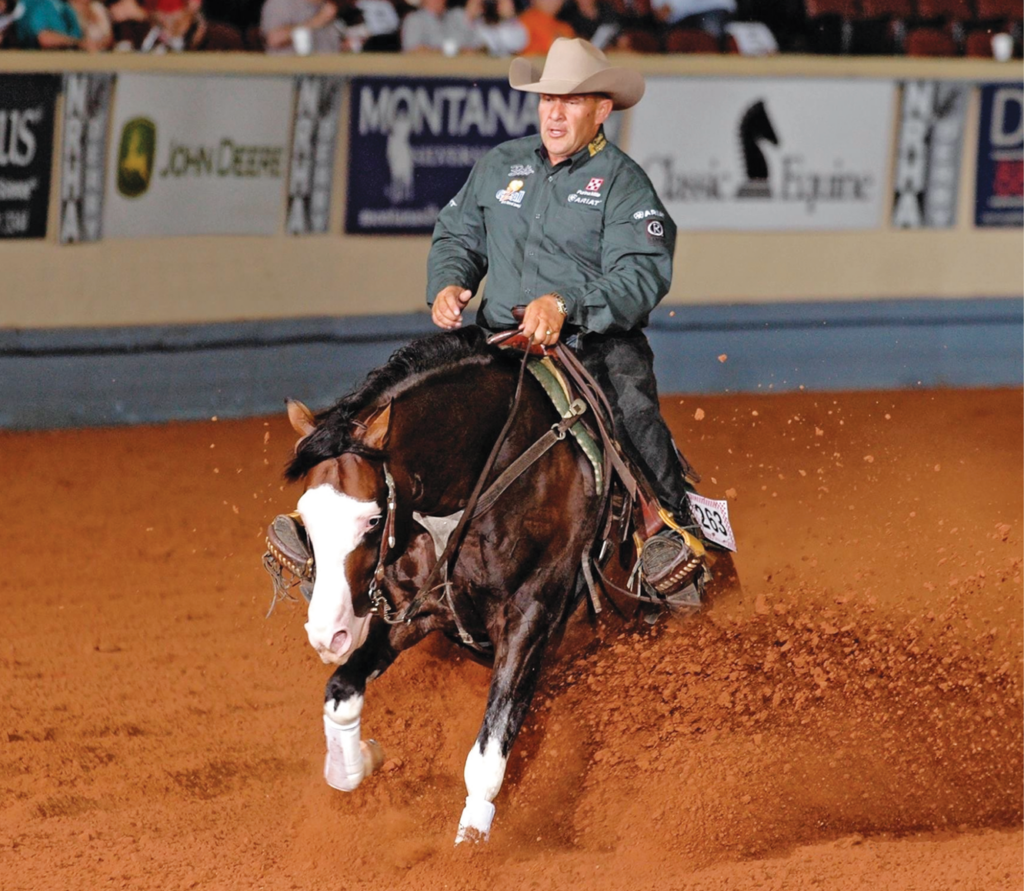
At the same time, Boomernic was introducing a different look in the show pen. One that leaned into a more bridled, West Coast style of reining. Ridden by Brett Stone to win the 1992 NRHA Futurity, Boomernic entered the finals carrying a naturally lower, more collected headset that stood out the moment he walked into the pen.
It was a noticeable shift. Instead of just forward motion and powerful maneuvers, there was more emphasis on collection.
Around that same time, Shining Spark was proving just how much feel and athletic ability could be built into a reining horse and passed on to future generations.
Even early on, his ability stood out. As his breeder, Carol Rose, recalled watching him as a yearling in the round pen, “You can’t imagine how that horse stopped.”
But it wasn’t just the stop that made him a household name, it was how he put an entire run together.
Piloted by NRHA Hall of Famer Tim McQuay, Shining Spark won the junior reining at the 1993 AQHA World Show with a score of 227.5.
The following year, the pair won the 1994 NRHA Derby with a 230.5—adding yet more laurels onto the head of a stallion who was quickly becoming one of the industry’s brightest stars.
The Horse That Changed the Look of Reining
The face of reining quite literally changed when Colonels Smoking Gun, better known as “Gunner,” stepped into the arena.
At the time, reining pens were filled with solid-colored duns, buckskins and more traditional Quarter Horse coloring, which is why the sorrel stallion stood out immediately. With his bald face, four white legs and unmistakable chrome, he looked different than any of the horses that had come before him.
But it wasn’t just how he looked.
From Gunner’s debut at the 1996 NRHA Futurity, where he finished as the open reserve champion with Clint Haverty in the saddle, it was clear he could back it up.
Kim and Debra Sloan, who purchased Gunner on the spot after his Futurity performance, quickly found out just how popular their new horse was when they tried to pick him up the next day—only to find him mobbed by admiring fans.
“We could not get that horse across the fairgrounds and into our trailer,” Kim Sloan recalled. “Everybody loved that horse. We finally hooded him, blanketed him and wrapped his tail. [We] managed to sneak him around back.”
But what made him truly influential wasn’t just the way he looked or the crowd he pulled—it was what he consistently passed on. Gunner went on to become the NRHA’s first $15 Million Sire, a milestone that has only since been surpassed by his own son, Gunnatrashya.
“Everybody loved all the white that he produced,” said McQuay, who eventually purchased the stallion in 2005. “That made him very popular because he really was the first horse to be white-faced. People loved it when he walked in the pen to show. Everybody liked his look, and he also produced real big stoppers. You can train horses to turn around and change leads, but nature takes care of the stop. It was born and bred in him.”
The Foundation of What Came Next
Few riders have had a front-row seat to the evolution of the modern reining horse like trainer NRHA $7 Million Rider Shawn Flarida.
Over the course of his career, he’s ridden the kinds of horses that often end up in the record books. One of them being Wimpys Little Step.
When “Wimpy” stepped into the pen at the 2002 NRHA Futurity, the golden palomino stallion was hard to miss.
“He was just so naturally talented,” Flarida said. “Everything came easy to him. The way he moved, the way he stopped—he just did it. And he had such a good brain.”
One maneuver, though, stood out.
“He could turn like crazy,” Flarida recalled. “He made it look so easy.”
That combination of ability and consistency helped Wimpy mark a 233 and earn Flarida his first Futurity title. But his impact didn’t stop in the show pen.
Retired to stud shortly after that win, Wimpy became one of the most influential sires in reining, passing on the same athleticism, trainability and consistency that had set him apart.
Then came one of his daughters.
The Mare That Changed History
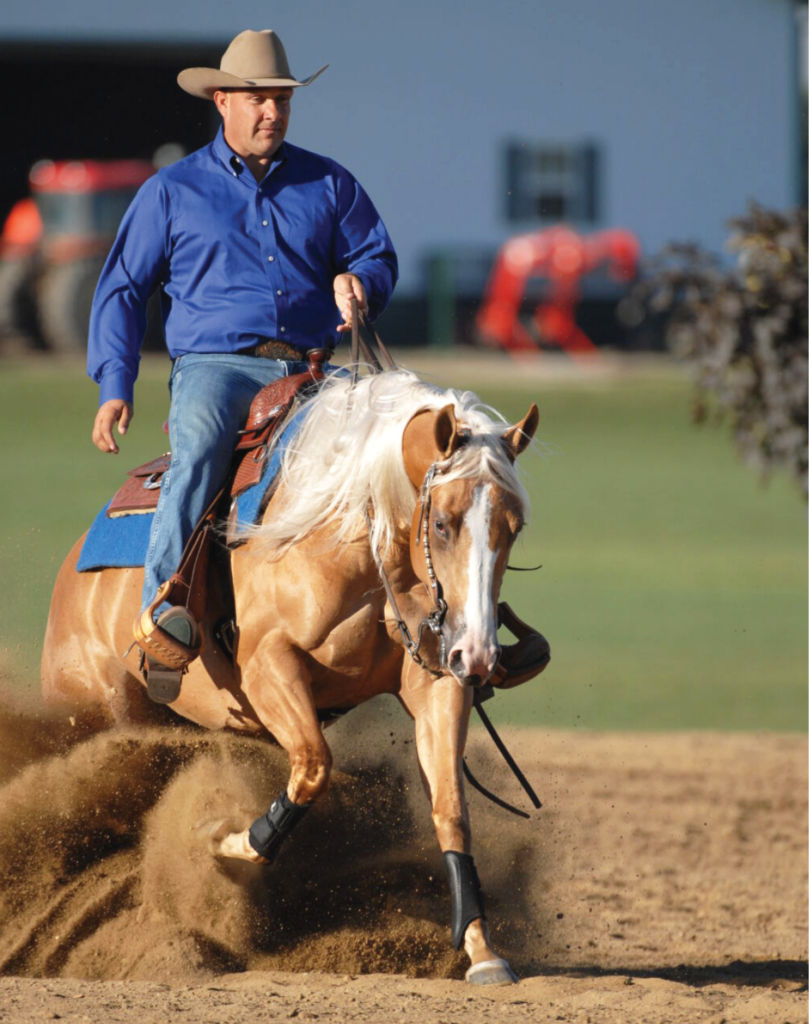
In 2008, Wimpys Little Chic made history when she became the first horse ever to win the Triple Crown of reining: the NRHA Futurity her 3-year-old year, the National Reining Breeders Classic her 4-year-old year and and the NRHA Derby also in her 4-year-old year.
The palomino mare shared many of the same traits as her sire, but there was something about her that made her even more of a force to be reckoned with in the show pen.
“She was very much her own woman,” Flarida said with a smile. “She had such a dominant personality. And she was probably even more physical in her abilities than Wimpy was. But at the same time, she had the sweetest personality and wanted to please every time you got on her. She has shaped the sport of reining more than anything else out there.”
She made the job look easy, but there was nothing ordinary about what she could do. Her stop, in particular, is what Flarida remembers most.
“She was just a humongous stopper,” he shared. “It’s just crazy what she could accomplish and do. The way she’d use her hocks and use her back, she never doubted her own physical ability.”
As dominant as she was in the show pen, that was only part of her story. What she did next is what truly changed the trajectory of the sport.
Wimpys Little Chic is the only mare in NRHA history to produce four Open Futurity champions—by three different sires—proving that her impact wasn’t tied to a single cross, but to the strength of the mare herself. Among them are 2012 NRHA Open Futurity Champion Shesouttayourleague (by Walla Walla Whiz), 2014 NRHA Open Futurity Co-Champion ARC Gunnabeabigstar (by Gunnatrashya), 2020 NRHA Open Futurity Champion All Bettss Are Off (by Colonels Smoking Gun) and 2022 NRHA Open Futurity Champion Andiamoe (by Gunnatrashya). She is also the first, and only, mare to reach the $2 Million Dam mark.
Only one other horse has matched that number of Futurity-winning offspring: Gunnatrashya.
For a mare to equal a stallion that breeds hundreds of mares each year isn’t just notable, it underscores just how rare her influence truly is.
Power, Style and the Reining Modern Standard
Gunnatrashya arrived on the scene with momentum and hasn’t slowed down since, becoming the NRHA’s first $16 Million Sire.
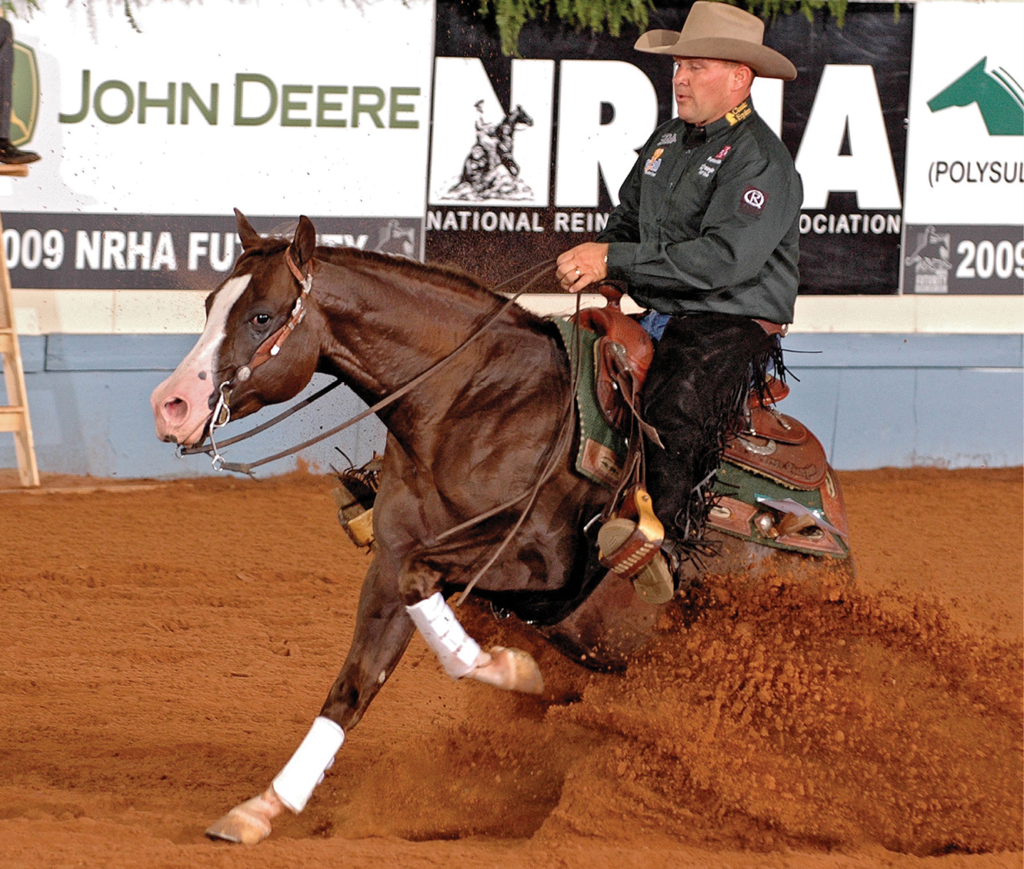
But that influence didn’t start in the breeding shed. Long before his offspring began rewriting the record books, Gunnatrashya proved himself in the show pen, winning the 2009 NRHA Open Futurity and the All American Quarter Horse Congress Open Futurity before returning to claim the 2010 NRHA Open Derby.
For Flarida, what set him apart was clear from the beginning.
“He always knew where his feet were,” Flarida said. “From the time I had him as a 2-year-old to the last time I showed him, he was like a cat on his feet. But he also had slow thoughts and didn’t get ahead of himself.”
That combination of quick footedness paired with a quiet, trainable mind has become one of the defining traits of his offspring.
“He never mistimed anything,” Flarida added. “He always knew where his body was. You could run him down to a stop or ask him to turn, and he’d fix himself before you ever had to.”
It’s the kind of natural ability that can’t be taught.
That same quick-footedness and body control make his horses not only standout open-level competitors, but also exceptionally rideable mounts for non-pro riders—horses that are forgiving, consistent and easy to guide.
And it shows. From The Run For A Million champions Gunnabebigtime and Gunna Stop to multiple NRHA Futurity winners like Ten Thirty and Super Marioo, his offspring continue to dominate at every level of the sport.
But while horses like Gunnatrashya pushed the limits of what was physically possible, others from the same era helped refine how that power was presented.
Few did that better than Spooks Gotta Whiz.
A 2010 NRHA Open Futurity Champion, 2012 NRBC Open Derby Champion and 2012 NRHA Derby Champion, Spooks Gotta Whiz didn’t just win, he did it with a style that stood out.
“He could lope,” Flarida said simply. “He was such a good mover.”
Where some horses were defined by sheer power, “Baby” brought cadence, balance and a level of movement that made every maneuver look smoother, easier and more refined.
Just as important was his mind.
“That horse was so kind to be around and train,” Flarida said. “You could ask him to do anything, and he’d say, ‘Yep, I got it.’ He never gave you any trouble.”
At the 2014 FEI World Equestrian Games in Normandy, France, Flarida and Spooks Gotta Whiz helped secure team gold for the United States before delivering a standout performance in the individual finals, scoring a 233.5—the highest score in WEG reining history at the time—to claim individual gold.
A decade later, that same mindset was still there.
When Flarida brought Baby back to compete at The Run For A Million at the age of 17, he was still showing the same try, the same presence and the same willingness that defined him as a young horse.
“He brought goosebumps to me,” Flarida said. “Just his try and his want to do it—it just makes your heart swell up.”
When a Reining Cross Clicks
The biggest change in today’s reining pen isn’t just how good the horses are but how often you’re seeing it.
It’s no longer one standout here and there. Now, it’s full siblings making the same finals, and first-crop offspring are making immediate impacts.
One example is seen in recent history with the now-proven pairing of Magnum Chic Dream and Gunna Be Custom.
That cross continues to be one of the strongest crosses today, producing stallions like Magnums Custom Dream, who was the 2025 The Run For A Million Reserve Champion and the 2022 Level 3 Open Derby Champion; Customize My Dream, who won the 2025 NRHA Derby and was fourth at The Run For A Million (competing against his full sibling) and Reserve Champion at the 2022 NRHA Futurity; and Custom Dreams who was reserve at the 2024 NRBC Derby.
“It’s surreal,” breeder and reining trainer Devin Warren said. “You hope for one or two good ones out of a mare. But to have that many full siblings compete at these major events—all legit horses, all thriving at that level? It’s pretty incredible.”
For riders like Casey Deary, who has shown Customize My Dream and Custom Dreams, the appeal comes from a rare combination of athletic ability and rideability.
“They’re explosive and dynamic,” Casey Deary said, “but also incredibly patient when you need them to be.”
According to Deary, many of those horses share a natural “draw”—the ability to come back underneath themselves the moment a rider stops pushing—along with the kind of lift and balance that allows them to get into positions that were rare just a few generations ago.
The Modern Athlete
That evolution is also changing what these horses are capable of physically.
“These horses have gotten so athletic that they do things that make my body hurt,” Deary joked. “They’re so physical—it’s hard to sit on sometimes.”
But just as quickly as a horse’s physical ability has advanced, so has the mindset.
“The coolest thing about what we’re doing now,” Deary said, “is we’re breeding horses that are incredible athletes, but are also extremely quiet and trainable. They just come out ready to be show horses.”
What once had to be trained, shaped and developed over time is now showing up from the very beginning. Modern reining horses aren’t just more athletic—they’re more consistent, with the kind of mindset that allows them to compete at the highest levels, winning hundreds of thousands of dollars in one night.
Every bit of that excellence can be traced back to the horses that came before. From the durability of those early ranch horses to the consistency of horses like Topsail Whiz to the presence of Gunner and the influence of a mare like Wimpys Little Chic, each generation didn’t replace the last. It refined it.