

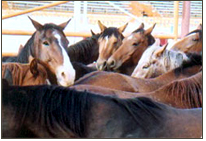
Since the passage of Proposition 6 in California 1998, the sale and transport of horses for slaughter have been banned in that state. Now, slaughter opponents are zeroing in on the last two equine slaughterhouses in the United States, hoping a little-used state law will close down the foreign-owned Texas plants for good.
On the other side of the issue, slaughter proponents–which include many who make their living in the horse industry–view banning slaughter outright as folly that will lead to tragic, unintended consequences.
Whether or not you believe the slaughter of horses should be banned, there are a few things you can do to support the humane treatment of horses.
- Make your feelings on the issue of slaughter known. In general, regardless of your attitudes toward slaughter, you can help monitor its execution and support change for the better.
- If you want to protect your own horses from slaughter, “see them through to the end of their lives,” recommends the Equine Protection Network’s Christine Berry. “If you think giving an old horse away is the right answer, think again,” she adds. “Many free-to-good-home equines end up on someone’s dinner plate.”
- Do everything you reasonably can to see that your horse isn’t an easy target for thieves, who often sell stolen animals to slaughter plants. Branding is one deterrent. Installing lights, repairing rickety fences, and investing in security alarms can also help.
- In the event your horse is stolen, a supply of high quality photographs taken from various angles, and a full written description of his physical characteristics can help in recovering him. Ask your veterinarian about the option of implanting a microchip for identification, as well.(For an in-depth report on the issue of horse slaughter, see “The Slaughter Question,” Horse & Rider, December 2002.) For more information, click on equineprotectionnetwork.com.