

Evaluate and place these ranch sorting geldings. Then see how your choices compare to our expert judge’s.
These are three performance type halter geldings to be judged for their suitability for ranch sorting. Judging conformation should be based on which horse has the highest combination of the following traits: balance, structural correctness, high quality muscling, and appropriate breed and sex characteristics compared to the other individuals in the class.
I always begin judging by assessing overall balance, then structural correctness to back up that balance. I’m looking for the horse that will provide the smoothest ride and stay sound the longest through a working career.
To stay organized and find the best horses, I put my classes in groupings, with the horses that are free of major faults in my top group, and any horses with major faults going into the bottom group. Depending on the size of the class, there may be groups in between the top group and the bottom group. I find the best in each group, and that helps me place them in an orderly manner, but in large classes, the horses earning ribbons may all be from the top group.
How to Take a Good Conformation Clinic Photo
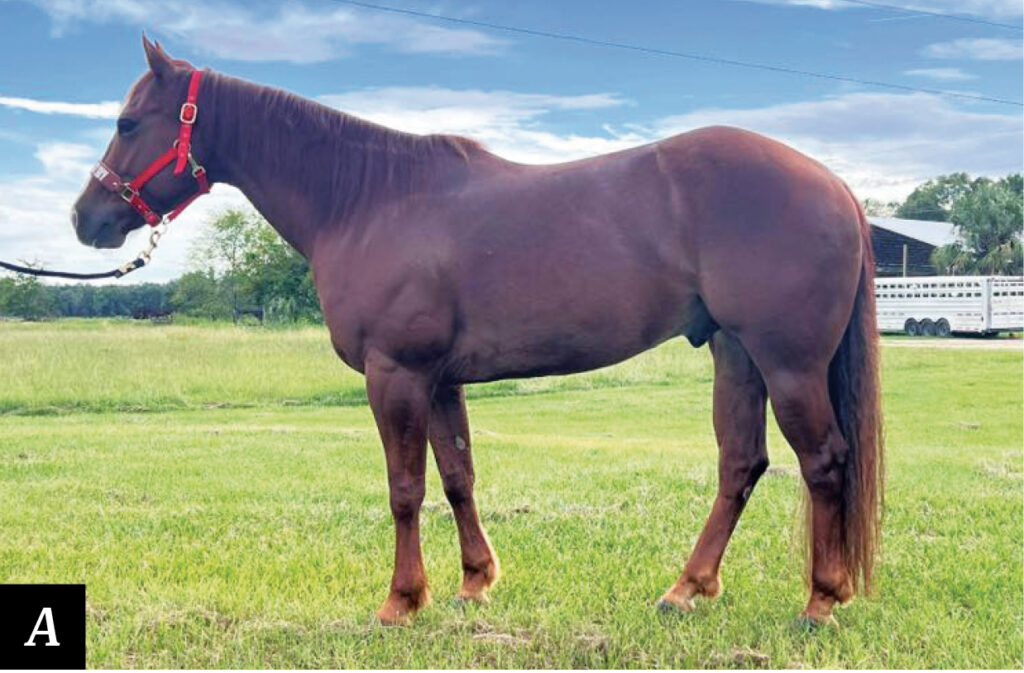
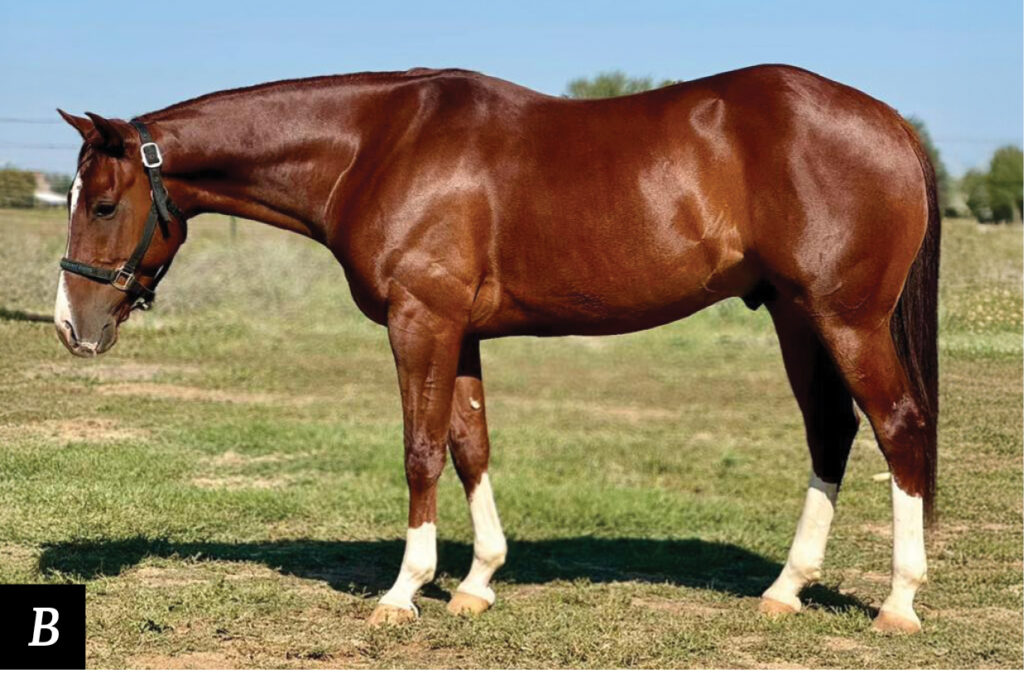
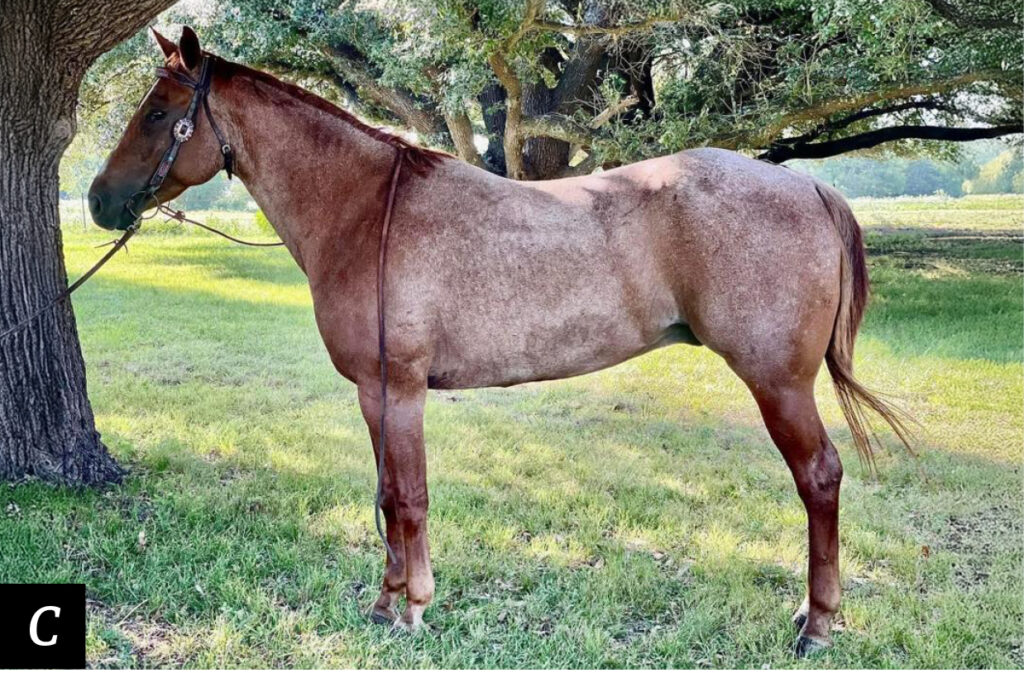
The Placings
🥇 Gelding A
This gelding is the most balanced of this class, always the first thing I look for. When divided into three sections front to back, his shoulder area, midsection, and hindquarters are equal in length and substance. His topline features well-defined withers and a strong back, and though a bit steep, his croup has length and substance.
His adequately refined head connects through a trim throatlatch to his shapely neck, which ties in tidily to his chest for good flexibility. His shoulder shows adequate slope and good muscling and his depth of heartgirth is excellent, equal in length to his front legs. The ample muscling and substance in his hind end match his front end.
His front legs form a straight column through his knees and his front pasterns are suitably long and sloped for a smooth ride. Focusing on his near hind leg, his angles are excellent with a plumb line falling from his tailhead through the back of his hock to his ergot. His hocks sit a bit higher than his knees, but that shouldn’t keep him from being a very nice ranch sorting horse.
Put your Conformation Clinic skills to the test!
🥈 Gelding B
This gelding is a totally different style from Gelding A, with a much lighter, leaner build more typical of an all-around horse. He’s not as balanced as Gelding A, with a longer middle section when divided into thirds from front to back. Across his topline, he has good withers, but he’s longer in his back and shorter in his croup.
His head is a bit long from eye to muzzle, but it’s proportionate for his size and shows great expression. His throatlatch is correct and his neck is well shaped, adequately long, and ties in nicely to his chest. Compared to Gelding A, he’s a bit steeper in his shoulder and though his depth of heartgirth and muscling aren’t as substantial, they’re suitable to his type.
His front legs are straight through the knees with pasterns that are well angled but slightly long. He doesn’t tie down as well in his hip as Gelding A, though his hocks are nicely angled with a plumb line through the hind cannon bone. He’s likely to make a very nice all-around gelding.
🥉 Gelding C
This gelding shows the least overall balance in this class. If divided into thirds, his front third is adequate, his middle third is very long, and his hind third is very short. Across his topline, this horse’s withers are well defined, but his back is quite long and his croup is short.
He’s a little long from eye to muzzle, but has a pleasant expression. His throatlatch is a bit thick, and his neck is a touch short. His shoulder shows adequate slope and muscling, but he lacks depth to his heartgirth, which emphasizes his long midsection, and muscling in his hind end, which is especially noticeable through his stifle and gaskin.
His front legs are set under him, almost giving the appearance of being back at the knee. His front pasterns are a bit more upright than ideal for a smooth gait. He’s presented here with his hind legs seemingly in a stretched-out position, with his hocks out behind him. His hind end lacks the substance and power of top performance horses, but he may well accomplish the work expected of him.
Sandy JIrkovsky is the director of judges and Professional Horsemen at the American Paint Horse Association. She has been a judge since 1987 and has judged major shows throughout the United States, Australia, and Europe. She and her husband, Jim, own and operate J Bar S Training in Whitesboro, Texas, and specialize in ranch horses. Sandy is carded with the AQHA, APHA, ApHC, NRHA, NRCHA, and NSBA.
To submit a photo of your horse to be evaluated in Conformation Clinic, send us a left-side profile photo of your horse (high-resolution, 300 dpi, in at least 3″ x 5″) to HorseandRider@equinenetwork.com with your contact info and your horse’s breed, age, gender, and height. We welcome all breeds!