

For Clint Price, ranch sorting has always been about more than what happens inside the pens—it’s about the people, the horses, and putting on a good show. Today, Price is a familiar and trusted voice at Cinch RSNC events, serving as an announcer whose role extends far beyond calling cattle numbers.
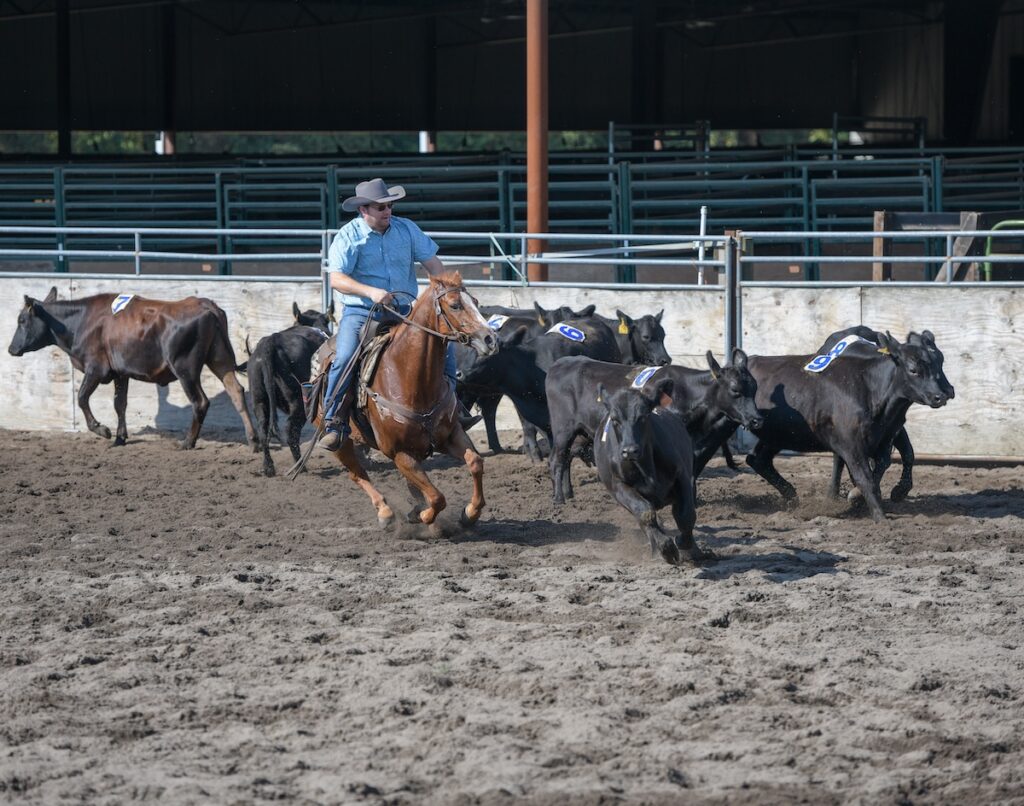
“I’ve had horses my entire life,” said Price, who hails from Bessemer City, North Carolina. “Dad had horses; we trail rode when I was little. In 1990, we started team penning; I was 9 years old.”
What began as time spent riding alongside his father quickly turned into a full family commitment. After attending their first team penning, the Prices didn’t just participate, they built something of their own.
“After we went to our first team penning, dad built an arena in the backyard, and we proceeded to have team pennings every weekend for many years,” he explained.
Those weekends shaped Price’s understanding of the sport and the community around it.
“I’d say every great memory has been at the show,” Price joked, reminiscing about his childhood. “When other people were going to high school football games, I—as a 12-year-old—was with my 40-year-old friends, and we were going team penning. That’s what we did every weekend, and I guess that’s what we still do.
From Producer to Announcer
As the years went on, Price and his family became known as producers throughout the Southeast, hosting rodeos, team penning and ranch sorting events. In the early 2010s, he continued that legacy alongside his wife, Heather. Together, they work with David King to put on events at the 5K Arena in Bladenboro, North Carolina, and help manage SA Productions with Mike Dillon.
Through producing hundreds of events, Price developed a behind-the-scenes understanding of what it takes to run a smooth, efficient show. That knowledge would become essential when he stepped behind the microphone, though he didn’t initially set out to become an announcer. But when a need arose at their own events, Heather encouraged her husband to give announcing a try.
Despite never attending announcer school and already having full-time work outside of the equine industry, Price jumped in. He set up speakers, started managing sound and learned on the fly.
The Voice Directing the Pens
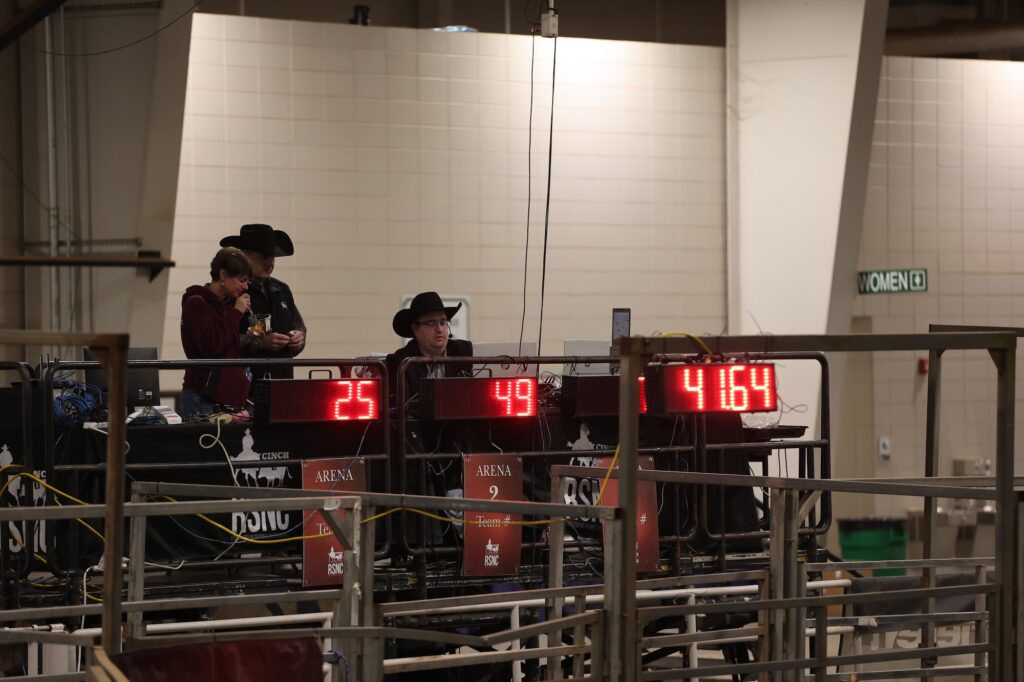
At many Cinch RSNC events, announcers manage two to four pens simultaneously, sometimes with different classes running at the same time. For Price, the job is far more complex than calling results. He controls the pace of the show, coordinates with judges and office staff, manages music and ensures teams are in the right place at the right time.
“You’re trying to run music to keep everything going,” he said. “You’ve got three pens, and sometimes you’ve got two classes going on at the same time. But it’s necessary because, if not, then we’d be here too long, so we want to get it done fast. You want everything to be accurate. You don’t want the computers to crash.”
It’s a demanding role that requires constant focus, adaptability and communication.
“I enjoy a good show,” Price added. “I enjoy it to be fast, quick, efficient and hopefully I don’t suck.”
Today, his skill behind the mic has him working Cinch RSNC events nearly every weekend, helping ensure competitors and spectators alike experience a well run, welcoming atmosphere.
Watching the Sport Grow
Price has witnessed ranch sorting evolve from a supplemental class into one of the fastest-growing family sports in the country. He’s seen that growth from nearly every angle—as a competitor, producer, judge and announcer.
“When I first started announcing ranch sortings, I announced and judged from the judge’s stand in two pens,” he explained. “So, you set it all up on the announcer stand or the judge’s stand left and right and you’re doing all the announcing and everything up there. But then it grew and all the shows became bigger.”
Now stationed strictly in the announcer’s stand, Price manages multiple pens while helping maintain the efficiency and family-friendly environment that has defined Cinch RSNC from the beginning.
For him, the most meaningful part of the job hasn’t changed, even as the sport has grown.
“The best part about going to these shows, whether you’re riding or whether you’re working, is the fellowship,” he said. “If it wasn’t for people hanging out and having a good time, I don’t think people can spend their life savings doing this. It’s something that you enjoy because of the people that are here.”
This article appears in the Winter 2026 issue of The Ranch Sorter.
This will open a pdf.
— H&R —