



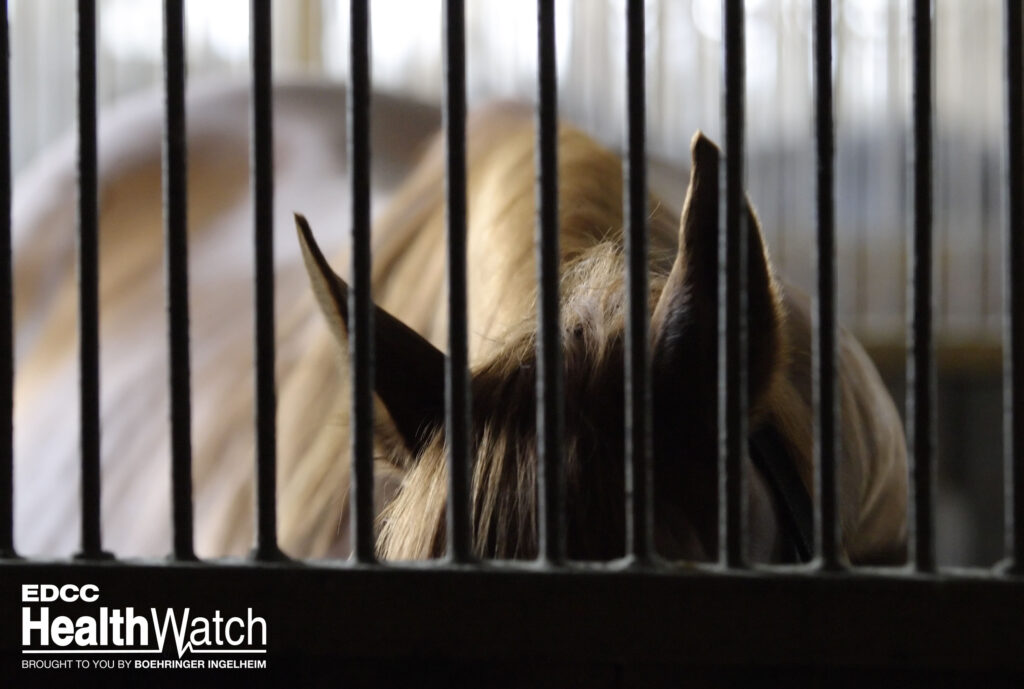
Two horses at an equine clinic in Madison County, Alabama, recently tested positive for equine influenza. Six additional cases are suspected, and 30 horses are exposed. The affected horses are under quarantine.
EDCC Health Watch is an Equine Network marketing program that utilizes information from the Equine Disease Communication Center (EDCC) to create and disseminate verified equine disease reports. The EDCC is an independent nonprofit organization that is supported by industry donations in order to provide open access to infectious disease information.
About Equine Influenza
Equine influenza is a highly contagious respiratory disease that infects horses, ponies, and other equids, such as donkeys, mules, and zebras. The virus that causes it is spread via saliva and respiratory secretions from infected horses. Horses are commonly exposed via horse-to-horse contact; aerosol transmission from coughing and sneezing; and contact with humans’ contaminated hands, shoes, or clothes or contaminated tack, buckets, or other equipment.
Clinical signs of equine influenza infection can include a high fever (up to 106°F); a dry, hacking cough; depression; weakness; anorexia; serous (watery) nasal discharge; and slightly enlarged lymph nodes. Consider monitoring your horse’s health at shows by taking his temperature daily, which can help you pick up on signs of infection early and take appropriate measures to reduce disease spread.
Vaccination is an important and inexpensive way to protect your horse. US Equestrian requires proof that horses have had an equine influenza vaccination within the six months prior to attending organization-sanctioned competitions or events. Your veterinarian can help you determine what other vaccines your horse might benefit from.
In addition to vaccinating, following strict biosecurity protocols can help reduce your horse’s chance of infection and disease. Such measures include quarantining new equine arrivals at barns, disinfecting buckets and equipment, and preventing nose-to-nose contact between horses.
Click here to read common questions and answers about equine influenza.
