

The equine community in Southern Oklahoma and North Texas were gravely affected by winter storm “Fern” Jan. 24–26, 2026, with accumulating sleet, ice, and snow bringing down at least 39 barn and covered arena structures.
With more than 72 hours of below-freezing temperatures and precipitation, metal buildings failed to take the strain. NRHA Professional and $5 million rider Jason Vanlandingham lost his covered arena and five portable stalls Saturday, Jan. 24 when the structure collapsed.
“We heard it fall down, but we had no idea what it was, until we stuck our heads out the door,” Vanlandingham said. “It was sickening, but more because we knew there were horses trapped and our barn apartment was under that roof as well.”
The barn apartment guest was unharmed, and Vanlandingham was able to contact the Whitesboro and Collinsville Fire Departments as well as neighbors including Lorenzo Lotti’s team. They pulled the 2-year-old horses out of the portable Priefert stalls, disassembling them as they went.
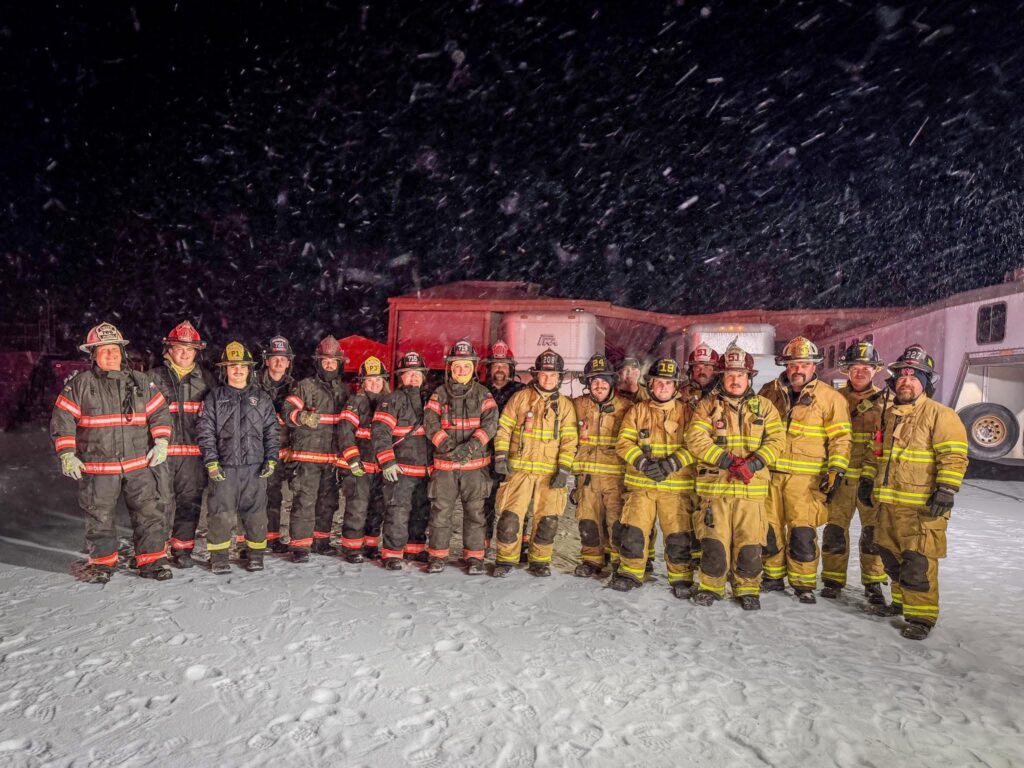
The team effort saw the horses emerge from the wreckage unharmed aside from a few cuts and scrapes. Vanlandingham noted the young horses were calm despite the flying sparks and chaos that surrounded them.
It was a scene that repeated across the primarily-reining community in area, with structures including North Central Texas College’s covered arena and the EE Ranches’ dry mare barn falling victim to the ice.
Vanlandingham reported his arena had “every bit of 2 inches of ice” on the roof, which comes to 9.5 pounds of ice per square foot. Multiply that by a 125-by-300-foot metal structure, and the ice outweigh the buildings’ capacity.
“I calculated what the minimum amount of weight would’ve been on there, and it was a ridiculous number—around 357,000 pounds, just from the ice,” Vanlandingham said. “That’s not counting any snow. That’s a lot of semi-loads of alfalfa sitting on top of a barn.”
Moving forward
Media professional Chelsea Schneider has been posting updates and resources on Facebook as the snow settles and people prepare to rebuild.
As for Vanlandingham, he’s counting his blessings. The timing of the collapse meant nobody was riding in the arena, and neighbor Lisa Petzka has offered her empty facility for them to use until the insurance allows him to rebuild.
“Everything is working as good as it could possibly work considering the circumstances,” Vanlandingham said. “I see God’s hand wrapped around it and we’re all going to be fine.”