



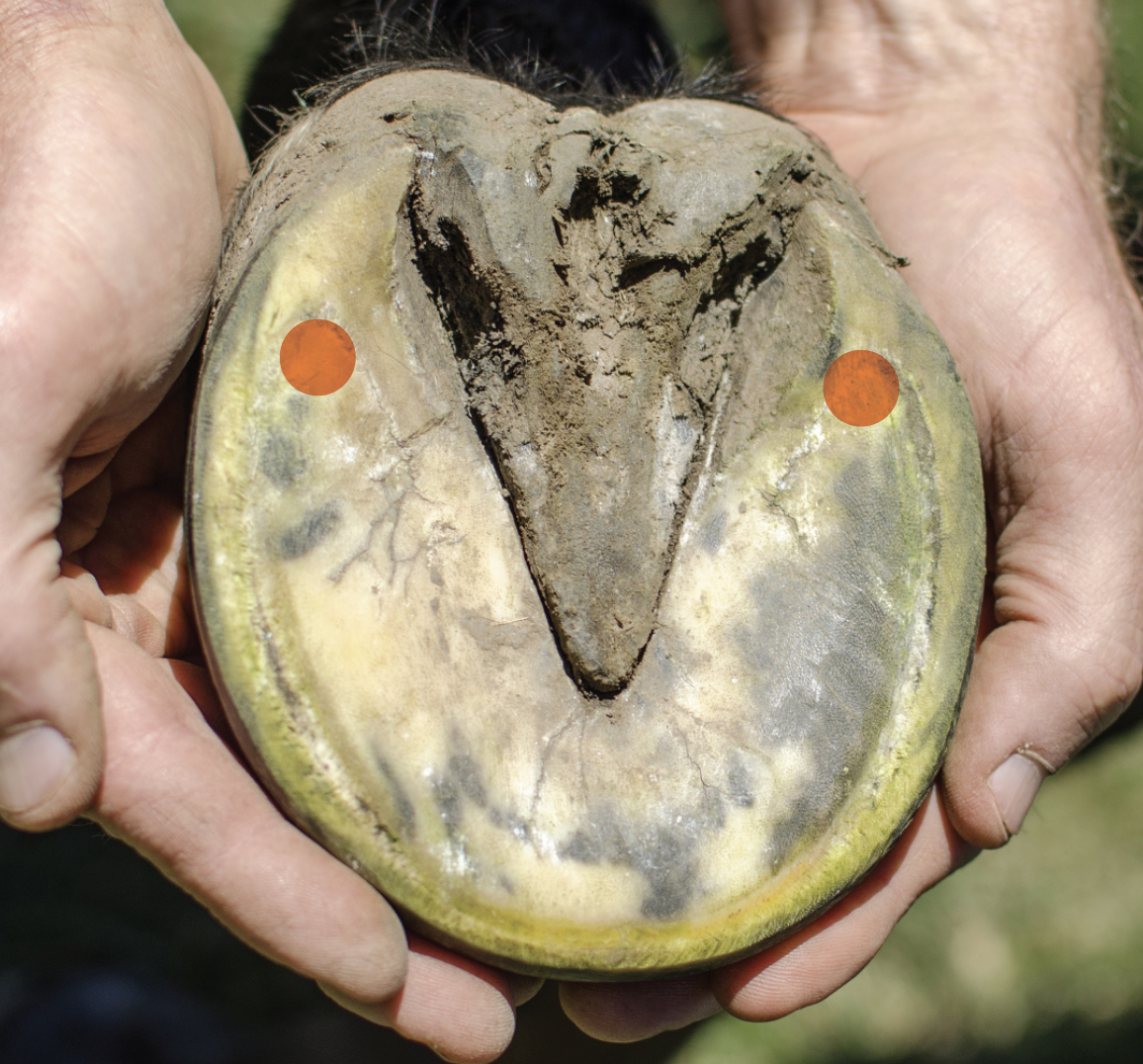
Courtesy of EasyCare, Inc.
Corns Need Timely Care
Corns are bruises occurring at the angle between the hoof wall and the bars (see photo). They’re commonly caused by shoes that are too short and tight at the heels, or that have been left on too long (the shoe slips forward and the heel branches traumatize the area). Stones and hard surfaces can also be factors. Corns may be dry (mild bruising), moist (clear, watery discharge), or suppurative (infected or abscessed). Treatments include removing shoes, expert paring with a hoof knife to relieve pressure, and draining/poulticing as needed. Competent hoof care at frequent, regular intervals is the best preventive measure.
[READ MORE: Horse Hoof Care Mistakes]
Diagnosing Corns
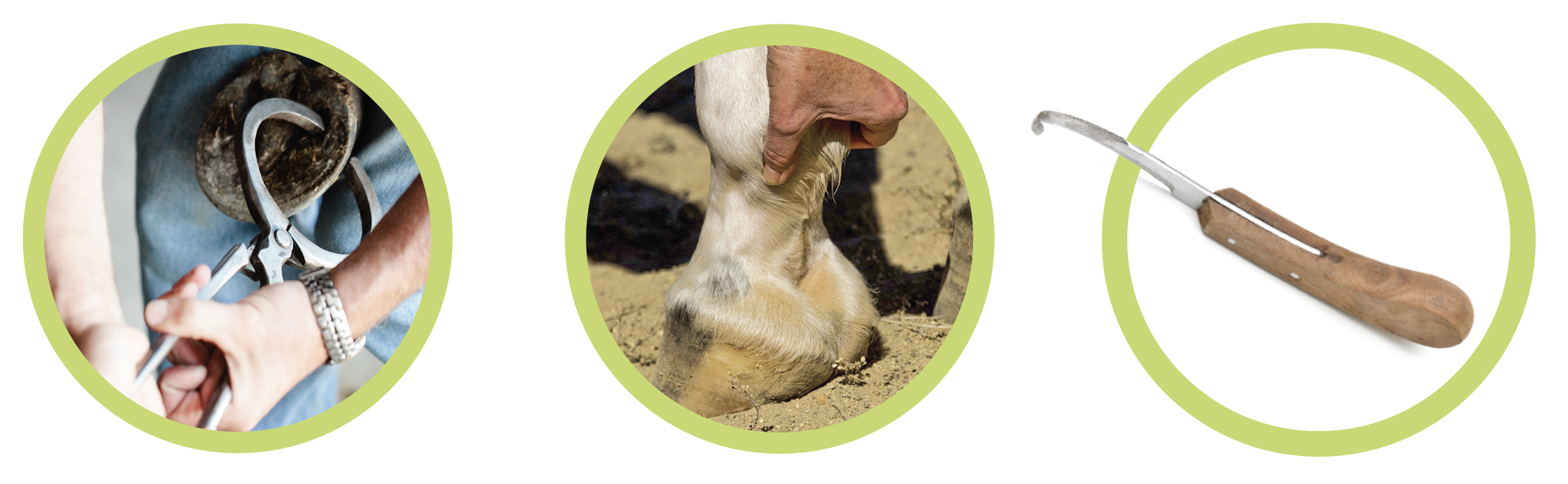
hoof testing
Hoof testers will identify pain over the “seat of corn” area.
digital pulse
A strengthened digital pulse may also be detectable.
hoof knife
Initial paring with a hoof knife may reveal a reddish bruise.
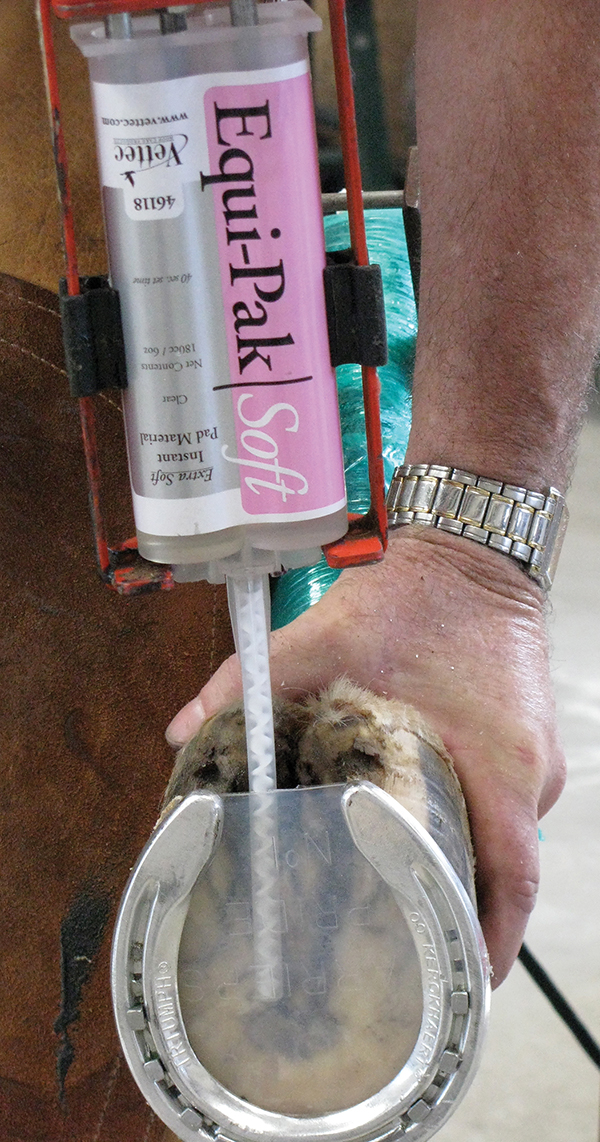
Extra Protection
Establishing shorter shoeing cycles will help in preventing or healing corns. Also potentially useful (ask your veterinarian and/or farrier for advice):
- Shoes with a fuller fit to provide more support in the heel area.
- Soft, pour-in pad materials (as above) to provide additional cushioning during the healing process.
[READ MORE: Horse Hoof-Care Help]