



You’re not a true horse person if many of your conversations and thoughts don’t revolve around your horse’s poop. Your horse’s manure gives you a daily window into his gut health and can be a major indicator of a health concern. It’s something you should pay attention to daily, or ensure that whoever cleans your stalls and pens notices and reports any changes from normal.
Don’t just scoop and toss. Your horse’s manure is a direct window into his gut health—take a quick look each day so you know what’s normal and can recognize when a change deserves a call to your veterinarian.
Time to Call Your Vet?
Healthy Digestion Indicators
Consider these five visual indicators of healthy digestion, or use them to tell you there’s something to discuss with your vet.
Contents and texture. Watch for strands of hay, which can show improper chewing and dental concerns. Sand exposes the accumulation of dirt, leading to sand colic.
Consistency and moisture. Dry and/or harder manure than usual can indicate dehydration, slow digestion, or even a developing impaction colic. Watery manure can be common when horses are on spring pasture, but ongoing diarrhea should trigger a call to your vet.
Color. Normal manure is green to brown, depending on your horse’s forage. Very dark poop can signal potential bleeding or ulcers, bright red can indicate bleeding in the hindgut, yellow might mean there’s a problem with your horse’s liver or too much bile production.
Smell. As a horse owner, you probably don’t find the smell of manure offensive, but if there’s suddenly a change, take note of it and look for other indications of an issue.
Worms. You can’t see parasite eggs with the naked eye, but visible worms mean your horse has a parasitic infection. It’s not unusual to see worms in manure shortly after deworming your horse.
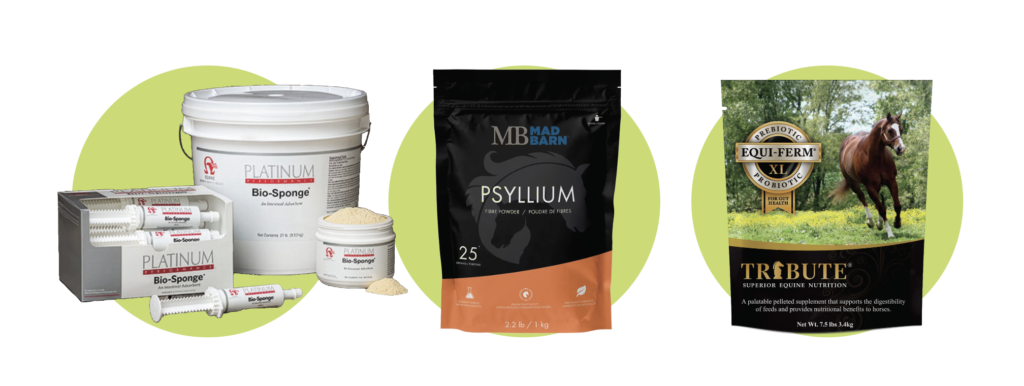
Digestive Support Products
With your vet’s consultation, there are many products on the market that can support your horse’s digestive health to keep his manure normal, healthy, and regular.
Platinum Performance Bio-Sponge
Supportive for intermittent cases of diarrhea in foals and grown horses, as well as to support digestion after an operation.
Mad Barn Psyllium Fiber
Natural psyllium fiber can help reduce accumulation of sand for horses that live in or graze on sandy areas or eat off the ground.
Tribute Equi-Ferm XL
Pre- and probiotic supplement that increases positive bacteria in the hindgut, increasing digestibility of the entire diet, even during times of stress.