



Evaluate and place these performance geldings, then see how your choices compare to our expert judge’s.
The first thing I look for in performance horses is good balance, which includes correct proportions and well-angled shoulders and hips. I also look for correct structure — the proper straightness and angles of the front and hind legs. Balance and structure are closely tied and can greatly affect one another. I also look for breed and sex characteristics, though I’ll sometimes excuse minor flaws within a class of geldings. Finally, I look for quality of muscling to provide the power to perform athletically.
Overall balance and correct structure are the foundation for athleticism and help a horse stay sound. General attractiveness helps, too, as some horses have a natural presence that stands out. I like to see good-bodied horses with enough substance and bone to hold up to work. I also like to see soft eyes and well-set ears, even in geldings, as their heads are an indication of their overall quality and trainability.
1st Place: Gelding B
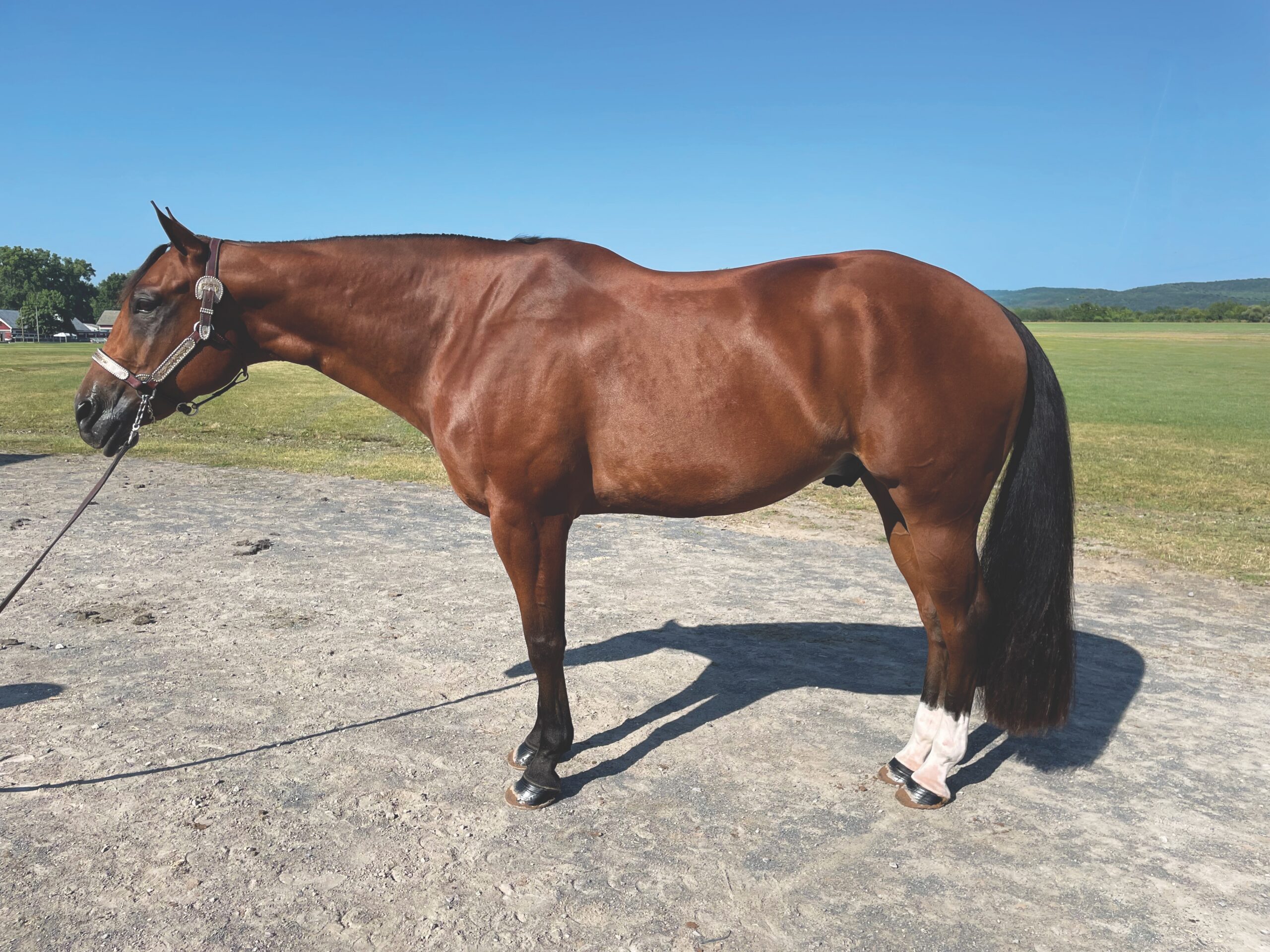
This gelding has the best overall balance and the most correct legs. If divided into thirds from front to hind end, he is very proportionate. His level topline is excellent, with a short back, prominent but not excessive withers, and strength over his loin. His croup has good length and slope.
His head is attractive with a big, soft eye and well-set ears, but perhaps a little coarse through the bridge of his nose. His throatlatch cleanly joins his neck, which is nicely proportionate in length and ties in adequately to his shoulder. His shoulder could have a touch more slope, but it matches his hip angle well. His depth of body is best in this class, and his muscle volume and definition are suitable for him.
His clean front legs are very correct and show good substance of bone. His nicely sloped pasterns match his hoof angle and his shoulder angle well. His hocks show a good angle and are fairly level with his knees, which goes hand in hand with his level topline. His balance and correctness should help him perform athletically.
2nd Place: Gelding A
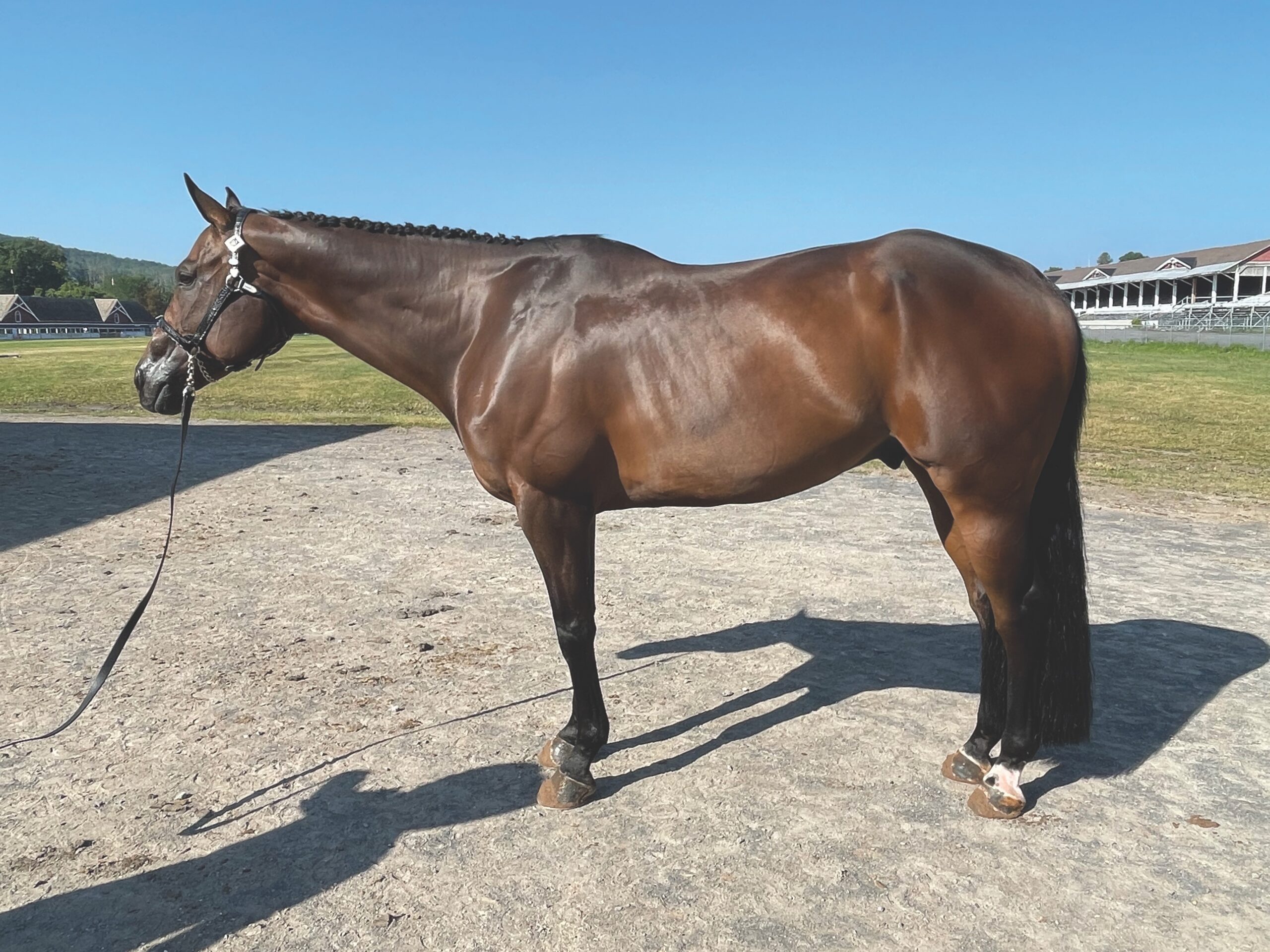
This gelding shows a little less overall balance, with a longer back and shorter croup than Gelding B. His topline is also not as level, with his hip slightly higher than his withers. He’s not as strong over his loin, without the smooth turn over to his croup that Gelding B has.
His head is appealing, with a kind eye, well-set ears, and a little more refinement than Gelding B. His clean throatlatch connects to the best neck in the class — it’s attractively shaped and ties in nicely to his shoulder. However, his shoulder is a bit upright, and he lacks the depth of heartgirth and length of hip of Gelding B. His muscling is suitable for him.
He looks a touch back in the knees, but it could be an illusion caused by the fact that his front pasterns have better slope than his shoulder. I’d like to see his shoulder match his front pastern angle for better reach and a smoother stride. His hocks have a nice angle but sit a bit higher than his knees, which corresponds to his hip-high topline.
3rd Place: Gelding C
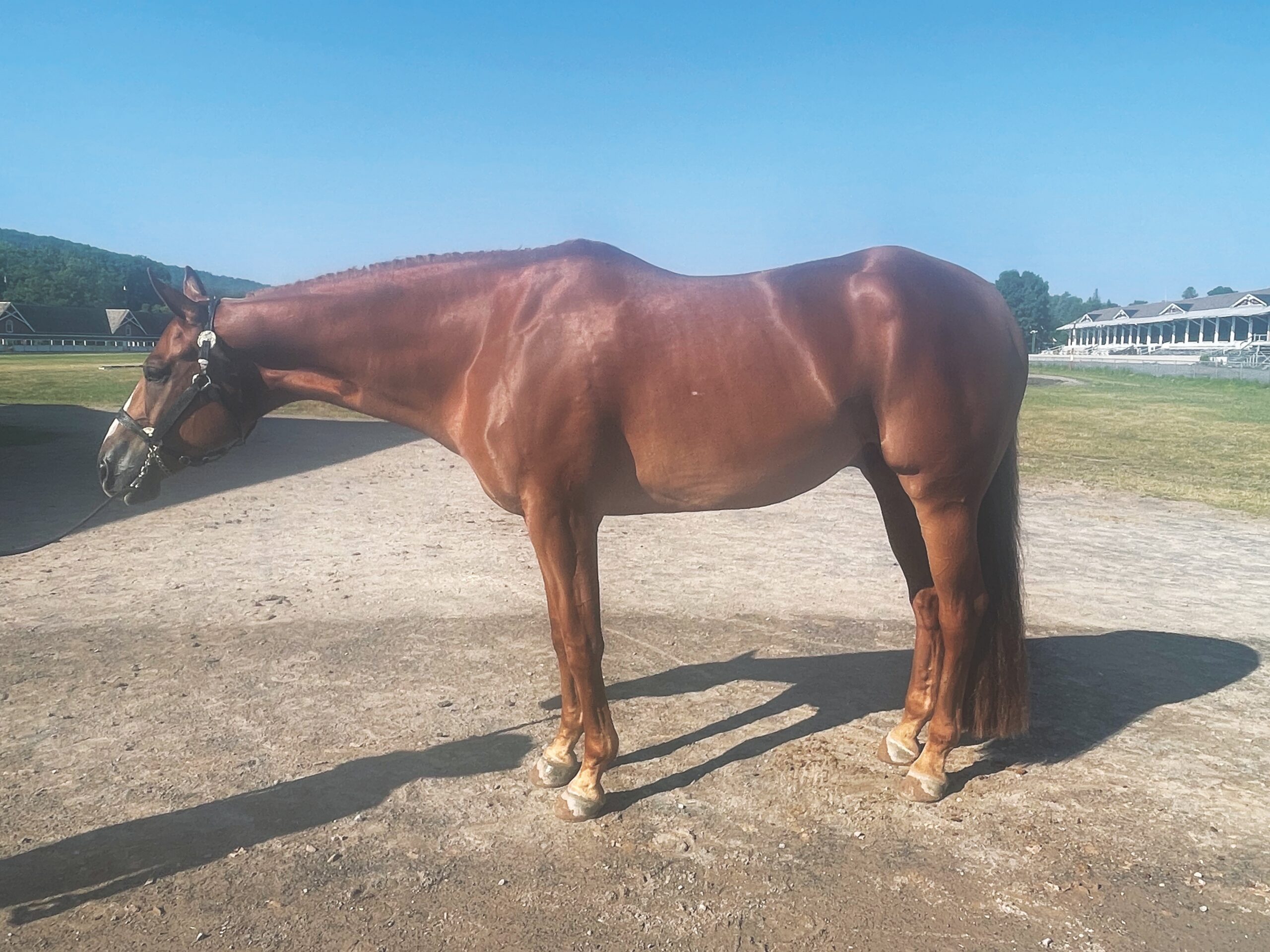
This gelding’s shoulder is closer to the camera than his hip, which emphasizes a lack of overall balance. He is long in his middle third, and his topline features high, forward-set withers and a lack of strength over his loin. His croup appears shorter than Gelding A’s, making it the shortest in this class.
His pretty head shows refinement and a calm alertness. His throatlatch is lovely but connects to a neck that expands to a very wide base and ties in extremely low. His shoulder is quite steep, corresponding to those tall, forward withers, and that steep shoulder with his low-tying neck gives the impression he’ll be heavy on the forehand under saddle. His depth of body is better than Gelding A’s, but he lacks length in his hip, which relates to his short croup. His muscling is adequate.
He appears just slightly over at the knee, a minor fault. Similar to Gelding A, his front pastern angle is better than his shoulder angle. He’s standing slightly under himself with his hind legs, but his hocks appear to be nicely angled.
About the Judge
Margo Ball, with her brother Wayne, owns and operates Ball’s Quarter Horses, a breeding, training, and showing business in Fort Collins, Colorado. A carded judge for 42 years, Margo currently holds AQHA, APHA, ApHC, PHBA, ABRA, NSBA, WCHA, NRCHA, and NVRHA cards. She’s judged more than 900 shows, including all major futurities, AQHA Regional Championships, the All American Quarter Horse Congress, and 25 World Championship Shows across multiple associations. She’s an AQHA Director at Large and currently serves on the AQHA Judges Committee.
Submit Your Horse
To submit a photo of your horse to be evaluated in Conformation Clinic, send a left-side profile photo (high-resolution, 300 dpi, at least 3″ x 5″) to HorseandRider@equinenetwork.com with your contact info and your horse’s breed, age, gender, and height. All breeds welcome.