



By Clint Fullerton
Evaluate and place these 6-year-old performance mares. Then see how your choices compare to our expert judge’s.
Following the stock breed associations’ rulebooks, I look for the four basics of balance, structure, breed and sex characteristics, and muscling when judging conformation. In performance horses, I am looking for a horse with positive characteristics in all of those categories that will be able to perform athletically and hold up after years of use.
For this class of 6-year-old mares, I’m able to quickly determine my winner, based foremost on that all-important first category of balance, as well as the second category of structure. However, second and third placings aren’t as straightforward, as I would have placed one of these mares second if not for a flaw that puts her in third place. All three have some positive attributes, but our winner has more positives than the others and stands out as most likely to perform the best and stay sound over time with good care.
The Placings
First Place: Mare C
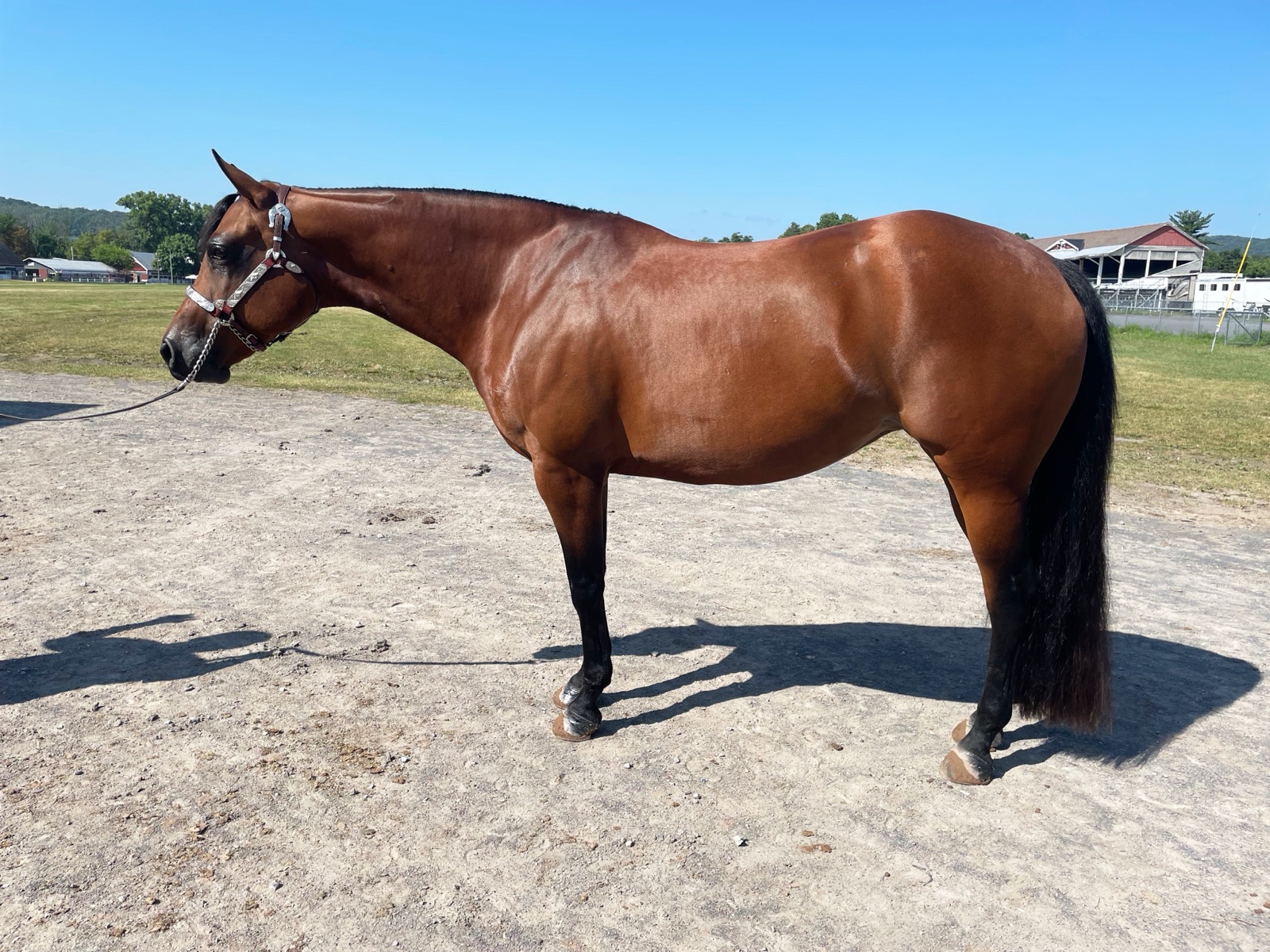
This mare is very pleasing to the eye, balanced overall with good structure and femininity. Though her back could be a touch shorter and stronger over her loin, the length of her neck helps keep her in balance, and her topline is smooth and level. Her croup is of good length and slope.
Her head could be more refined with a shorter ear, but appears feminine and shows good expression. Her throatlatch is trim enough and smoothly joins her neck. Her neck is a nice length, and ties in nicely. She won’t be high-headed when ridden. Her shoulder angle is very adequate, though her withers could be a bit farther back behind her front leg. Her depth of heartgirth is nicely proportionate to her overall balance. I would like to see a bit more muscling in her hip, though her length of hip is good.
Her front legs are excellent, straight through the knees with pastern slope that matches her shoulder slope. Her hind legs are also good, with hocks level with her knees and angulated well. I would expect this mare to be a good mover.
Second Place: Mare B
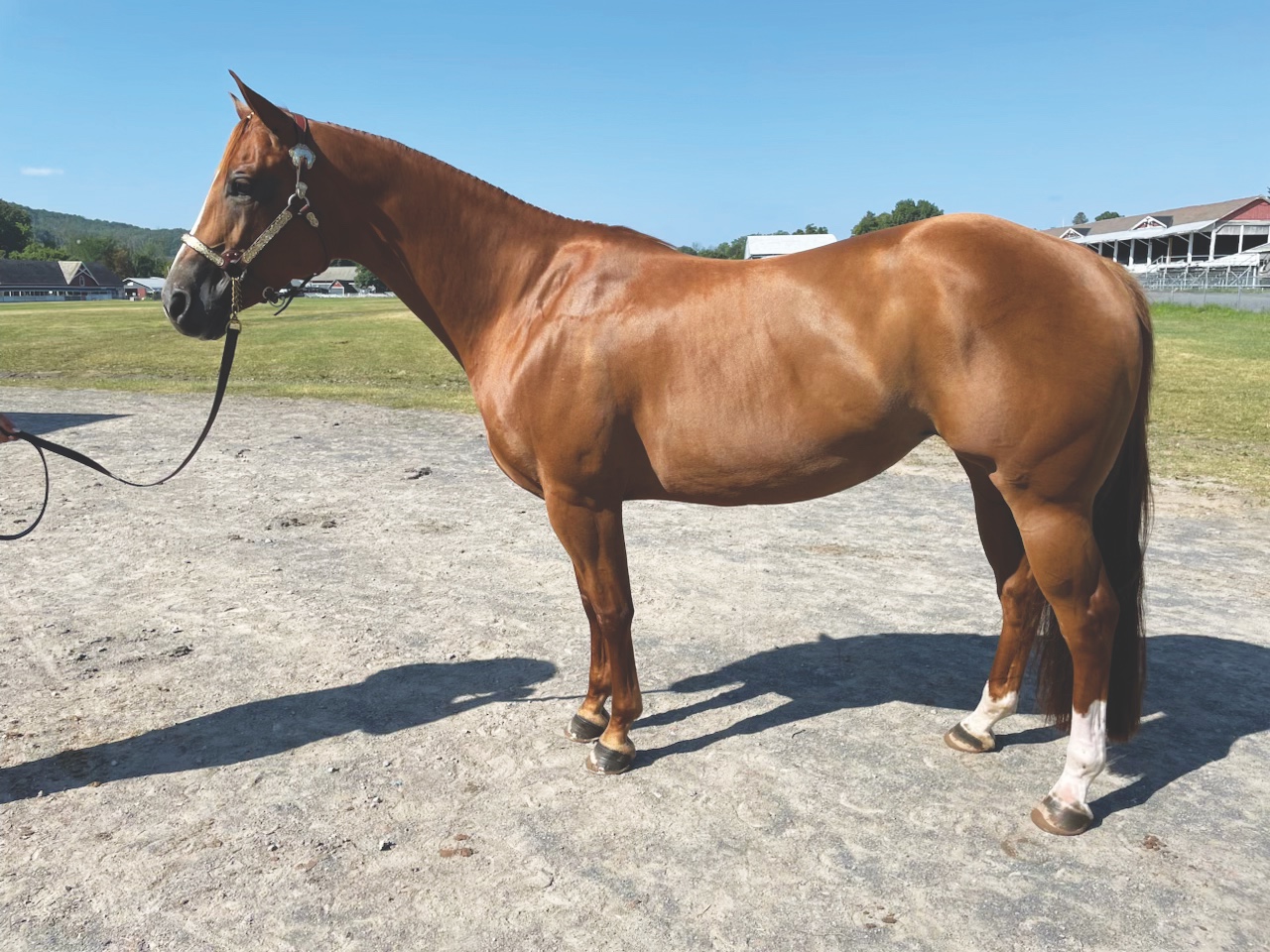
This mare has a few nice individual parts, but has a significant lack of overall balance and structural flaws that could lead to unsoundness. Her back is long and she’s built downhill, which compounds some of her other issues. Her long, flat wither will make it difficult to keep a saddle in place. Despite her topline troubles, her croup is of good length and slope.
Her head is passable, but without much femininity. She has a nice, clean throatlatch that leads to a beautiful neck that ties in nicely. Her shoulder, however, is extremely upright with her withers right above her front leg. That steep shoulder combined with her downhill build will make her short-strided and a rough ride. Her heartgirth is shallow, yet she has the strongest hip of these three mares.
She’s slightly back at the knee, and her steep shoulder and downhill build will put even more pressure on those knees. Her hocks are angled well enough, but sit higher than her knees, which correlates to her downhill build and will make it difficult for her to drive from her hind end.
Third Place: Mare A
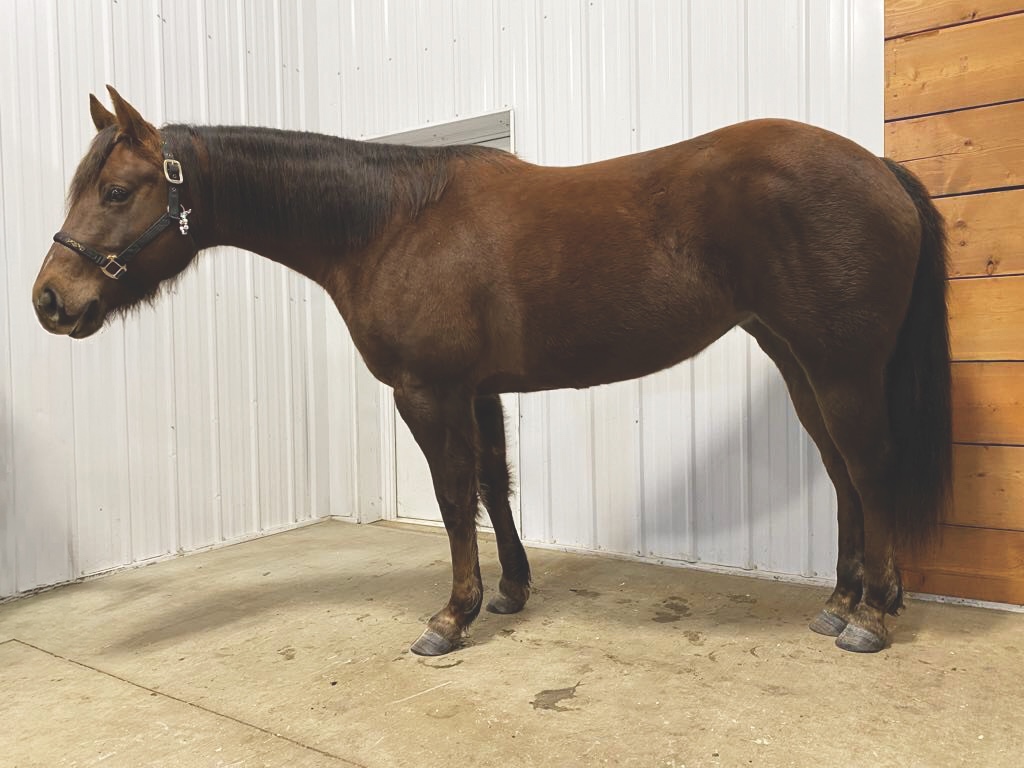
This mare would have been in second place, but her negatives outweigh her many positives. From her flank forward and her knees up, she could be the best mare in this class, but her flaws put her third. She’s fairly balanced and has the shortest back and strongest topline from withers to loin. Behind that, though, her croup is short and steep with a noticeable dip at her tail junction. Her average head has a nice expression. Her neck and shoulders are best in this class. Her shapely and proportionate neck ties in beautifully to her well-sloped shoulders with her withers behind her front legs. Her heartgirth is adequate, but her hip is the weakest in the class, lacking length and substance.
Her long, weak front pasterns position her cannon bone behind her hoof. The resulting stress could be causing the visible calcification at her coronets. I expect her to show signs of unsoundness at some point. Her hocks are excellent and also best in this class, but with the ringbone in her front legs, I must place her third.
About the Judge
Clint Fullerton resides in Bonner Springs, Kansas, and as a judge, currently holds cards with the AQHA, APHA, ApHC, NRHA, NSBA, and WCHA. Born into a family of horse trainers, he has also trained, shown, and coached more than 250 world and reserve world champions.
To submit a photo of your horse to be evaluated in Conformation Clinic, send us a left-side profile photo of your horse (for digital photos: high-resolution, 300 dpi, in at least 3″ x 5″) to HorseandRider@equinenetwork.com with your contact info and your horse’s breed, age, gender, and height. (We welcome all breeds!) Visit HorseandRider.com for additional instructions.