

Unless you live in a state with a mild winter, the season’s harshest months can mean less time in the saddle. While it might not be exactly what your kids want, it can be the perfect time to grow their knowledge about their horses, care, gear, and nutrition.
Listen to The Ride Podcast to Learn More About Shyanne Smith
Grow Their Horse Knowledge
There’s a good chance your rider is still learning all the parts of the horse. This is the perfect time to master their knowledge while still having fun. We work on learning the parts of the horse in a few ways. We can hand them a stack of cards with double-sided tape and ask them to place each card on the corresponding part. Or we can use fingerpaints and call out a part and have the child mark where it is. Be sure that the horse is safely tied and quiet enough for the youngsters, and if you use paint that you have access to warm water to wash the horse and a warm place to let them dry.
Learn the Parts of Their Gear
Understanding each part of the saddle, bridle, bit, and more can help your youngster understand the “why” behind its use. Break down the sessions to short lessons, and quiz them on the parts of their tack. Search online for simple diagrams that they can study when they’re not at the barn to amplify their learning.
Perfect the Saddling Process
Just because your child can’t go for a ride doesn’t mean they can’t work on all the steps leading up to it. Teach them to get their horse from the stall, work on their grooming practices, and then try saddling. By mastering these techniques in winter, they’ll be ready to do it all on their own come spring. For a more advanced child, give them a reasonable amount of time to complete their tasks and then cut that time as they improve. Then the entire process will be quicker when they can ride regularly.
Explain Basic Nutrition
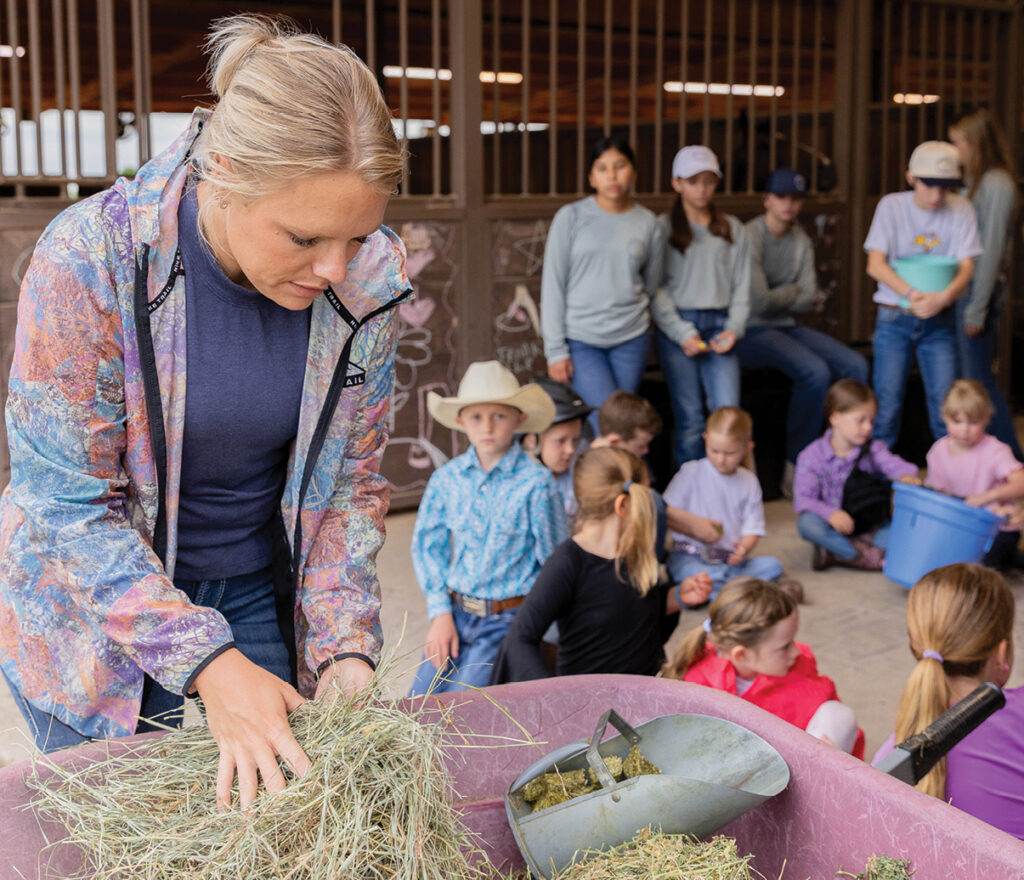
When your child helps you feed, they might do what they’re told but not understand the “why” behind it. When you feed each morning and evening, talk about why you feed the amount and kind of forage to each horse, why some horses get grain or other supplements and others don’t, and explain the basics of feeding. Then you can build on this knowledge as they mature.
Practice Handling and Showmanship
Even if your child won’t compete in showmanship, it’s easy to practice basic showmanship maneuvers, which lead to better handling practices, in the barn aisle. Discuss proper halter adjustment, cueing the horse to move away from you and back up, and even a few turns and trotting if you have space.
Get Ready for Spring
Now is a great time to set some goals, discuss aspirations, and figure out a path toward them. Even the youngest riders can challenge themselves to try new things and advance. Additionally, at the end of winter, try on all show attire, from hats to boots, to ensure that everything fits with plenty of time to find a size up if needed.