

Lope-over poles in ranch trail might look straightforward, but they’re one of the quickest ways for judges to spot holes in a horse’s balance, cadence, and self-carriage.
AQHA professional horseman Cody Crow says success through the obstacle starts long before the first pole. Instead of simply steering toward the logs and hoping it works out, riders should focus on establishing the right stride, tempo, and body control before entering the maneuver.
In a Ride TV training session, Crow breaks down three key ways riders can improve their scores through ranch trail lope poles.
Watch the full video on RIDE TV here.
No. 3 Know Your Horse
AQHA ranch trail and ranch riding lope-over poles—whether ground poles or elevated logs—are typically spaced between six and seven feet apart, with many trainers setting them at about six feet to encourage a consistent, collected stride.
For Crow, the goal is to build a horse that can maintain the same stride the entire way through the obstacle. Understanding your horse’s natural stride is key to making that work.
In Crow’s demonstration, he’s riding a large, long-strided mare who naturally wants to cover more ground between poles. That means he has to rate her stride before entering the obstacle.
“This is a pretty big mare and she’s really long-strided,” Crow said. “So she’s got to be kind of dialed back a little bit.”
When horses fail to maintain a consistent stride, penalties like ticks and splitting logs (horse places its front or back legs on either side of a log, rather than stepping over it cleanly) becomes more likely.
When riding through lope overs that require more than one stride between them, horses will try to lengthen their stride to make up the perceived gap.
“These horses see that gap and then they get really long and stretch out to reach that next pole,” Crow explained. “Then they get too long and they’ll split that next pole.”
No. 2 No Rushing Allowed
When lope poles start going wrong, many riders make the mistake of pushing through the obstacle anyway.
Crow recommends doing the opposite.
When practicing, if the horse isn’t organized or balanced before the poles, it’s better to circle, regroup, or even break gait rather than practicing the maneuver incorrectly.
“There’s no reason for me to take her over those poles if I don’t have her organized before I get there,” Crow said. “I might as [reset] and get her correct.”
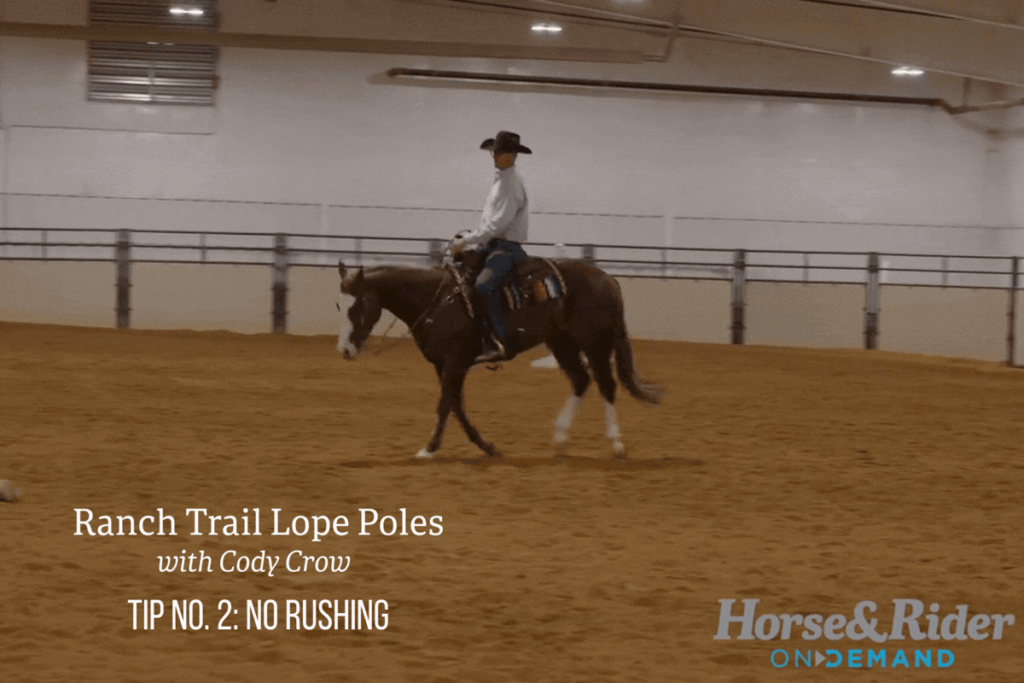
That preparation might include circling at the lope, trotting to rebalance the horse, or driving the horse forward into the bridle to reestablish softness and lift.
Once the horse is soft, balanced, and approaching the lope poles at a consistent pace, riders are ready to proceed.
No. 1 Pick Up the Shoulders and Maintain Collection
The biggest factor in clean, high-scoring lope poles is self-carriage.
Crow focuses on keeping his horse round and lifted through the body so she can maintain balance and her stride naturally. If the horse becomes hollow—dropping the back and shoulders—the stride often becomes inconsistent.
Instead, Crow wants the horse’s belly lifted and shoulders elevated, which allows the hind end to stay engaged and the stride to stay adjustable.
“If her belly’s up, she’s going to drive from behind,” Crow said. “She’s going to be able to pick those hocks up off the ground.”
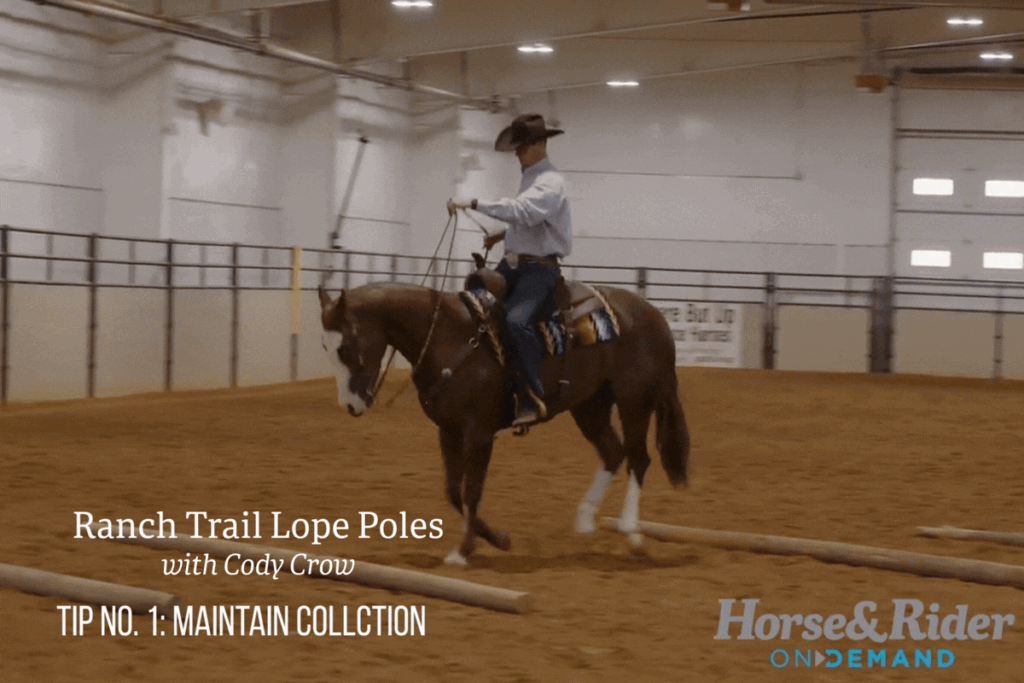
When horses carry themselves correctly, they can stay rhythmic and balanced from the first pole to the last—giving riders a much better chance at earning those plus scores in the ranch trail.