



For Cinch RSNC open rider Kody Ward, having the right bit for each horse is key to success. From experienced horses who know their job in the pen to younger horses just learning the ropes, finding the bit that fits their individual needs is important.
Here, Ward breaks down his top bit choices and why he prefers them.
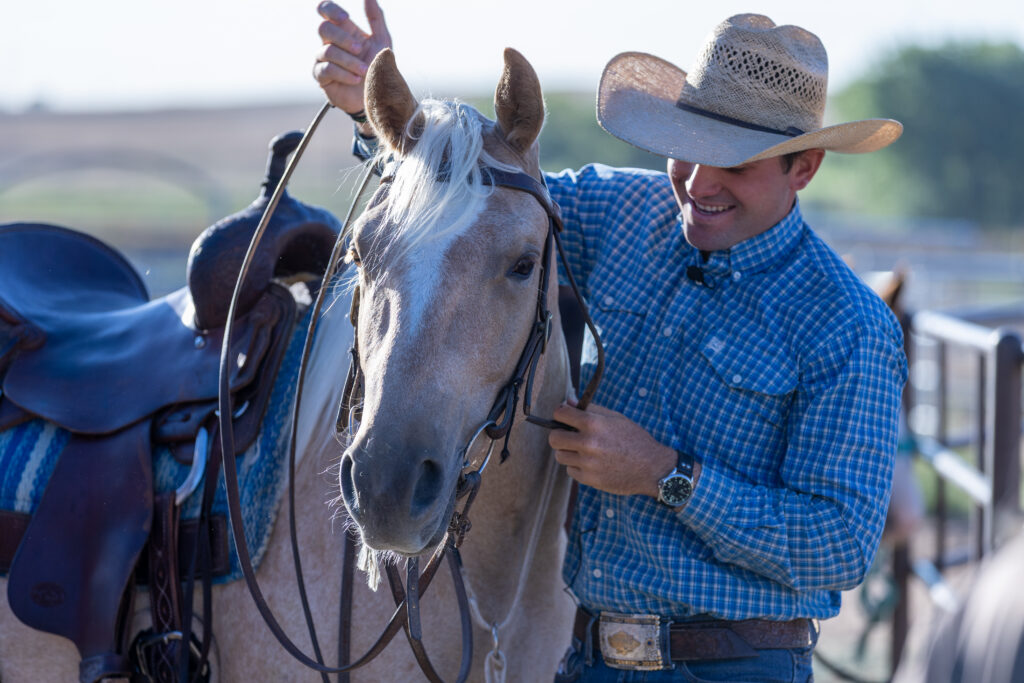
Slow Twist on an O-Ring
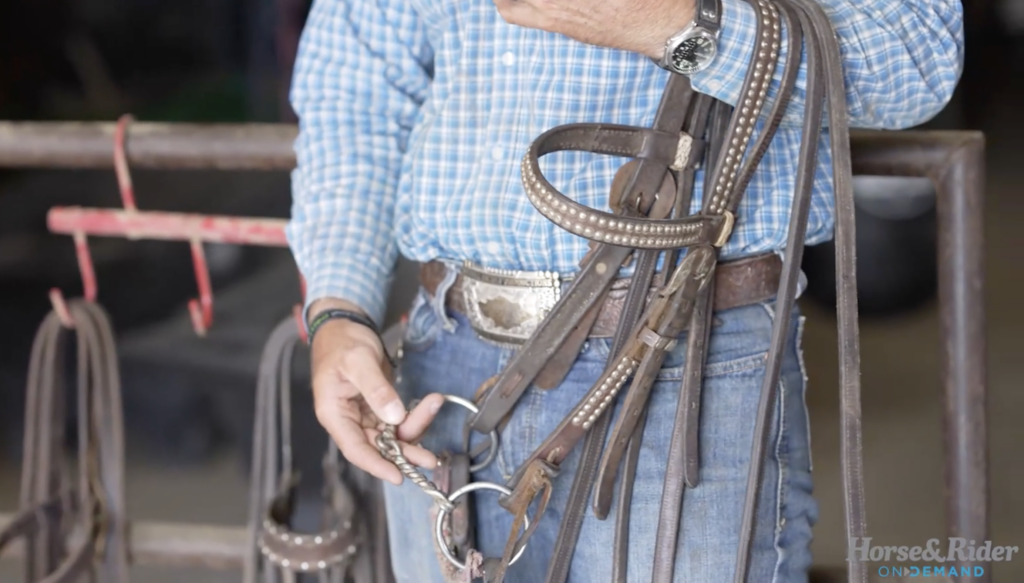
Ward favors the slow twist on an O-ring when he wants some leeway in the show pen, especially with horses that are a little stronger in the mouth or in situations where he doesn’t want the horse to feel jerked or over-corrected.
“I like the twisted mouthpiece because it gives me a little bit more grab, but it’s a really soft twist,” he explains in the video. “It gives me a little bit more room for error without being quite so jerky on my horse’s mouth.”
Smooth D-Ring
For horses that are soft-mouthed or particularly sensitive, Ward prefers a smooth D-ring. The bit offers a very direct pull, with the whole mouthpiece moving together, making it easier for the horse to feel the rider’s cues without overreacting.
It is particularly suited for horses that may have a slightly delayed response, helping them react promptly when asked. The smooth D-ring is a staple in Ward’s collection for horses that respond best to subtle guidance rather than stronger corrections.
Ball Bearings on a D-Ring with Three-Piece Dog-Bone
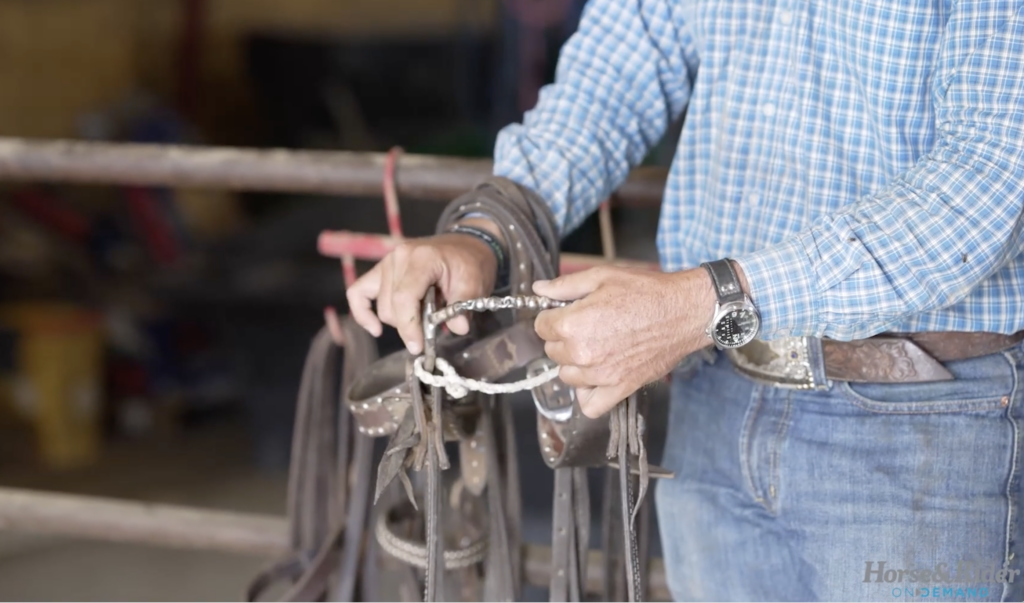
When Ward needs more control for horses that tend to pull or brace against the rider, he uses a D-ring with ball bearings and a three-piece dog bone in the center.
“I really like this bit because of the ball bearings,” Ward says. “The gaps between them almost act like a slow twist. But I like the dog-bone because everything moves. There’s nothing for a horse to grab a hold of with their mouth to brace against you.”
This bit is ideal for managing horses that need firm but fair guidance without causing discomfort.
Thin Twist D-Ring
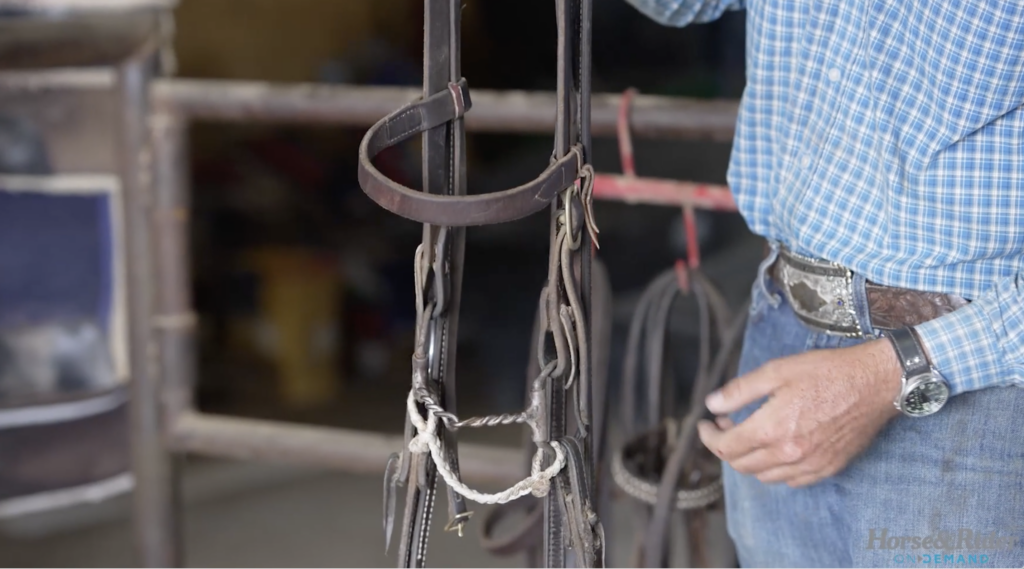
For horses that are strong, new to sorting, or need immediate, firm responses, Ward uses a thin twist D-ring. The bit has very little give, so any movement from the rider’s hands translates immediately to the horse, whether turning the nose or stopping.
While stronger than other bits in his show arsenal, it is still precise, giving the rider confidence without confusing the horse with overly complex signals.
Variations of Smooth Bits
Ward also uses variations of smooth bits on either O-rings or D-rings, sometimes adjusting the width or thickness of the mouthpiece to suit the horse’s comfort.
These bits are excellent for soft horses that require a gentle touch and subtle cues. They allow the rider to guide the horse without overwhelming it, making them ideal for correcting minor mistakes or maintaining a calm, focused ride in the arena.