



As a judge, understanding a horse’s balance and structure—and how they relate to performance—is critical. The conformation ideal is supposed to maintain breed standards, but that always goes back to balance and structure and how those factors affect soundness, longevity, and performance. As I assess these three ranch horses, I’m looking for qualities that will help them be useful and stay sound.
With this class of geldings, as stock breed rulebooks stipulate, I look first for overall balance, then structural correctness. A horse needs overall balance to perform as an athlete, and he must have structural correctness to stay sound. I also look for muscle definition and volume, as that’s their source of power. The demands of ranch work will take a toll on a horse that lacks balance and correctness.
How to Take a Good Conformation Clinic Photo
The Placings
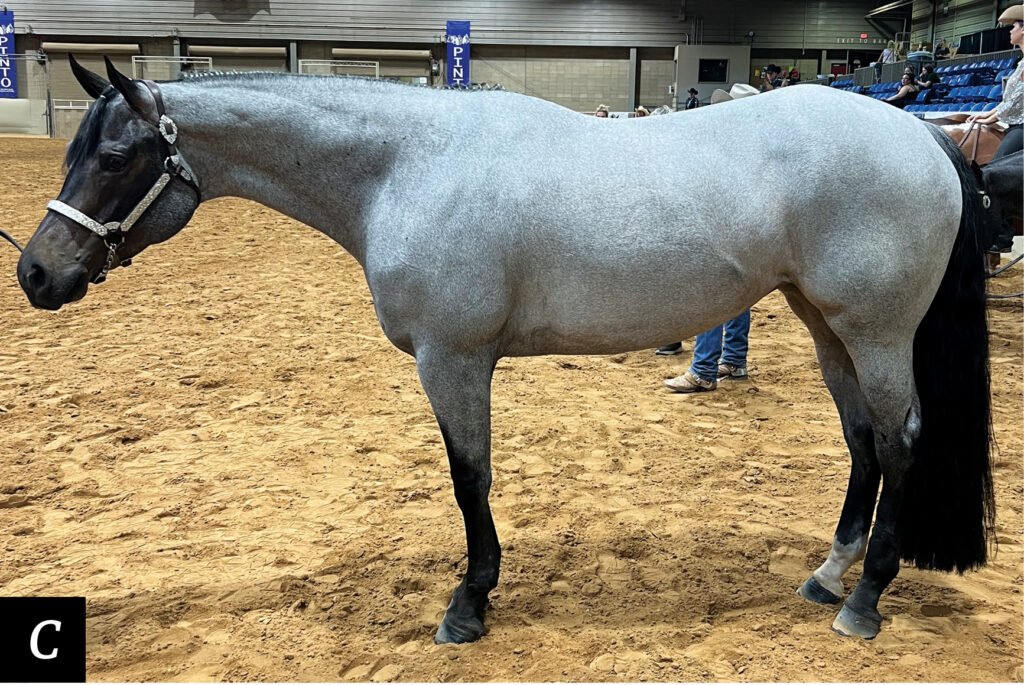
🥇 Gelding C
This attractive gelding has the best overall balance and structure in this class of three. If divided into three parts, his middle third is slightly longer than ideal, but it shouldn’t hinder his ability to perform. His topline is fairly level, with withers that are just prominent enough.
His pretty head shows good breed characteristics and a soft eye, and joins his neck through a clean, trim throatlatch. His neck, adequately long and tied in high enough to his chest, should be flexible to enable him to balance well. Though slightly upright, his shoulder angle is the best of the three here. He could use a bit more depth of heartgirth, and more muscle volume and definition.
His front legs look clean and flat through the knees, though he’s standing underneath himself here. His pastern angle matches his shoulder angle, and he has adequate bone in his legs for his size. He’s level from knees to hocks, and though his hocks appear slightly more angled than ideal, it shouldn’t hinder his performance, and they would appear less angled if he were stood up better.
Put your Conformation Clinic skills to the test!
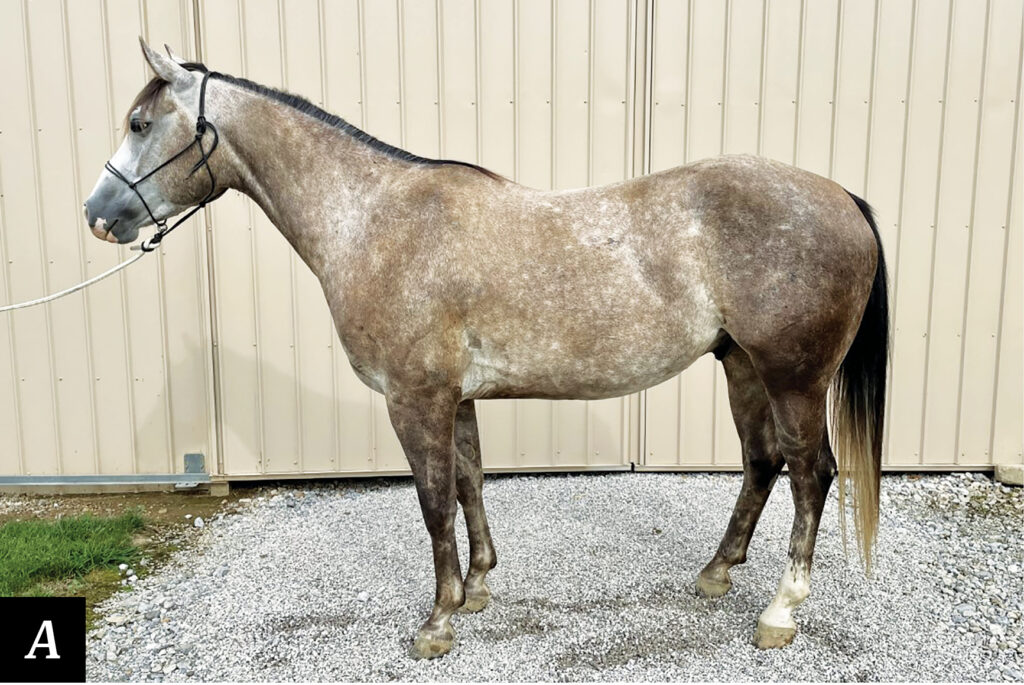
🥈 Gelding A
This is also an attractive gelding that would have good presence in a show pen. He shares several qualities with the first-place gelding, including being just slightly long in his middle section. His back appears a bit longer than Gelding C’s, with withers that could carry back farther, and he appears slightly shallower in his heartgirth, which places him second.
He has a lovely head with good breed characteristics that attaches to his neck through a trim throatlatch. His shapely neck, the best of the three here, has plenty of length and ties in cleanly to his chest. As with Gelding C, his shoulder angle is a bit upright, and he could have more muscle volume and definition.
His front legs appear clean and flat through the knees, and his pasterns have good length and slope that matches his shoulder angle. He would benefit from being stood up better on his hind legs for this photo, but his leg hidden by his tail appears to have good hock angulation, with his cannon bone forming a plumb line to the ground.
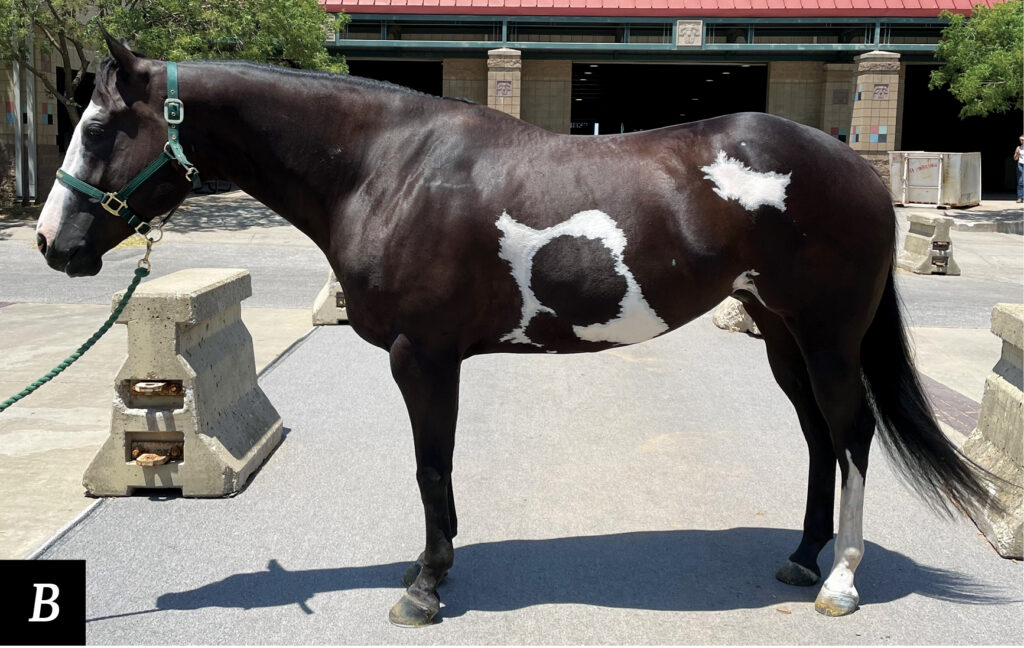
🥉 Gelding B
This gelding is the deepest bodied horse here, but isn’t as well-balanced as the other two overall, and is lighter boned. His topline is smooth, and his back is a good length and strong over the loins, but he appears slightly hip high.
He has a pretty head with an expressive eye and well-set ears, and though his neck is clean and trim, it’s noticeably shorter than other two geldings’ necks. His shoulder angle is quite steep, which also contributes to being a bit mutton withered. His withers are broad where they should show definition.
Though he has most depth of body here, he has the lightest substance of bone in both front and hind legs. His front pastern angle doesn’t match his steep shoulder, showing more slope and perhaps a bit too much length. As with the others, he could be stood up better to show his hind legs to advantage, but he appears to toe out as well as not having a plumb line through his cannons. His hocks are higher than his knees, which goes along with being hip high.
Margo Ball is continuing the family business as owner and trainer at Ball’s Quarter Horses, a breeding, training, and showing business in Fort Collins, Colorado. A carded judge for 37 years, Ball currently holds AQHA, PHBA, APHA, NSBA, NRCHA, WCHA, and NVRHA cards. She’s judged more than 900 shows, including all major futurities, AQHA Regional Championships, the All American Quarter Horse Congress, and 21 World Championship Shows for AQHA, PHBA, APHA, and IBHA.
To submit a photo of your horse to be evaluated in Conformation Clinic, send us a left-side profile photo of your horse (high-resolution, 300 dpi, in at least 3″ x 5″) to HorseandRider@equinenetwork.com with your contact info and your horse’s breed, age, gender, and height. We welcome all breeds!