



Evaluate and place these performance mares. Then see how your choices compare to our expert judge’s.
I have the same mindset in judging a halter class and a performance halter class, always looking for the basics of overall balance, structural correctness, breed and sex characteristics, and muscling. Upon first seeing a class, I let myself notice which horses really set themselves apart, almost as though they’re silently saying, “pick me.” Every good horse has a good profile, and I trust my instinct to be attracted to that first. Then I ask myself a series of questions about the basics of each horse to make sure I’m correct in my initial impressions.
When I line the class up, I want the casual observer to be able to see the flow of how I pinned the class. The horse with the highest combination of balance, correctness, quality, and muscling should be clear, with each horse down the line showing a little less. Our winner in this class shows the most positive characteristics and should make a good athletic performance horse.
How to Take a Good Conformation Clinic Photo
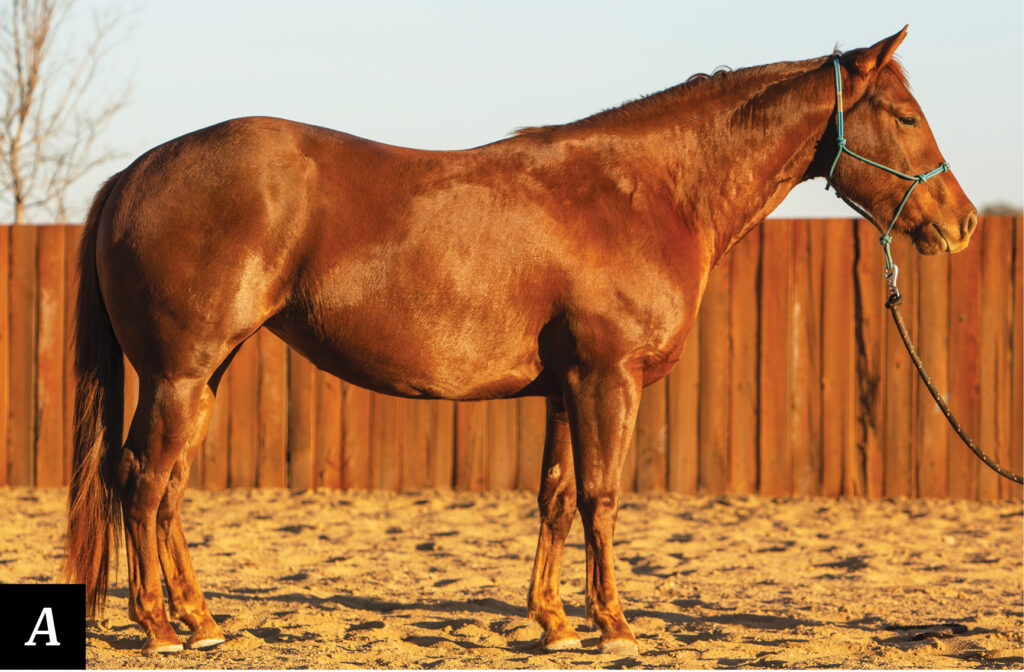
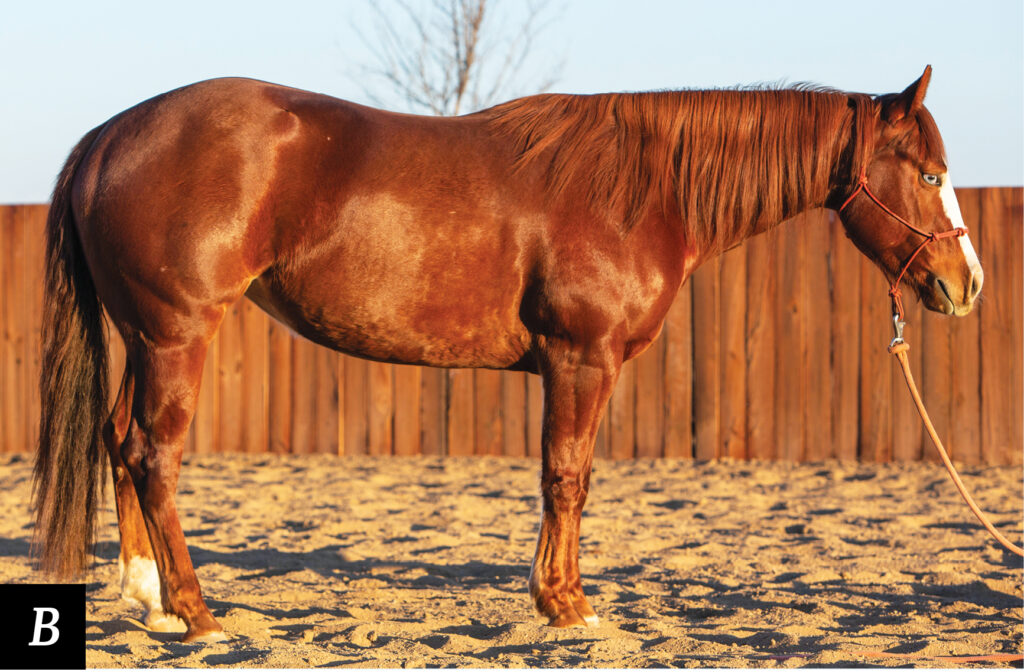
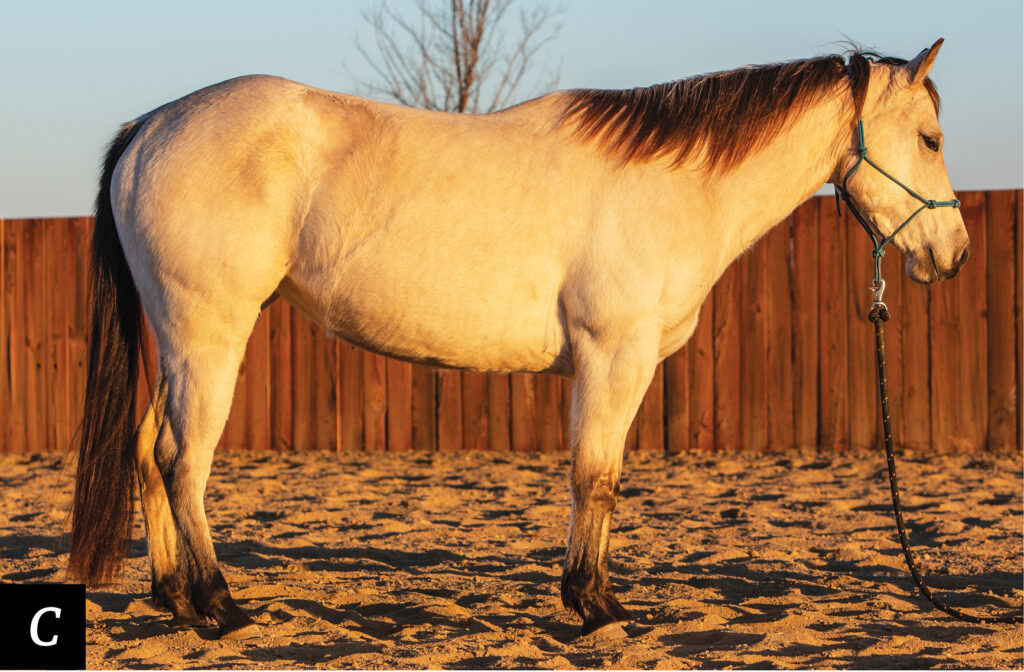
The Placings
🥇 Mare A
This attractive, smooth mare’s overall balance stands out, and she has excellent structure, quality, and muscling to go with it. Her body divides into three even portions—shoulder, midsection, and hip—and she’s vertically proportionate, too, with the same distance from withers to underline as from underline to ground. She also has the most level topline in this group, though I’d like to see her back drop less.
Her refined, feminine head shows a kind eye and short ears. She could be slimmer through her throatlatch and along the top of her neck, but her neck is a good length and ties in nicely to her chest. Her well-laid-back shoulder will enable good freedom of movement and her equally good hip angle will allow her to reach underneath herself and drive off her hocks.
Her hocks show a good angle, and her hind cannon bone drops down a plumb line to the ground. Her front legs line up well from the side view, too, and her pasterns show good length and slope. Her muscle volume and delineation are also very good.
Put your Conformation Clinic skills to the test!
🥈 Mare B
Similar to Mare A, this mare divides nicely into three equal sections from shoulder through midsection to hip. Her depth of heartgirth and vertical proportions are also good. Her back is strong and doesn’t drop as our
winner’s does. However, her topline is more uneven from top of croup to withers.
She shows good quality and femininity through her head. Her neck has adequate length, ties in well to her chest and is leaner along the top than the first-place mare’s. Her shoulder and hip angles are good, and match each other well, and her muscling is quite adequate. Her front legs show good alignment from the side, with nicely angled pasterns.
She places second because she’s built more downhill, which shows in her topline and in her hocks sitting higher than her knees. She places behind the winner, too, because her hind cannon bone drops to the ground in front of a plumb line. Her downhill build and hock angle will make it more difficult for her to drive off her hind end, and could predispose her to soundness issues over time.
🥉 Mare C
This mare’s vertical proportions are good, with depth of body approximately equal to front leg length. However, from front to hind end, she doesn’t divide into three equal segments, with a longer
middle and shorter shoulder and hip segments. Her back is also long and she’s downhill from croup to withers.
Her head is a bit more common, long from eye to muzzle and long in the ears. Her neck is of good length, but ties in quite low to her chest. Her shoulder and hip show adequate slope, but both are shorter than the other two mares’, which won’t allow her to develop the same amount of power. Also, she is the lightest muscled in the group, lacking volume and tone.
Her front legs are aligned well from the side view, and her pasterns are angled well to match her shoulder angle. However, she is standing camped under in front, which could be related to her high hip. Her hind cannon bone also falls in front of a plumb line to the ground, which could lead to unsoundness.
Clay Cavinder of Starkville, Mississippi, has a lifelong history of showing and judging horses. He’s currently the Extension Horse Specialist at Mississippi State University where he educates about horse management practices and training to improve performance for showing and recreational uses. He holds judge’s cards with AQHA, APHA, and NSBA, and has judged extensively across the U.S., as well as in Canada, Australia, and throughout Europe.
To submit a photo of your horse to be evaluated in Conformation Clinic, send us a left-side profile photo of your horse (high-resolution, 300 dpi, in at least 3″ x 5″) to HorseandRider@equinenetwork.com with your contact info and your horse’s breed, age, gender, and height. We welcome all breeds!