



Giving your horse consistent direction on the ground creates better communication, stronger boundaries and a safer partnership.
Confidence means being sure of something. For me, that confidence comes from knowing I can control a situation—whether I’m in the saddle or on the ground. Consistent groundwork to build confidence is where I start with every horse.
Over the years, I’ve worked with countless horses that struggled with trailer loading, handling, or other everyday challenges. More often than not, those problems weren’t caused by the horse alone. They started with a handler who wasn’t sure how to direct the situation.
When a handler gains confidence and develops a plan, their horse becomes more comfortable, too.
Have a Plan
Obstacles are a useful way to practice working through resistance. An unfamiliar obstacle might make your horse nervous, allowing you to redirect his movement, reposition yourself, and help him work through the situation safely.
When you can guide your horse over an obstacle he initially resists, you start to realize you have the tools to work through other difficult situations, too.
I often see people become defensive or uptight when they’re handling a horse that has scared them in the past. The horse picks up on that energy, and suddenly a small problem becomes much bigger. When both horse and handler are nervous, neither one has a clear direction.
That’s why you must go into the situation with a plan. Knowing how you’ll respond gives you something productive to focus on.
Put His Energy to Work
When your horse becomes nervous, give that energy somewhere to go. You can ask him to circle, yield his hindquarters, change direction, or change speed so he begins paying more attention to you and less to whatever makes him nervous.
The more consistently you direct your horse, the more he learns to look to you for the next cue. As his response improves, you’ll become more comfortable, knowing you can influence his movement when you need to.
Establish Your Space with Groundwork
A horse that lacks confidence can become pushy. That’s where a simple back-up exercise can help establish boundaries.
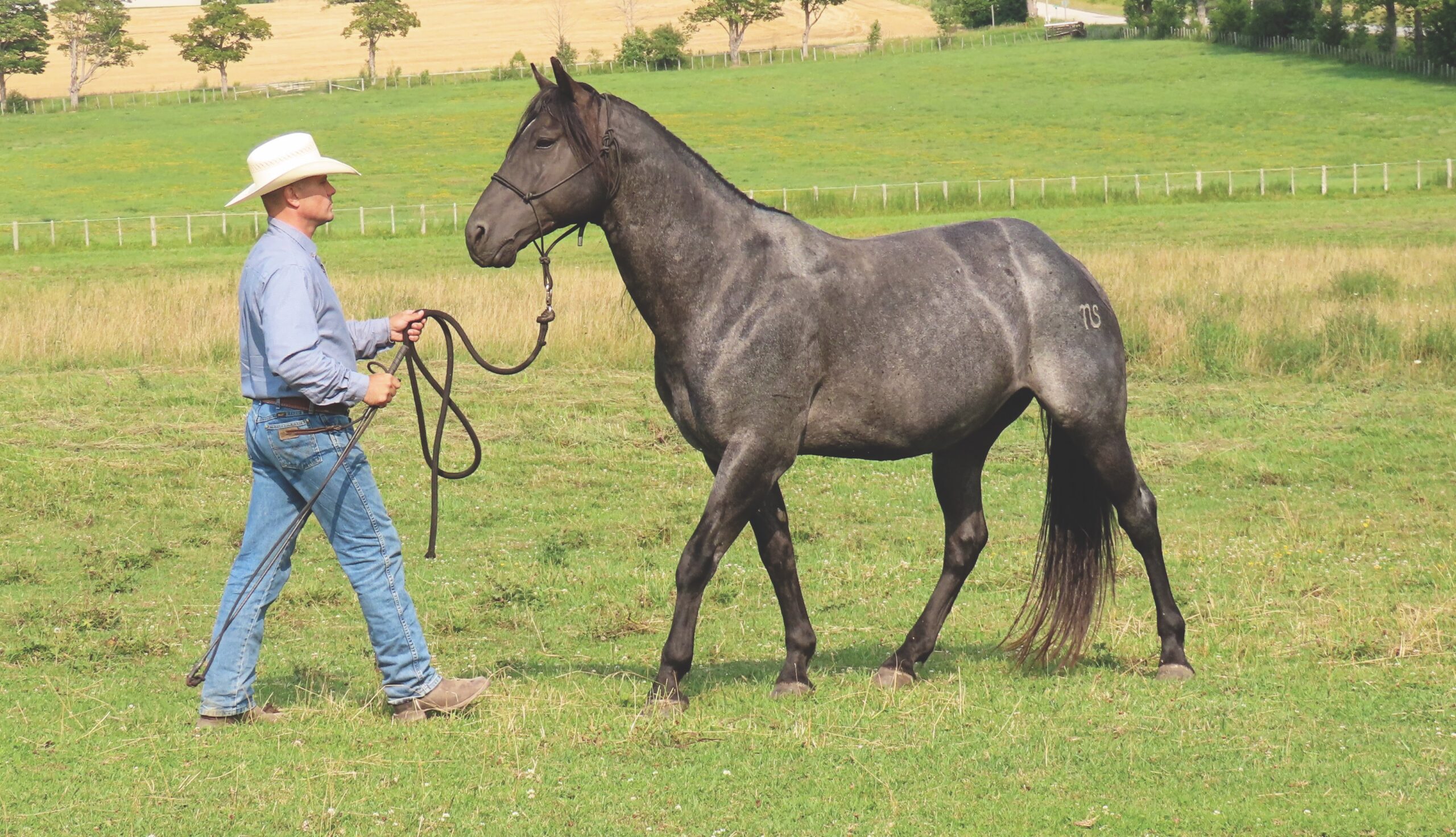
Stand in front of your horse with the lead rope in one hand and a training stick in the other. Walk toward him while moving the training stick back and forth to ask him to back. The moment he takes one step backward, lower the stick and release the pressure. That release helps him understand he gave you the response you were looking for.
Once he willingly backs several steps, you can begin asking for more. When he can comfortably back 10 steps, add a little speed to the exercise and ask him to respond more promptly to your cue.
Make Every Interaction Count
When your horse willingly takes direction, he begins looking to you for the next cue. With consistent work, he learns what to expect from you and begins to relax.
Consistent groundwork to build confidence is what turns those individual exercises into everyday habits.
Every interaction with your horse is a training session—even when you don’t intend for it to be. The more consistent you are about what you ask and how you respond, the more clearly your horse understands what you expect from him.
Based in Ontario, Canada, Jason Irwin and his wife, Bronwyn, work together to provide horsemanship to clinic attendees, through lessons and through The Horse Trainers, a show that runs on the Cowboy Channel Canada. He was selected as a Wild Card competitor at the Road to the Horse event in 2026 and has presented clinics at such events as the Horse Expo Canada, Equine Affaire, and the Western States Horse Expo.