


Reining trainer Crystal McNutt, uses her warm-up to establish softness, responsiveness, and control before asking for more speed. Riding Bourbon, a horse that can get stiff on his right side and occasionally anticipate her cues, she demonstrates the basic routine she uses to get a horse listening, guiding and waiting on the rider.
Watch the full reining warm-up video lesson on Ride TV ➔
1. Start With a Jog to Establish Softness
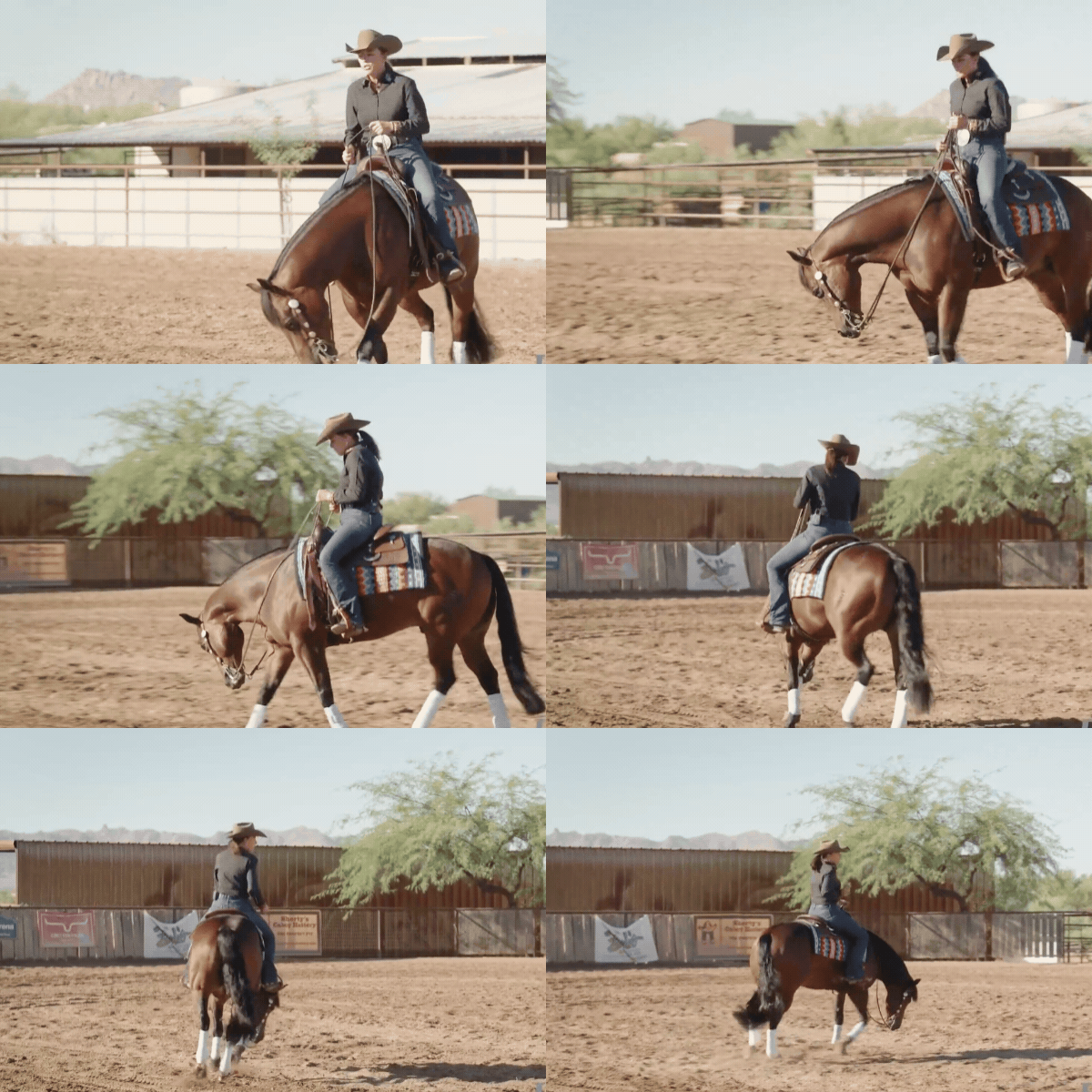
I’ll just jog some circles and kind of bend him and not put him in a position where he wants to be uncomfortable, just a spot where I know I can get him soft and find a release. That way, when I ask him to do a maneuver, if I move my hand, he doesn’t want to go the other way. We just want to make sure they’re nice and going forward to their face and we’re not putting them in a position where they feel trapped.
2. Check That Your Horse Is Paying Attention
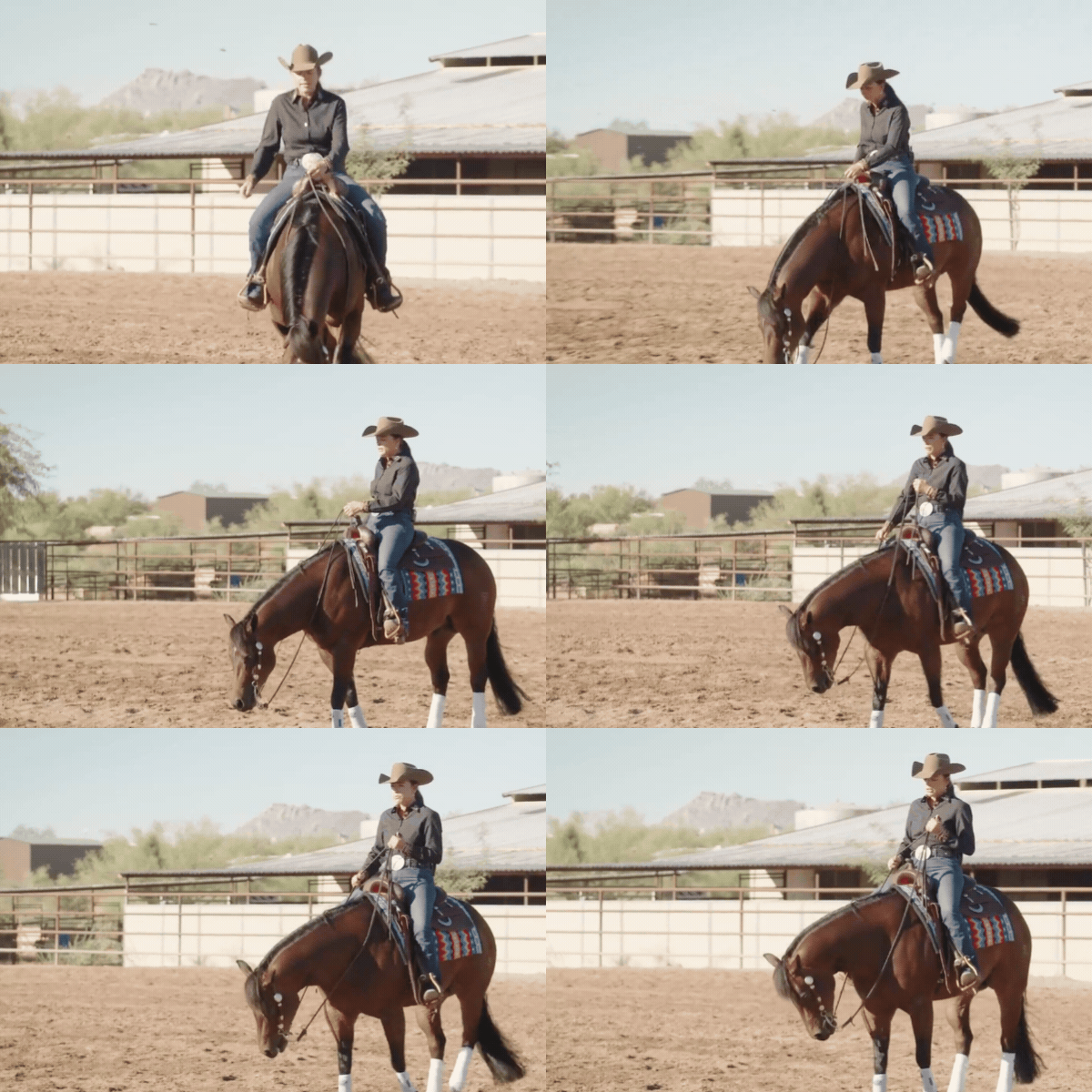
Every once in a while put your leg on or pick your hand up to make sure they check in with an ear or both ears and are paying attention to you.
3. Lope Circles and Correct Your Horse’s Position
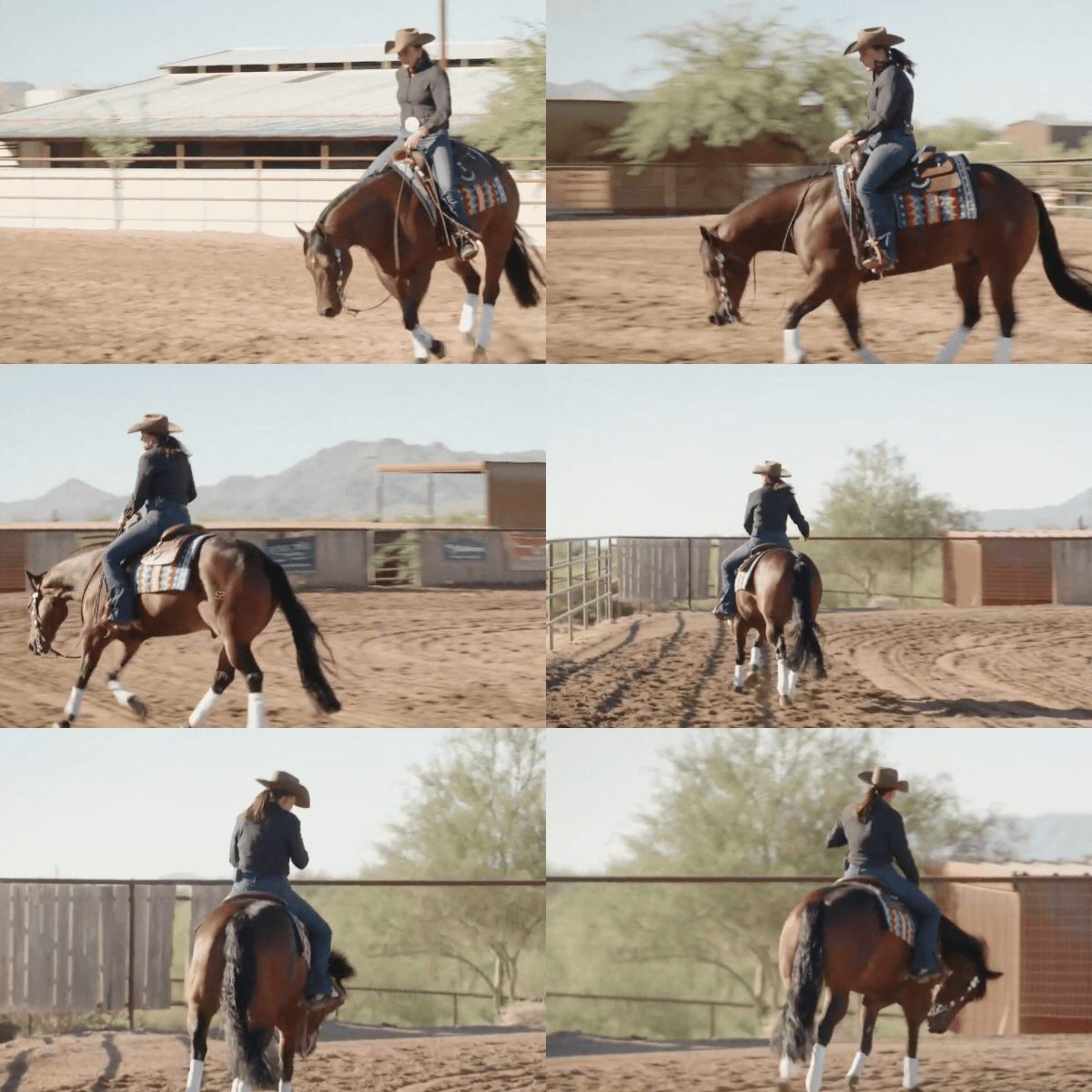
I always lope a little bit and then I steer. You’re just going to check in and make sure if you move that hand, they’re listening and going where you want to go.
While I’m loping here, he’s kind of falling into the inside of this circle. So I’ll take a hold of this inside rein, hold my outside leg against him and tap him to find that bend in his rib cage, put his hip over to the right and make him stand up a little bit more.
4. Practice Speed Control Without Losing Steering
Then I’m going to do a little speed control. You have to decide what your speed is that day. Not every day are you going to work at show speed. I like to steer when I’m going fast because a lot of times we lose a little bit of control coming through the middle of that circle, and a lot of things happen in the middle of that arena.
Sometimes I just have him break all the way to a walk because it’s a whole lot easier to press the gas than it is to pull the brake all the time.
5. Change Up Your Circles to Prevent Anticipation
When you’re at home practicing, don’t always start your big fast out of the middle and slow down in the middle. Start it somewhere else.