



Evaluate and place these Paint Horse performance geldings. Then see how your choices compare to our expert judge’s.
I’m judging these APHA geldings as a performance halter class, a division at stock breed shows that is open to horses that have qualified by earning points in performance divisions of their breed association. In performance halter, I’m looking for a horse with qualities that make a good performance horse—overall balance, correct structure, and sufficient muscling to get the job done.
A horse that does well in performance halter will look like an athlete, with all the structural components that enable agility and power, lightness of movement and length of stride. In my career, I have come across some good performance horses whose conformation would not indicate their athletic ability, but far more often, good conformation leads to better performance, as well as soundness and longevity.
In these three geldings, I am assessing balance, which is their relative proportions from nose to tail, and how suitable they would be for performance events. I’m also looking for muscle tone and fitness as well as signs of any structural flaws in their legs that could lead to unsoundness.
How to Take a Good Conformation Clinic Photo
The Placings
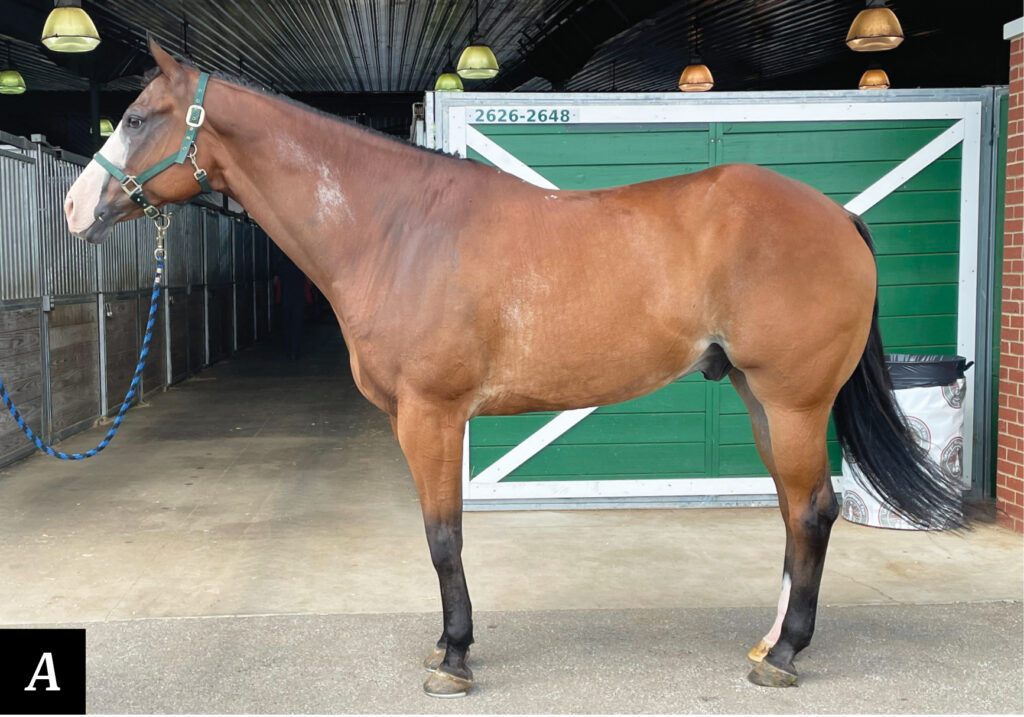
🥇 Gelding A
This gelding appears to be the best balanced and fittest in this group. Balance, structural correctness, and condition are all critical to a performance horse, and he has all three. He has good, prominent withers and a strong, short back. His croup is a bit steep, but looks powerful, and the top of his croup is level with his withers, which will help him to lift himself and drive forward from his hind end.
His attractive head shows good expression. His neck is a good length for his overall proportions, but could appear cleaner, as it’s a bit thick and long in its underline. His shoulder is a bit more upright than ideal, but he has sufficient depth of heartgirth, a strong, tight underline, and enough muscle volume and tone.
His legs look correct from the side, though his front pasterns match his shoulder angle and could show more slope. His hocks are well underneath him and show a good angle—he should be able to reach with his hind legs to propel himself forward. Overall, he looks like a strong athlete.
Put your Conformation Clinic skills to the test!
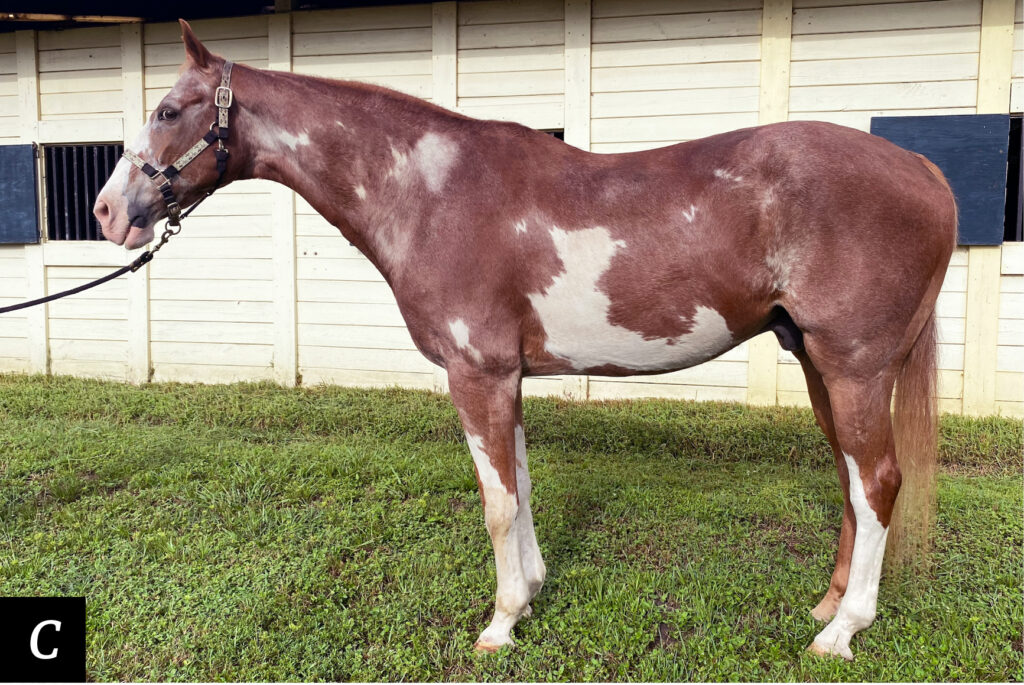
🥈 Gelding C
This gelding has many good qualities, though he appears to be an older horse without the muscle tone and fitness of Gelding A. His overall balance is good, and I like that his topline is level from withers to hip with prominent withers, a short back, and a croup that’s a little longer than Gelding A’s.
His head could be more refined, but he has the intelligent expression of an old campaigner. His neck has a bit of a crest, but that doesn’t bother me in a performance horse. He appears able to lay his neck out well and with his softer shoulder angle, he might even be a smoother moving horse than Gelding A. He’s adequately deep in his heartgirth, but doesn’t have the tight, fit underline of Gelding A.
He’s a little bit let down in his fetlocks, but I’ve had good luck with soundness in horses with a bit of pastern angle, and with his pasterns matching his sloping shoulder, it could indicate a long, soft stride. His hocks are well under him and should provide power from his hind end.
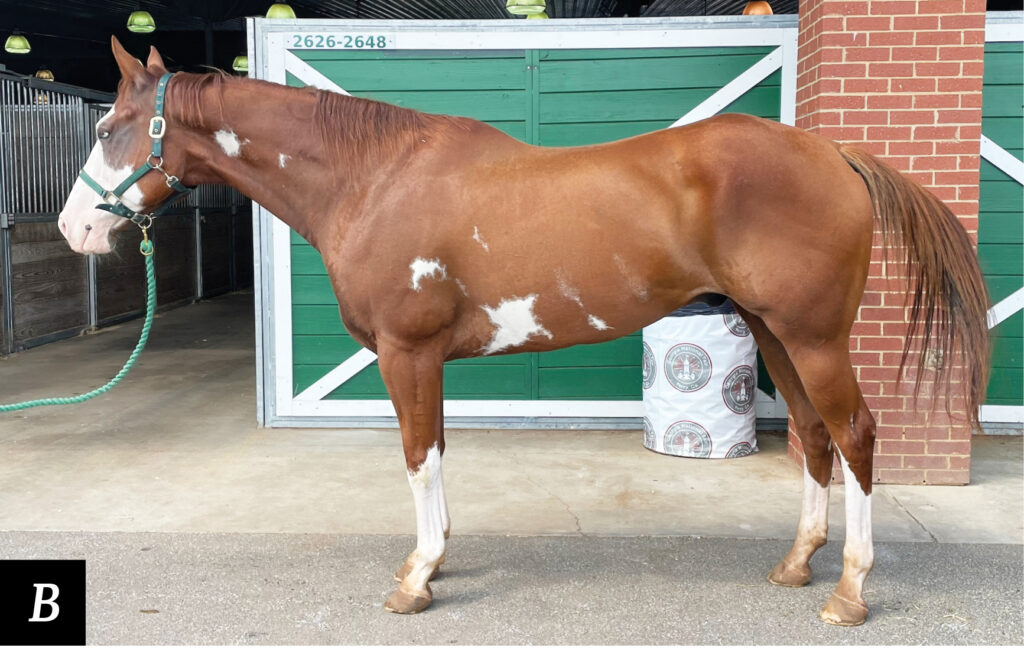
🥉 Gelding B
This horse doesn’t have the overall balance of Geldings A and C. His front end is much better than his hind end, but performance horses must have power from behind, so I’m more critical of hind end weakness than of a straighter shoulder or shorter neck. This gelding is weak across his loins and short in his croup, with a high tail set often seen in horses whose hind legs trail out behind them.
His neck and shoulders are among his better attributes. His neck is of good length and shape with a clean throatlatch and, in this relaxed state, gives a good level look to his topline. His shoulders have good slope and set up prominent withers, though his back drops off quite a bit behind his withers.
His front pasterns match the good slope of his shoulders, but his hocks are higher than his knees and are positioned behind him when his cannon bones form a plumb line to the ground. Those trailing hocks and his weakness through the loins mean that he’ll struggle to lift his back and reach underneath himself to drive forward from his hind end.
Holly Hover works with youth and amateur riders in all-around, ranch riding, and reining events from her Holly Hover Performance Horses in Cave Creek, Arizona, and during that time she’s coached or trained 18 world and reserve world champions. She’s also judged the AQHA World Show and All American Quarter Horse Congress multiple times, as well as the APHA World Show.
To submit a photo of your horse to be evaluated in Conformation Clinic, send us a left-side profile photo of your horse (high-resolution, 300 dpi, in at least 3″ x 5″) to HorseandRider@equinenetwork.com with your contact info and your horse’s breed, age, gender, and height. We welcome all breeds!