



You feed the good hay. You schedule the bodywork. You take the lessons and show up with heart. You try to be kind, consistent, and clear. You love your horse—and yet, something in your partnership feels strained.
He walks away when you bring the halter. He holds tension in his jaw when you curry his side. Maybe he stiffens slightly at the mounting block, or rushes back to the gate the moment you’ve finished a ride.
At first, you brush off these small signals. But they collect over time, until the truth becomes too hard to ignore. You’re doing everything right—so why does your horse seem like he’s just tolerating you?
After working with thousands of horses and riders, I know this is far more common than most people want to admit. Many horses end up in strained—even toxic—relationships with their humans, not because a rider is cruel or careless, but because the emotional conversation has broken down.
When something isn’t right, horses don’t hide it. They show it through tension, fear, and resistance. They’re telling you when they don’t trust you, when they’re afraid, or when they don’t understand what you’re asking. The problem is that most riders were never taught how to truly listen to that language.
In human relationships, a toxic relationship is one that consistently undermines emotional or physical well-being. It’s marked by confusion, manipulation, and a loss of autonomy. With horses, it looks different—but it feels just as heavy. Sometimes it shows up as explosive behavior under pressure. More often, it shows up quietly, in a horse that disconnects, tunes out, or shuts down altogether.
You see those horses all the time. They do what they’re told. They hit their marks. They go through the motions. But there’s no curiosity. No confidence. No softness.
All they feel is pressure—pressure to perform, pressure to comply, pressure to get it right. There’s no real conversation anymore. Just orders being given and obedience being expected.
The Quiet Kind of Breakdown
The breakdown begins when your horse feels like he doesn’t have a voice. When you don’t give him space to process, respond, or ask questions, he eventually gives up. He stops trying. He slips into learned helplessness—a mental and emotional state where the safest option becomes compliance, not because he understands, but because he’s been conditioned not to speak.
What makes this so heartbreaking is that many owners never see the problem, because they’ve never experienced anything different. Most people have never felt a horse that truly wants to be with them—without treats, without food. A horse that seeks harmony. A horse that feels good about training. And if you’ve never felt that kind of willingness, you won’t recognize it when it’s missing.
Over time, disconnection starts to feel normal. You learn to rationalize it. You tell yourself your horse is lazy, dominant, distracted, or hormonal. You blame bad days. Bad footing. A bad saddle fit. You double down on your cues and grow frustrated when nothing improves. You’re not trying to be a bad partner. You’re doing what you were taught.
But from your horse’s point of view, he’s been asking questions you haven’t learned how to answer.
When you use too many cues at once, too much pressure, and unclear expectations, you end up making your horse do it instead of teaching him how to do it. You don’t give him the space to learn. You don’t listen for his answers.
This pattern usually starts with how most riders were introduced to training—as a one-way street. The horse is the student. You are the instructor. End of story. But real communication has never worked that way. It’s a two-way process, and with horses, that matters more than most people realize.
Everything starts with the relationship. Think about it: When was the last time you willingly did something for someone you didn’t like, didn’t trust, or didn’t respect?
Too often, horses are treated like machines. Their feelings are dismissed. Their thought processes are misunderstood. Their reactions are misread. So when something goes wrong, more restraint and more force become the answer.
Most people aren’t doing this on purpose. They’re not trying to be harsh. They simply don’t know any different.
Read More: How to Tell If Your Horse is in Pain
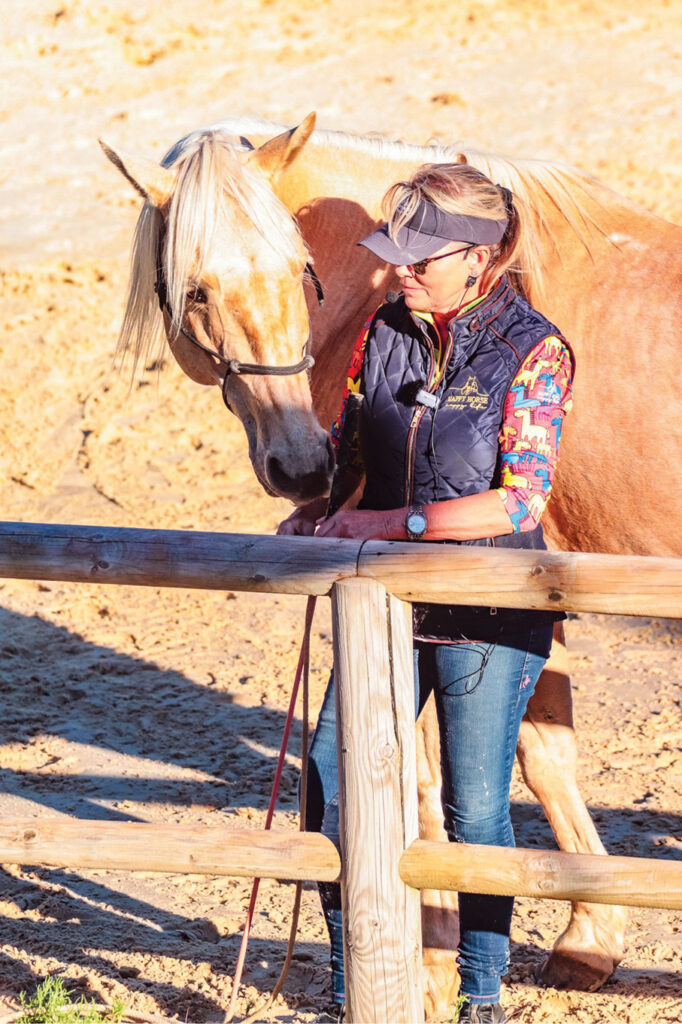
The Weight We Bring
Horses don’t compartmentalize. They don’t tell themselves, “My rider was frustrated about something unrelated today, but I won’t take it personally.” They feel everything you carry into the barn, whether you mean for them to or not.
That’s why one of the biggest shifts you can make isn’t technical. It’s emotional.
Frustration, fear, and ego sit at the root of most horse-human problems. And at some point, you have to be humble enough to admit that you’re part of the equation.
That awareness starts before you ever swing a leg over. It begins when you notice your body language as you walk down the aisle. When you pay attention to your tone, your tempo, and your breathing. When you ask yourself whether your mindset matches what your horse needs today—not what your to-do list demands.
Your horse doesn’t need you to be perfect. But he does need you to be honest.
He needs you to show up the same way, day after day, with an energy that invites trust instead of tension. With clarity instead of chaos. With presence instead of pressure.
If you want your horse to be present with you, you have to be present with him first.
That’s where everything begins.
Slowing Down Speeds Everything Up
When you shift from demanding responses to inviting participation, you’re no longer just training, you’re opening the door to a conversation.
A horse can’t learn when he’s emotionally overwhelmed. When you push through anxiety, frustration, or confusion, you don’t create clarity. You deepen the emotional fracture.
It’s easy to believe that slowing down means losing momentum. Falling behind. Giving up progress. But in reality, the opposite is true. You slow down so your horse can understand what you’re asking. When you push a horse that’s struggling, you block learning and damage trust and respect.
And this has nothing to do with lowering your standards or abandoning your goals. It has everything to do with reaching them. An emotional horse can’t learn, and he can’t perform at his best. When you give your horse space to understand, you create space for trust to grow. And when trust grows, performance follows.
Sometimes that means doing less in a session because your horse needs time to process. It might mean waiting until he checks in with you before you ever pick up the reins. Or it could be setting your training goals aside so you can get quiet enough to hear what he’s telling you.
The Four Roles of Partnership
In your horse’s life, you’re being asked to fill four roles: leader, friend, protector, and teacher. Not just one or two of them—all four. When even one of those roles is missing, the relationship starts to weaken.
Most riders focus almost entirely on the first role: being a leader. You work hard to establish respect, set boundaries, and guide your horse through pressure and direction. That isn’t wrong. But leadership without relationship quickly turns into force.
If you start and end with being“the boss,” your horse doesn’t feel supported—he feels controlled. And a horse doesn’t want to be managed. He wants to feel safe. He wants to know he’s being heard.
From your horse’s perspective, leadership is about consistency, not dominance. He’s looking for someone he can count on when he’s unsure. That means staying emotionally steady instead of reactive. It means making choices that build confidence instead of fear. It means becoming someone he would choose to follow—even if he had the option to walk away.
Then comes the role of a friend. This is one of the most overlooked parts of horsemanship—and one of the most powerful. Being your horse’s friend doesn’t mean letting him ignore boundaries or invade your space. It means seeing him as more than a training project. It means noticing his preferences. Learning his thresholds. Understanding his quirks. Spending time together without always having an agenda.
When you begin to approach your horse like a friend, everything changes. He softens. He engages. He becomes willing—not because he’s been forced to comply, but because he wants to participate.
The role of protector is about your horse’s physical and emotional safety. It’s about watching out for him on the ground and under saddle. It’s about recognizing when a situation is too much and choosing to back off instead of push through.
Being a protector means choosing environments and experiences that build confidence, not fear. It means advocating for your horse in public spaces—asking someone to give you room in the warm-up pen, stepping out of a clinic exercise when your horse needs a reset, or saying no when something isn’t right for him that day.
Too many horses never feel truly protected. They’re rushed. They’re asked for things they aren’t ready for. Their fear gets dismissed. And then people wonder why they explode.
The final role is teacher—and this is where many well-meaning riders get tripped up. Teaching isn’t drilling. Teaching is breaking ideas into pieces your horse can understand. It’s seeing mistakes as information, not failure. It’s looking for understanding, not just correctness.
As a teacher, you’re investing in whether your horse truly learns—not just whether he gets it right today, but whether he feels confident enough to repeat it tomorrow.
When you show up as a leader, a friend, a protector, and a teacher, you create a foundation of trust that can withstand pressure, setbacks, and fear. You build a relationship where your horse feels safe enough to try, secure enough to soften, and confident enough to stay present.
When one of those roles is missing, the relationship becomes unbalanced. If you’re a great teacher but never a protector, you may push your horse through fear. If you’re a kind friend but never a leader, you may create confusion. Even with good intentions, imbalance creates stress—and horses carry that stress in their bodies and behavior.
You can’t fill these roles if you’re only speaking from your side of the conversation. You have to learn how to “talk horse.”
That means learning how to interpret what your horse is telling you—not just what he’s doing. It means adjusting your communication so he can actually understand you.
Just like moving to a new country requires learning a new language, building a real partnership with your horse means learning his.
When You Start Listening, Everything Changes
When you begin reading your horse’s subtle signals—his ear flicks, blinking, breathing, and posture—you stop relying on pressure alone. Instead, you start responding to the conversation that’s already happening between you.
I remember a gelding from one of my clinics that was known for being difficult to saddle and prone to bucking. People had tried everything with him—different saddles, more groundwork, even desensitizing. Nothing seemed to work.
But when we finally slowed down and truly listened to what he was telling us—Hey, slow down—during the saddling process, everything changed. He relaxed. The bucking stopped.
It felt like a miracle in the moment. But it wasn’t. It was the power of connection. It was what happens when you stop trying to fix the behavior and start listening to the horse.
People had tried everything with him—different saddles, more groundwork, endless desensitizing. Nothing worked. But the moment you slowed down and truly listened to what he was saying during the saddling process, everything changed. He relaxed. The bucking stopped.
It felt like a miracle. But it wasn’t. It was simply the power of connection. It was what happens when you listen to your horse instead of trying to overpower him.
That connection grows strongest when it’s paired with consistency. Horses thrive on predictability. They’re incredibly sensitive to emotional changes, and they notice when you show up differently under pressure.
What your horse needs most is for you to be the one constant thing in his life. No matter the setting. No matter the day. He should know exactly who you are and feel safe depending on that.
When that emotional steadiness is in place, everything else starts to fall into place, too. Your cues become softer. His try comes more willingly.
He starts checking in with you—not because he has to, but because he wants to.
And that’s when real partnership begins.