



Ranch Trail has quickly become one of the most popular events at today’s breed shows, putting real-world ranch skills to the test. And no matter the pattern, there’s one obstacle you can almost always count on seeing: the gate.
Ranch trail has quickly become one of the most popular events at today’s breed shows, putting real-world ranch skills to the test. And no matter the pattern, there’s one obstacle you can almost always count on seeing: the gate. In ranch trail, you’re always going to open a hinged gate. There are no rope gates in this class because the obstacle is meant to reflect the kind of ranch task your horse might face on the daily.
This means you might have to get creative with the type of gates you open when practicing at home. If you don’t have access to a hinged gate that you can set up in your arena within a pattern, like I have in these photos, you can practice on a pasture gate.
In this lesson, I’m going to work a right-handed gate, which means that I will be using my right hand to open and close the gate. However, there will be times that you’ll be asked to work a left-handed gate, so it’s best to practice both directions at home to be prepared for any scenario you might come across in the show pen.
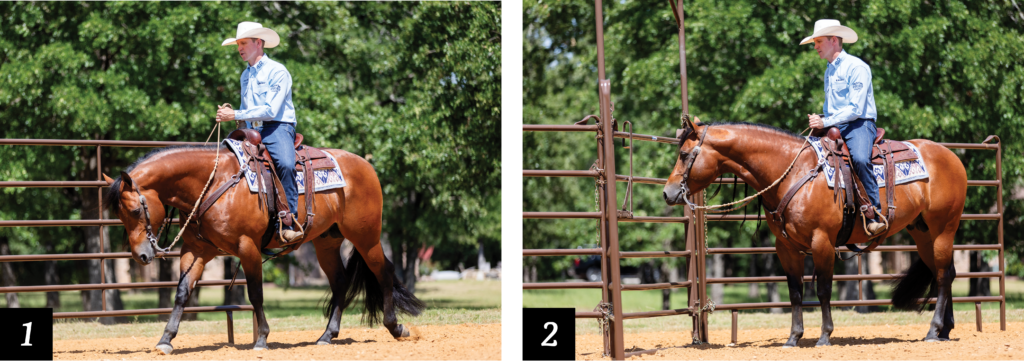
One
When I approach the gate, I like to come in wide, when the pattern or gate allows me to, and then line myself up so I’m as parallel as possible with the gate. I like to be as close as I possibly can to the latch so that I don’t have to lean off the right side of my horse. Leaning off the side of your saddle to get to the latch can tell judges that your horse doesn’t guide as well as you’d like him to, or that he’s not confident going into the gate and is trying to create space between him and the obstacle.
Two
Metal gates make more noise than a rope gate you might see in a regular trail course, so it’s not uncommon for a horse that’s never worked a real gate to be a little uncertain of it at first. If I feel my horse getting tense as we approach the gate, I might sit there a minute and even rattle the gate a little until he gets more comfortable with the noise it makes.
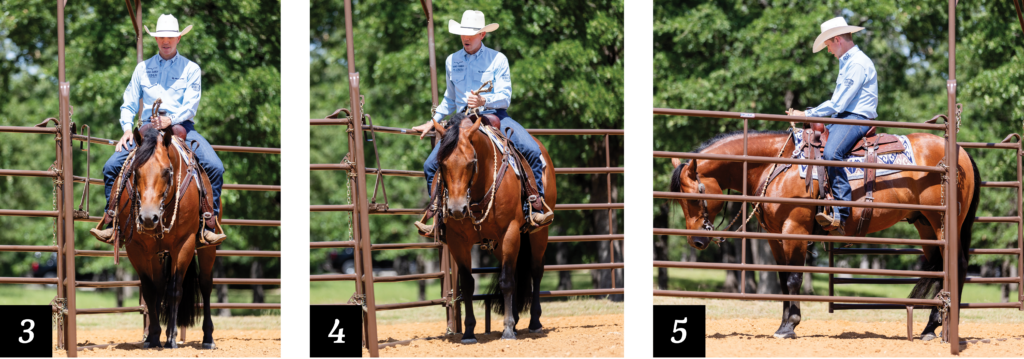
Three
Once I know my horse is ready to proceed, I’m going to open the gate using my right hand. I’m riding in romal reins, which is a common piece of equipment in ranch horse events, so I need to move my romal tail over to my left hand and have all my equipment in my left hand before I begin to unlatch the gate.
Four
Now it’s time to open the gate. I push my latch forward to unlatch it. Then, I ask my horse to rock back underneath me by pushing my heels down and forward a little bit, just like I would for a downward transition in ranch riding or a sliding stop in the reining. I want him to respond more off my feet than with my hand so that he can be more efficient during this obstacle.
Once I commit to opening the gate, my hand needs to stay relatively connected to it. Losing control of the gate, or letting go of it completely, is a five-point penalty per judge in AQHA competition. You can move your hand up and down to maneuver your way through the gate, but you must always stay in control of it from start to finish.
Five
I’m only going to open the gate as wide as necessary to get through it, as I don’t want to let out my imaginary cows on the other side of it.
You’ll notice I keep my horse straight and parallel to the gate as I walk through it. I don’t want to push the gate open and turn my horse into the gate at the same time, as that would put his body in the wrong position. It would also force me to open the gate much wider than necessary.
Watch Bud Lyon’s Ranch Trail Masterclass
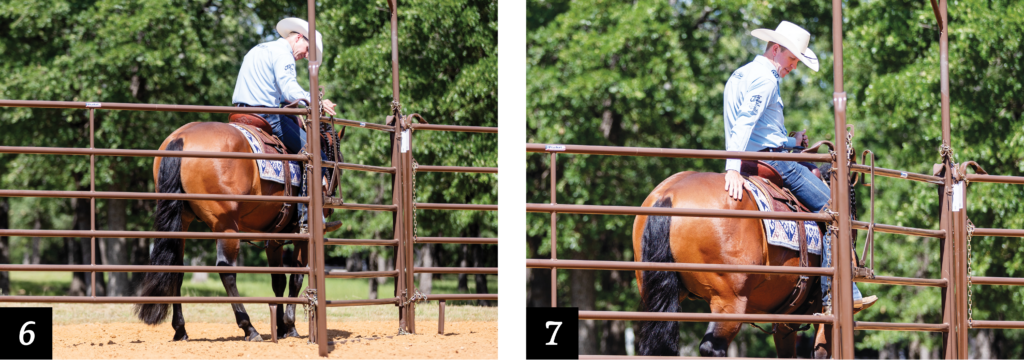
Six
When my right leg passes the edge of the gate, I start to think about pivoting to the right around the gate. Once I get to the other side of it, I begin to use my left leg to sidepass back into the gate so that it closes. I then stop sidepassing once I can easily relatch the gate without leaning off the side of my horse.
Seven
If you’re dealing with a nervous or green horse, it’s important to take your time practicing this maneuver at home. Rushing the gate in practice can cause anxiety in your horse and make him rush the maneuver in the show pen. While being able to work the gate at a nice, steady pace is the goal, slowing everything down at home will allow your horse to take a deep breath and relax.