



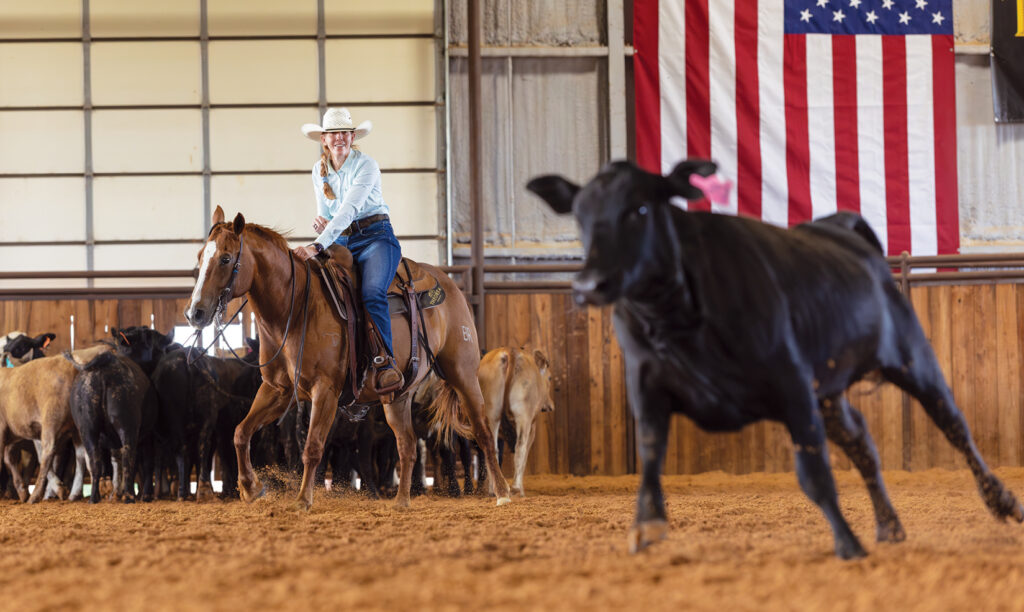
The high of riding a well-trained cutting horse is comparable to few other things, but for the 12 BraveHearts’ riders who participated in the Theorem Ranch Give Back Day in May 2026, it probably felt like being back among their comrades in the military. Cheering each other on, checking off the technical needs, and then acting on instinct to manage horse and cow sounds a lot like many veterans handling their military duties.
BraveHearts, which has three farms based in the Midwest, brought 12 riders—11 veterans and one Gold Star father—to participate in a special event that focused on cutting at Theorem Ranch’s facility in Texas. While a long way to travel to ride a horse, the connections made, lessons learned and stories shared more than made up the miles.
“Horses give many veterans purpose, peace, hope, and joy,” said Meggan Hill-McQueeny, BraveHearts’ president and chief executive officer. “Having an opportunity to come here and learn to cut from some of the very best is truly a bucket-list experience. The veterans selected for this opportunity were told it would greatly accelerate their horsemanship in just a few days.”
Jason and Kisha Itkin, Theorem Ranch owners, and resident trainer Craig Thompson, a two-time NCHA Open Futurity Champion and Open Hall of Fame inductee, opened the doors to the facility and invited more than a dozen other horse trainers to partake. The two-day event not only brought together people and horses, but it also built lifelong connections.
Building Bravehearts
How many times can someone point to a horse as the catalyst for a life-changing event? For BraveHearts’ founder, Marge Tautkus Gunnar, her Lipizzaner stallion named “Max” provided the courage and strength she needed to endure months of chemotherapy to combat ovarian cancer. She overcame that cancer and decided that others needed to feel the healing power of the horse.
In October 2002, BraveHearts was born and, in 2007, began providing equine-assisted services for military veterans. Accredited with the Professional Association of Therapeutic Horsemanship International, and affiliated with the Department of Veterans Affairs, BraveHearts provides a myriad of horsemanship and therapy experiences to children, adults, and veterans.
“BraveHearts serves veterans from across the country, and is located in Illinois, where we operate three farms,” explained Hill-McQueeney, who has spent 18 years with the organization. “Through our partnerships with VA hospitals in Illinois, as well as our national outreach efforts, we’re able to support veterans nationwide. We are also contacted daily by veterans across the country seeking participation. We want the horse industry to better understand the profound impact that horses can have on veterans and first responders. The connection between humans and horses is powerful, transformative, and deeply meaningful. Horses offer a unique path to healing, growth, and resilience, and we’re honored to serve those who have served.”
Whether through a Gold Star family program (meaning the family of a fallen service member) or by providing goals and competition through horsemanship, like the drill teams, BraveHearts has many ways to heal through horses. Ken Boyd traveled to Texas for the special event.
“We got involved because of my son, CJ Boyd, who lost his life in Afghanistan in August 2010,” said Boyd. “BraveHearts held a Gold Star Mother’s retreat, my wife went, and it changed her life. I saw that and wanted to be part of it. That’s when we started volunteering at BraveHearts. The horses actually saved both of our lives. The horse fulfilled our hearts, gave us purpose. I was 60 years old the first time I got on a horse.”
The focus on aiding people who use equine-assisted services is not unusual. But BraveHearts tries to “think out of the box” and take veterans’ horse experience to a higher level. One such way they do so is through clinics.
“At BraveHearts, we often bring in clinicians to give clinics that help accelerate Veterans’ horsemanship and expose them to additional coaching,” said Hill-McQueeney. “We try to incorporate a variety of advanced horsemanship opportunities whenever possible. [In April 2026], we took a group of veterans to the Gardiner Ranch in Kansas for a cattle drive.”
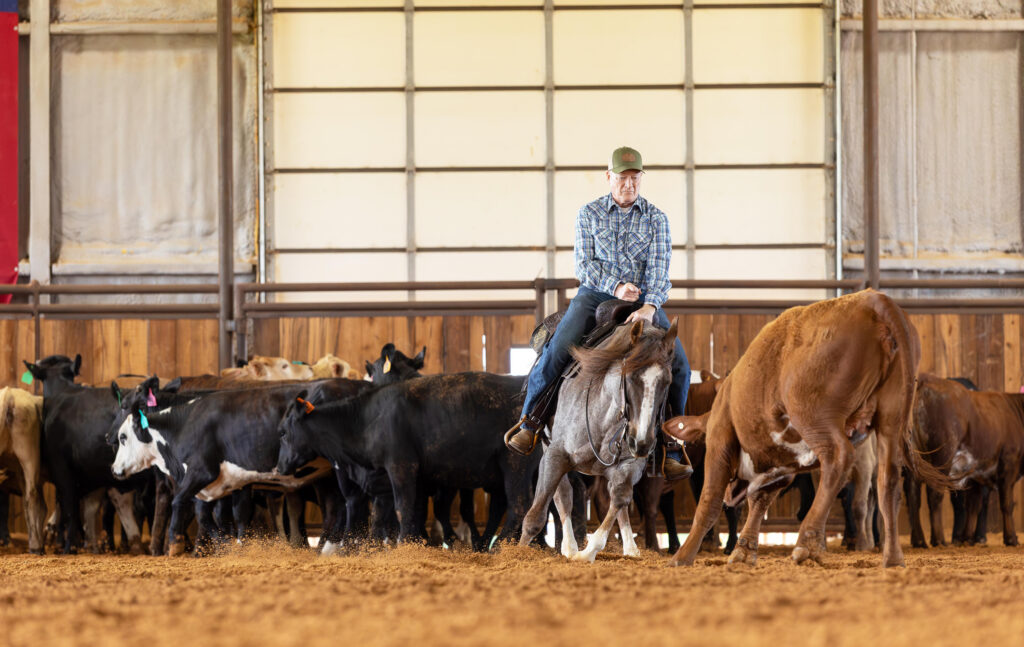
Hill-McQueeney had previously visited with the NCHA trainer about hosting a clinic. When Thompson, the resident trainer at Theorem Ranch, suggested the Itkins host a BraveHearts clinic, everyone jumped on board.
Connecting Through Cutting
Jason and Kisha Itkin purchased Teton Ridge’s TR9 Ranch in January 2026. The family, owners of NCHA Hall of Fame stallion Stevie Rey Von and a Montana cattle ranch, has described the property as a key piece of its long-term commitment to growing Western performance sports and expanding public engagement with the industry.
“One of the things that’s really important to us at Theorem is making the horse world more accessible to people,” said Jason. “A lot of that starts with children, but many of these veterans had never been on a cutting horse, but they have gotten so much out of it because they now understand how special a horse is. Being able to start small and spread that feeling out more is what we are all about.”
When Thompson proposed the clinic, it was another door to invite new people to learn about cutting horses and the Western performance horse industry.
“This was our first major event at the ranch, and we were excited to partner with BraveHearts,” Kisha said. “Inviting people into the horse industry—regardless of their experience level—is incredibly rewarding. Supporting organizations like BraveHearts and helping elevate their programs is one way we can introduce more people to horses and the opportunities they provide.”
The response from the Western performance horse community was immediate. Trainers and competitors from across the cutting, reined cow horse, reining, and rodeo industries volunteered their time, expertise, and horses to support the event.
Among those participating were NRCHA professionals Corey Cushing and Todd Bergen; PRCA World Champion heeler Colby Lovell; cutting horse trainers Winston Hansma, Phil Rapp, Casey Green, Craig Thompson, Kody Porterfield, Chris Stanford, Hayden Upton, Brad Mitchell, Shane Carlon, Shane Hall, Kameron Buchanan, Tom Dvorak, Ben Robertson, Brett McGlothlin, and Bruce Morine; along with longtime NCHA announcer Tom Holt.
For the 12 BraveHearts veterans and one Gold Star Father who traveled from Illinois to Texas, it was a dream come true.
Ilene Schiller began working with BraveHearts six years ago, after serving 14 years in the U.S. Navy. She faced challenges with emotional regulation and trust, both of which have improved through working with horses.
“I worked with Corey Cushing, and he was so welcoming. He was willing to teach me as much as he could in the time we had,” shared Schiller. “I came into this clinic with some knowledge of cutting, but even the smallest tips from Corey made a big impact. I hope I have another opportunity to do cutting in the future. There’s so much to be said not only for horses but for having a community.”
BraveHearts brought down six of their own horses for the event, who all had previous cutting careers. One horse, “Ichi,” a son of Cat Ichi, was donated to the program following his cutting career. During the clinic, Ichi was ridden by Sarah Bowker.
“This was my second time to ride Ichi,” Bowker explained. “Building a relationship with him and trusting him has been impactful. When I ride him, I feel sharper, more in tune with him, and more focused than at any other time. Suddenly, I’m not in my head, I’m in the moment and just doing what needs to be done. It’s a very freeing feeling. I don’t think the smile ever came off my face during this clinic.”
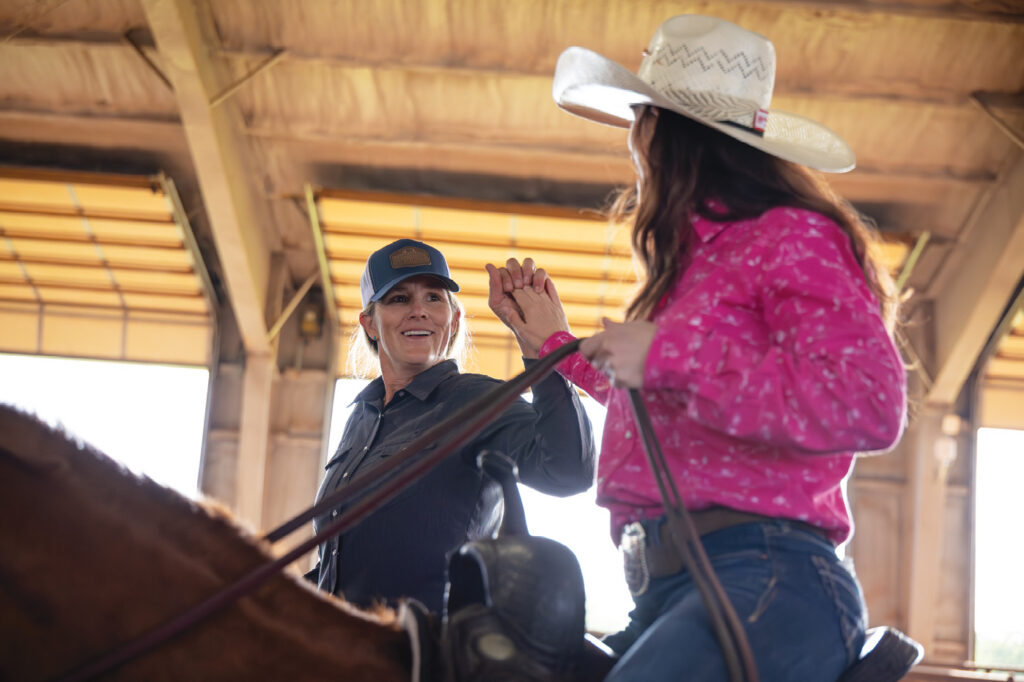
While the focus was on riding, it was also on building community among all the riders, something many veterans seek following service.
“The horse brings us all together, and we’re thankful for that,” said Thompson. “The bond between the horses and the veterans, and us as well, takes everyone to a special place. A lot of veterans are dealing with invisible wounds, and the bond with a horse helps them to heal and recover.”
Mental Over Muscle
Horsemanship and the precision needed to cut a cow brought together a group of veterans, trainers, and horse enthusiasts, but each left with a greater sense of fulfillment. At BraveHearts, every veteran can participate in two hour-long lessons a week at one of the three BraveHearts farms. However, this clinic gave them the opportunity to spend extended periods in the saddle.
Many veterans deal with Post-Traumatic Stress Disorder, anxiety, and other mental health problems, but many also face physical challenges. It wasn’t until the second day of the clinic that U.S. Marine Corps Veteran Josh Horton explained why he was having issues with his horse.
“I was severely wounded in combat in 2004, prepping for the battle in Fallujah, and a mortar landed about 5 feet from me, blowing off part of my right leg,” he explained. “I had ridden horses years before I went to Iraq, and they piqued my interest, but it wasn’t until I hit a rocky road in 2024 that I contacted BraveHearts. Trying to ride again with the injuries I got in Iraq has been a challenge, but nothing I couldn’t overcome. I have severe nerve damage in my right leg, so I have to be deliberate about my cues to the horse. I rode ‘Bones,’ and we had a good time together.”
Men and women who experienced traumatic events often avoid group activities, but as time passed, many started to open up. Before being presented with commemorative belt buckles by Theorem Ranch, Hill-McQueeney mentioned that the veterans and horsemen visited about how horses have impacted them.
“When veterans open up about their journey, it’s eye-opening for those of us who didn’t serve. It’s truly meaningful,” Hill-McQueeney said. “Those of us who have been around horses all our lives often take them for granted, but anytime you see a veteran and a horse connect, it reminds you how special horses are. Horses have an extraordinary ability to heal.”
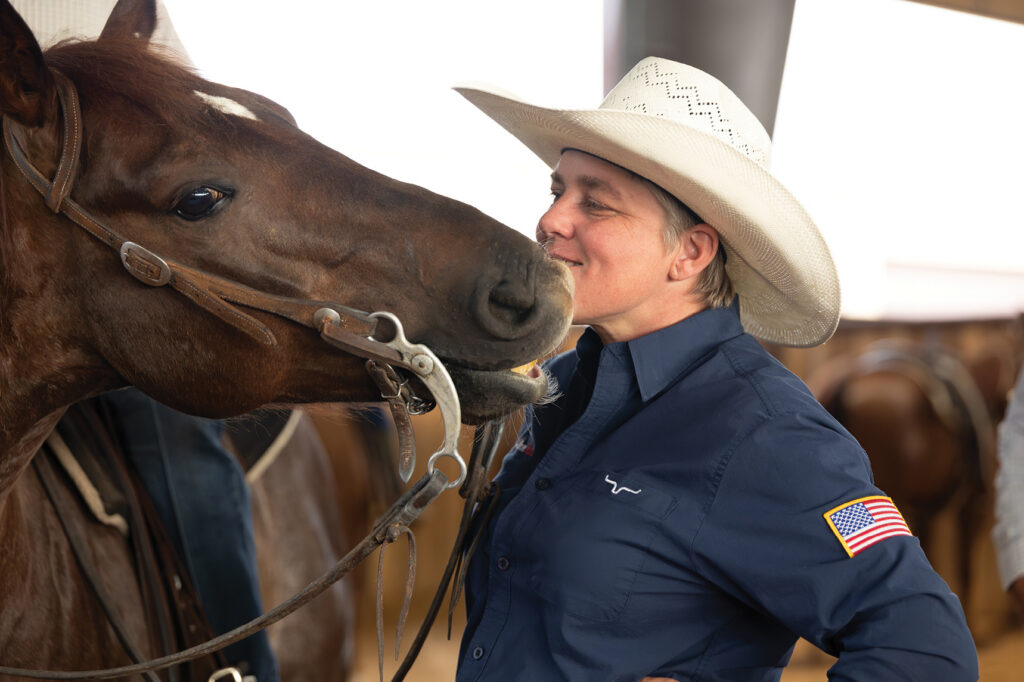
“There have been so many times we’ve heard a veteran say they wouldn’t be alive if not for the program or horses,” she continued. “It’s a really profound mission that we have, and we hope we can continue to deliver. Many veterans come to BraveHearts because traditional therapies or medications have fallen short. What we witness every day is the transformative power of horses.”
Thompson said that until this event, he didn’t realize the extent of the veteran suicide epidemic. He mentions that he and the other trainers found as much fulfillment working with the veterans as they gained knowledge from the horsemen. This sentiment was shared by all participants.
“Knowing the sacrifice veterans have made, and watching them let go, connect with the horses, and see the impact the horses made was inspiring,” said Kisha. “To see how our involvement with horses can pay it forward was worth it.”
Ultimately, Boyd summed it up best when he said that horses “gave us purpose.”
“I love the sport of cutting; it’s amazing what it can do for you,” Boyd said. “A lot of veterans are adrenaline junkies, so they ride. This is another level of horsemanship that we don’t have the ability to do [in Illinois], but this facility and these trainers that opened up to us made it possible. It took the horsemanship to another level. You wouldn’t believe the trash-talking going on as everyone competes. It’s friendly and a bonding experience. That is what many veterans miss.”
Though the adrenaline rush was one reason BraveHearts wanted to expose veterans to cutting, it was equally important to improve horsemanship and provide a mindfulness experience, said Hill-McQueeney. All of those goals were met in Texas.
“While they might be adrenaline junkies, many of the veterans have been officers, defended our freedoms, and had very important careers in the military,” she said. “They deserve to be pushed and challenged, and that’s one thing cutting can do. A skill often found with horses is trust, and when you’re working a cutting horse, you put your hand down and give all your trust to the horse. And that’s an incredible feeling veterans can rediscover.”